

On this page

How Long Is Croup Contagious After Steroids?
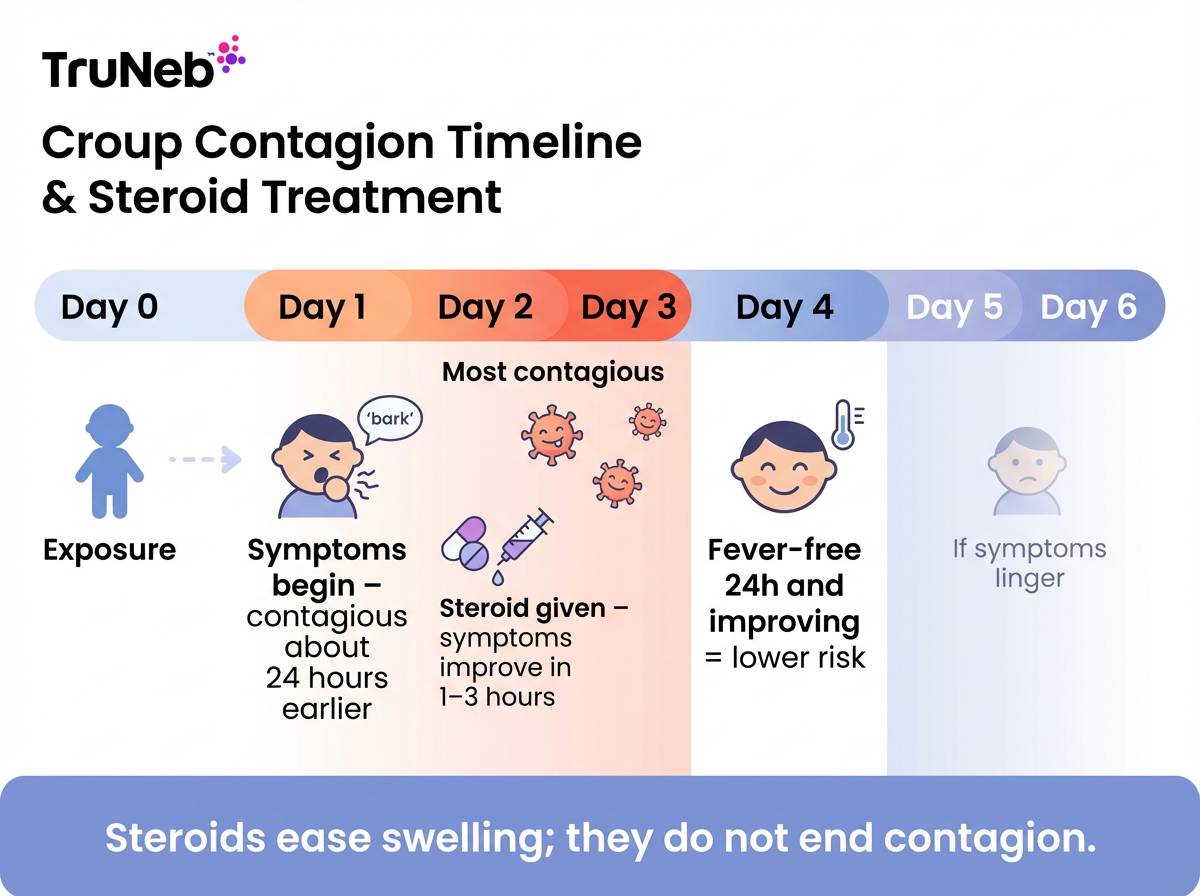
Most children with croup are contagious from about a day before symptoms start until around day 3 of illness, with or without steroid treatment. Some can spread the virus up to day 5 or 6 if cough and fever last. A steroid like dexamethasone eases swelling fast, but it doesn't stop the virus from spreading. Steroids calm the swelling in the airway but don't kill the virus, so your child can still pass it to others for a few days. Keep your child home until they have been fever-free for 24 hours and are clearly improving.
Key point: Steroids reduce swelling and symptoms; they do not shorten the contagious window.
Symptom relief can be quick, but the virus still needs a few days to clear.
Croup Contagiousness Timeline
Croup viruses can spread before the cough shows up. After exposure, symptoms usually appear in 2 to 6 days. A child can be contagious about 24 hours before the barky cough starts.
The first 2 to 3 days of symptoms are the most contagious. Fever and a harsh cough usually line up with the highest amount of virus.
Steroids given on day 1 or day 2 usually make breathing sound better within 1 to 3 hours. That relief doesn't change the virus timeline. Your child can still pass the virus to others until the illness settles.
Most kids are ready to be around others by day 3 or 4, once symptoms are clearly improving. If cough and fever linger, it can take up to day 5 or 6. Use the same return rule described above, not the timing of the steroid dose.
Rule of thumb: most contagious in the first 2–3 days, then the risk fades as symptoms ease.
What Causes Croup and How It Spreads
Croup is a viral infection that swells the voice box and windpipe. Parainfluenza virus is the most common cause. Other viruses can do it too, like RSV, influenza, and adenovirus.
These viruses spread through droplets and close contact. Coughs, sneezes, shared toys, and unwashed hands pass them along. Young children get the classic barky cough because their airways are small. Croup is most common between about 6 months and 3 years, when airways are smaller.
That's why hand-washing and keeping sick kids home for a few days matter.
Some children have spasmodic croup, which looks similar but typically follows allergy or reflux triggers. That type is usually not from an active infection.
Croup is viral and contagious, mainly spread by coughs, sneezes, and hands.
Croup Symptoms and How Long They Last
Classic signs are a barking, seal-like cough, a hoarse voice, and stridor, which is a harsh sound when breathing in. Symptoms usually get worse at night. A low fever is common but not required.
How long does croup last? The worst part usually lasts 2 to 3 nights. Most children improve by day 3 or 4. A mild cough or hoarseness can linger up to a week.
Can you have croup without a fever? Yes. A child can still be contagious without a fever, especially during the first few days. Use the same return rule from above once breathing and cough are clearly better for a full day.
Most croup eases by day 3–4; a mild cough can hang on longer.
Treatment for Croup: From Steroids to Home Remedies
Doctors usually give a single dose of dexamethasone. It starts working in about 1 to 3 hours and can last up to 72 hours. A single dose typically covers the worst 2–3 days of illness. Some children can receive prednisolone instead. In severe cases, a nebulized epinephrine treatment can give fast relief for a short time in the ER while the steroid takes hold.
Antibiotics are not helpful for routine croup because it is caused by viruses.
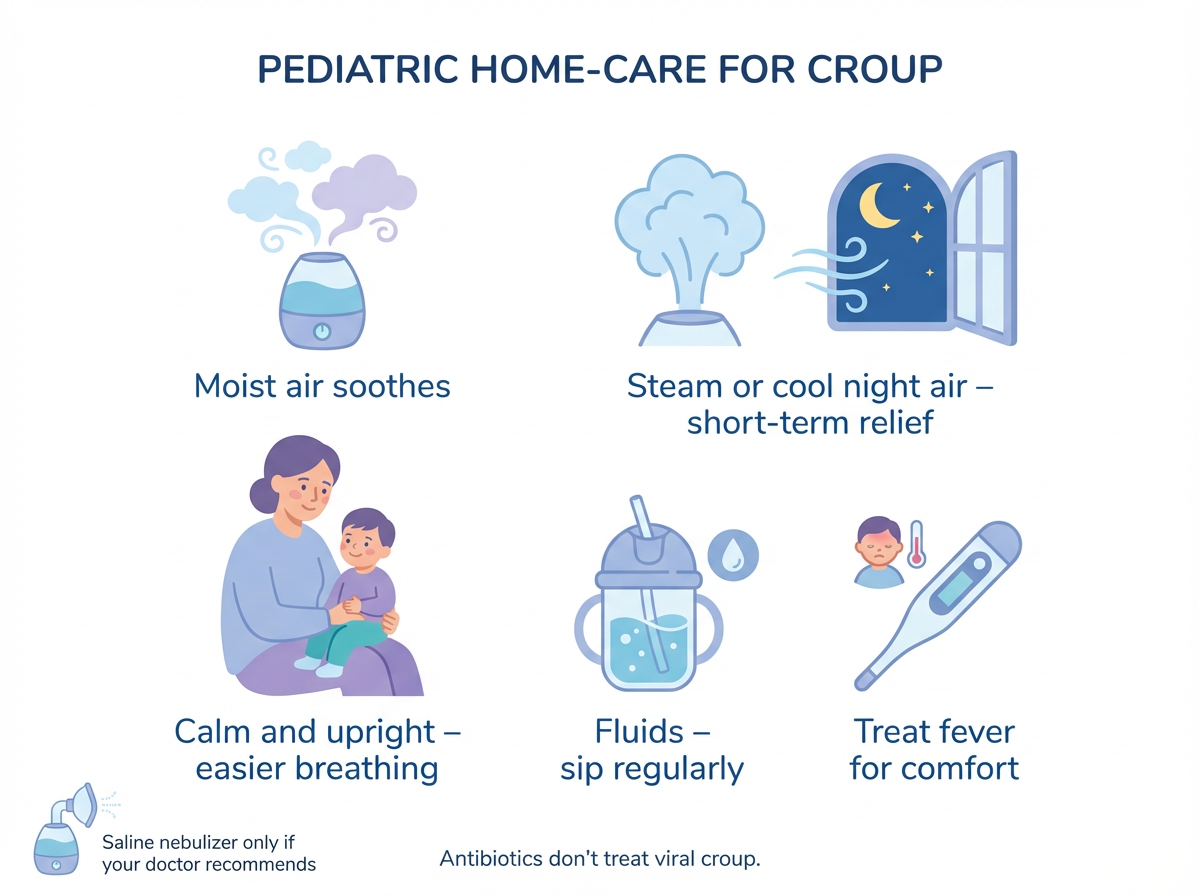
At home, focus on comfort:
- Run a cool-mist humidifier at night.
- Try brief steam from a warm shower or a few minutes of cool night air.
- Keep your child calm and upright.
- Offer fluids throughout the day.
- Use fever reducers if your pediatrician says it is okay.
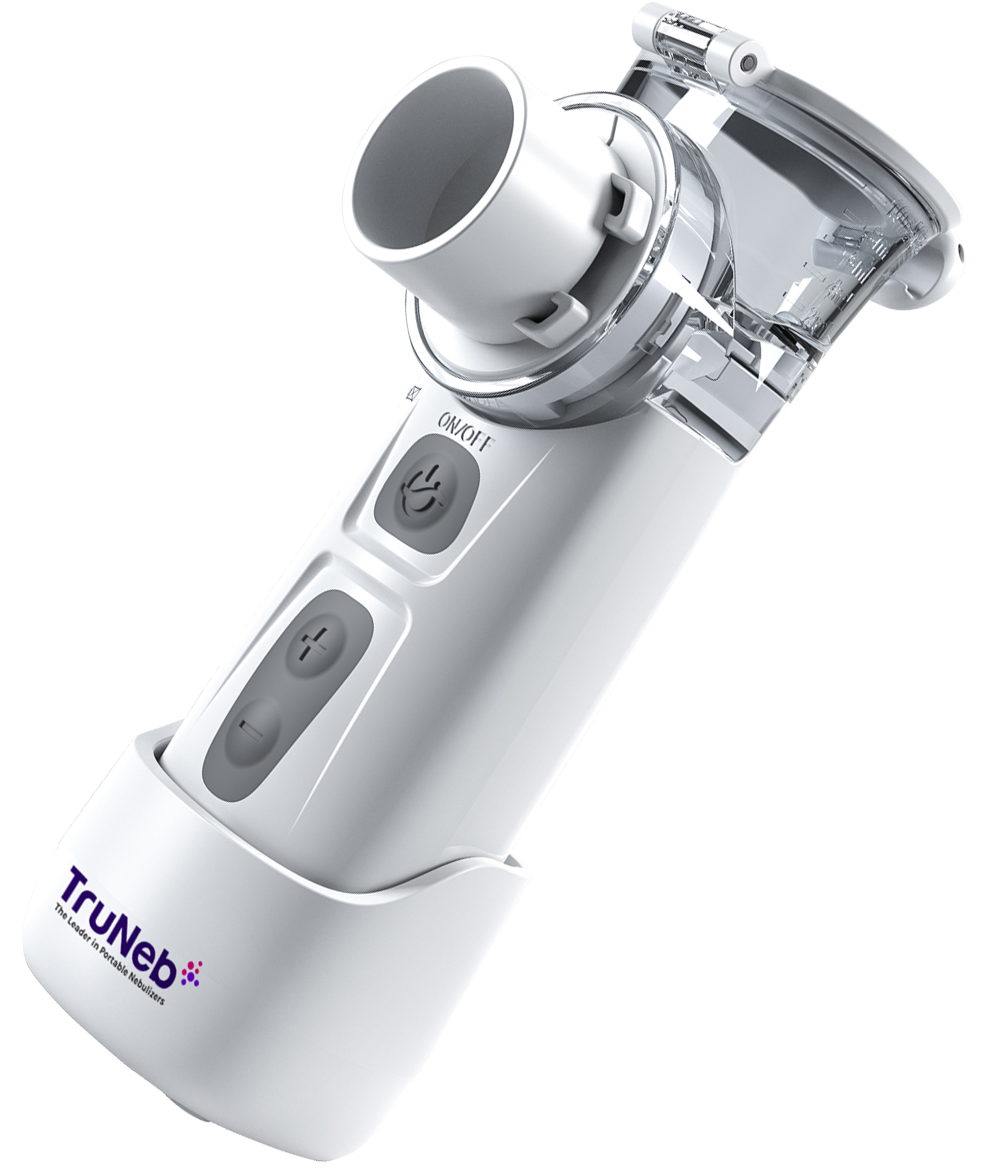
If your child also has asthma, bronchiolitis, or thick mucus, your doctor might suggest saline by nebulizer for comfort. A TruNeb™ portable mesh nebulizer can deliver a gentle saline mist quietly at home if your doctor recommends it. It won't cure croup or change how long the virus spreads, but it can make breathing feel easier in the right cases.
⚠️ Steam inhalers are not nebulizers and shouldn't be used to breathe in medications.
Key takeaway: Humidifiers and steam inhalers add moisture, but only a nebulizer delivers medication; never use a steam inhaler for medicines.
| Device | Purpose | Delivers medication? | Role in croup care | Safety/notes |
|---|---|---|---|---|
| Cool-mist humidifier | Adds moisture to room air | No | Comfort at night; can soothe cough | Use clean water; clean unit regularly |
| Steam inhaler | Provides warm moist air to the face | No | Brief comfort only; not for medicines | Use caution with hot water |
| Mesh nebulizer (e.g., TruNeb) | Turns sterile saline or prescribed meds into a fine mist to inhale | Yes (saline or doctor-prescribed meds) | Comfort with saline when a doctor recommends; not a cure and doesn't change contagion | Clean after each use per instructions |
Talk to your doctor before trying a new medication.
Bottom line: steroids ease swelling fast and cover about three days, but they don't shorten contagion.
Preventing the Spread of Croup
Keep your child home during the early days of illness and while the cough is harsh. Wash hands frequently, clean shared toys and surfaces, and teach older kids to cover coughs and sneezes. Try to limit close contact with infants and grandparents until symptoms ease.
Adults can catch the same viruses. Most adults get a hoarse voice or a cold instead of the barky cough, but they can still pass the virus on.
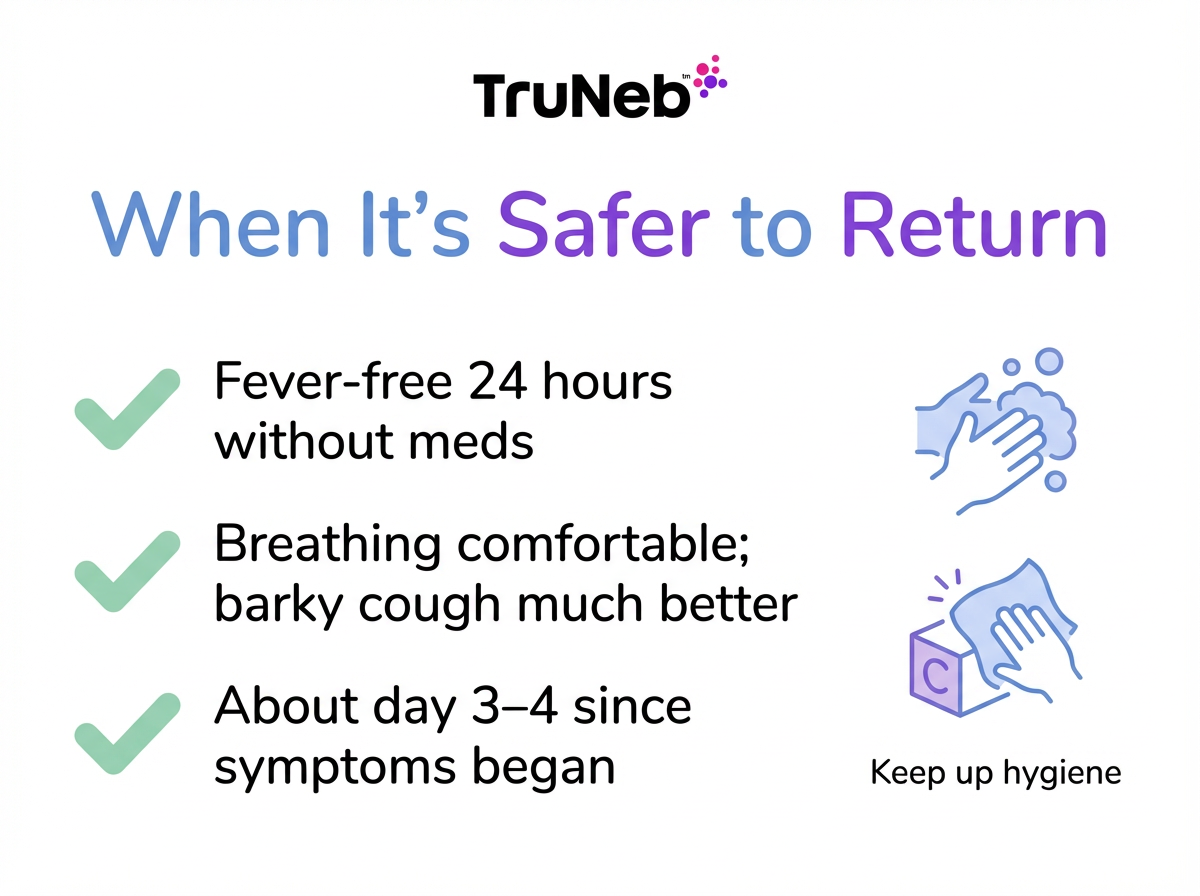
You can usually send your child back to school or daycare after they have been fever-free for 24 hours without medicine and are clearly improving, usually by day 3 or 4. If symptoms last longer, wait until your child is breathing easily and has good energy again. Keep up hand and surface cleaning for a day or two after your child returns to activities.
Protect others with good hygiene and a short home rest until your child is clearly better.
When to See a Doctor for Croup Red Flags
⚠️ Get emergency help right away if you see any of these signs:
- Stridor when the child is calm (noisy breathing at rest).
- Chest or neck pulling in with each breath.
- Bluish lips or face.
- Drooling or trouble swallowing.
- High fever, severe tiredness, or the child looks very unwell.
- Getting worse or not improving after 48 hours.
Most cases improve with a steroid and home care.
Call 911 if there is severe trouble breathing or a blue color around the lips. If you're unsure, call your doctor.
Fast breathing, blue color, or stridor at rest need urgent care now.
Frequently Asked Questions
Tap or click a question below to see the answer:
Most kids need about 3–5 days at home. Follow the return rule described above.
Dexamethasone usually helps within 1–3 hours and can last up to about 72 hours. Prednisolone is sometimes used for 2–3 days if prescribed, and one dose usually covers the worst period.
Yes, some children have croup with no fever. They can still be contagious early on; use the same return rule once breathing and cough are clearly better for a day.
It’s typically 2–6 days from exposure to symptoms. A child can start spreading the virus about a day before the cough begins.
Adults can catch the same viruses. Most get a hoarse voice or a cold instead of the barky cough, but they can still pass the virus on.
No. Croup is usually viral, so antibiotics don't help. Most kids do well with comfort care and a single steroid dose to ease swelling.
Disclaimer: This article is for informational purposes only and doesn't replace professional medical advice. Always talk to your doctor about your child's symptoms, diagnosis, and treatment options.