

On this page

Can You Develop Asthma as an Adult? What It Means
Yes, you can. Adults can develop asthma at any age. This is called adult-onset asthma, sometimes also called late-onset asthma.
Adult-onset asthma means your asthma symptoms first appear in adulthood. Asthma happens when the airways in your lungs get inflamed and narrow, which makes breathing hard. Coughing, wheezing, and chest tightness are common.
In the U.S., nearly 23 million adults live with asthma. The good news: with the right plan, you can control it and live your life.
In this guide, you’ll see what can trigger adult-onset asthma, how doctors confirm it, and what treatments can help you breathe easier.
One-liner: Adults can develop asthma for the first time at any age; doctors call this adult-onset asthma.
Common Causes and Risk Factors of Adult-Onset Asthma
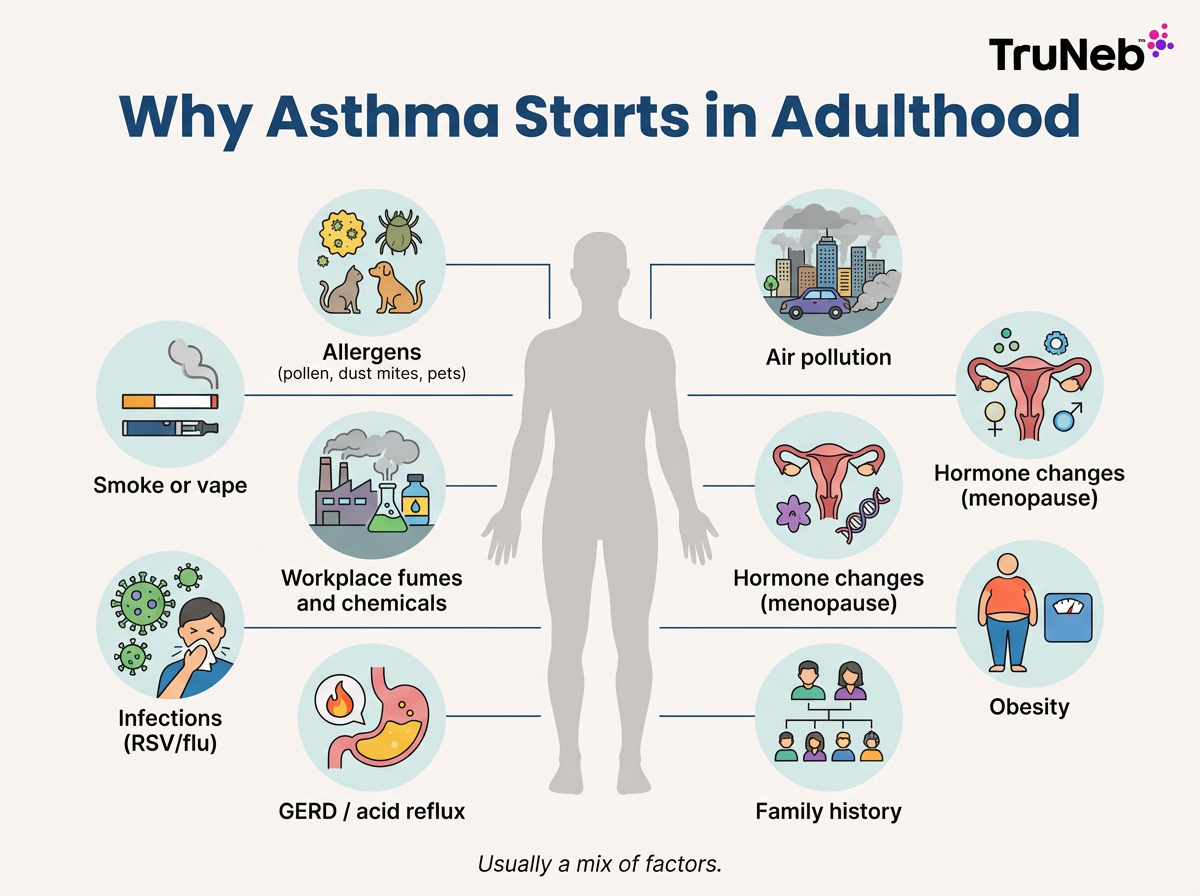
There isn’t one single cause. Adult-onset asthma usually develops when inherited risk and life exposures stack up over time. Here are common factors:
- Allergies: Pollen, dust mites, mold, or pet dander can inflame your airways over time.
- Workplace irritants (occupational asthma): Fumes, flour dust, cleaning chemicals, and sawdust can trigger symptoms at work.
- Smoke and pollution: Cigarette smoke, vape aerosols, and dirty air make airways more reactive.
- Hormone changes: Asthma often begins for women in midlife, likely tied to changes around menopause.
- Extra weight: Obesity raises inflammation and makes breathing harder.
- Infections: A tough respiratory infection, like RSV or the flu, can set off asthma that lingers.
- GERD (acid reflux): Stomach acid that creeps up can irritate the airway and spark symptoms.
- Family history: If asthma is in your family, you may have a higher chance of developing it.
Asthma subtypes that are typically first seen in adults:
- Eosinophilic asthma: Driven by certain white blood cells; can be more severe but treatable.
- Aspirin-exacerbated respiratory disease (AERD): Asthma with nasal polyps and reactions to aspirin/NSAIDs.
Not everyone has a clear trigger. Sometimes it just appears. But spotting your risks helps you plan and avoid flares.
One-liner: Adult-onset asthma usually develops from a mix of allergies, irritants, infections, hormone shifts, reflux, and genetics.
Signs and Symptoms of Adult-Onset Asthma
Adult-onset asthma has the same core symptoms as other asthma, but the pattern of when they show up is important.
Common signs:
- Wheezing: A whistling sound when you breathe out.
- Shortness of breath: Feeling winded with chores, walks, or stairs.
- Chest tightness: Pressure or squeezing in the chest.
- Chronic cough: Usually worse at night or early morning; sometimes the only symptom.
- Waking at night: Coughing or breathlessness that disrupts sleep.
- Exercise trouble: Getting unusually winded during workouts or in cold air.
If these symptoms keep coming back, or flare with triggers like pollen, smoke, or a cold, asthma is a strong possibility.
One-liner: A lingering night cough, wheeze, or breathlessness that worsens with triggers are classic signs of adult-onset asthma.
How Doctors Diagnose Asthma in Adults
Your doctor starts with your story: symptoms, triggers, and any allergy or family history. They will listen to your lungs and can check oxygen levels.
Key tests:
- Spirometry: You blow into a device to measure airflow. The test is usually repeated after a bronchodilator (like albuterol). A big improvement after the inhaler points to asthma.
- Peak flow: A simple home or office tool that tracks how fast you can blow air out. Drops can warn of narrowing airways.
- Allergy testing: Skin or blood tests can uncover triggers like dust mites, pets, or pollen.
- Ruling out other issues: A chest X-ray or other tests can be used to make sure it’s not something else, like COPD or an infection.
Your primary doctor may refer you to an allergist or pulmonologist for testing and long-term care if needed.
Getting a clear diagnosis sets you up with the right plan.
One-liner: Spirometry with bronchodilator response is the main test doctors use to confirm asthma.
Treatment and Management Options for Adult-Onset Asthma
Asthma is manageable. The goal is steady control with few or no flares.
Avoid triggers and build healthy habits:
- Cut exposure: Reduce allergens at home, avoid smoke and vape, and limit time in heavy pollution when possible.
- Move your body: Regular activity helps lungs work better. Warm up longer and pace yourself.
- Manage reflux and weight: If you have GERD, working with your doctor to treat it and aiming for a healthy weight can ease breathing.
Medicines and devices that help:
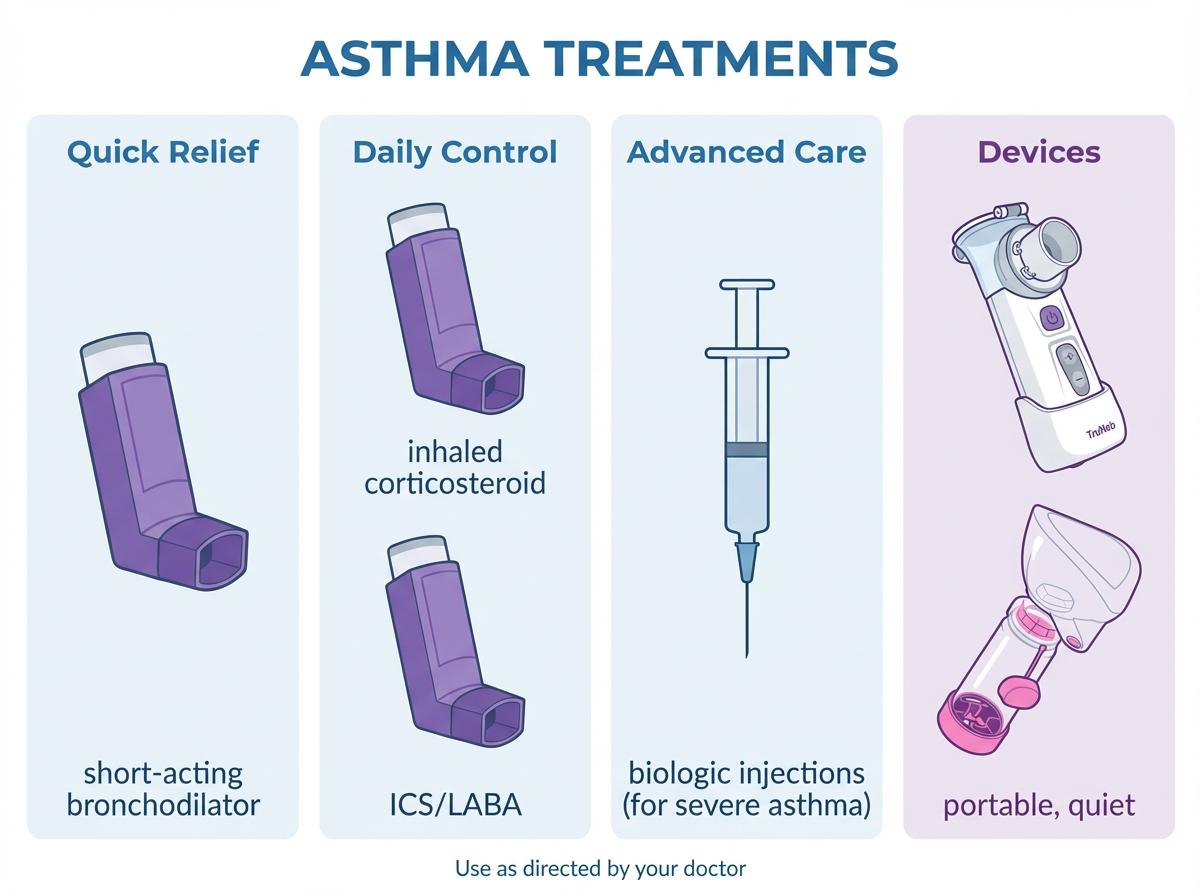
- Quick-relief inhaler: A short-acting bronchodilator (commonly albuterol) relaxes tight airway muscles during symptoms.
- Daily controller: Inhaled corticosteroids (ICS) reduce airway swelling and prevent flares. Some adults use a combo inhaler (ICS/LABA).
- Other options: A leukotriene pill may help some people. For severe asthma, biologic injections are available through specialists.
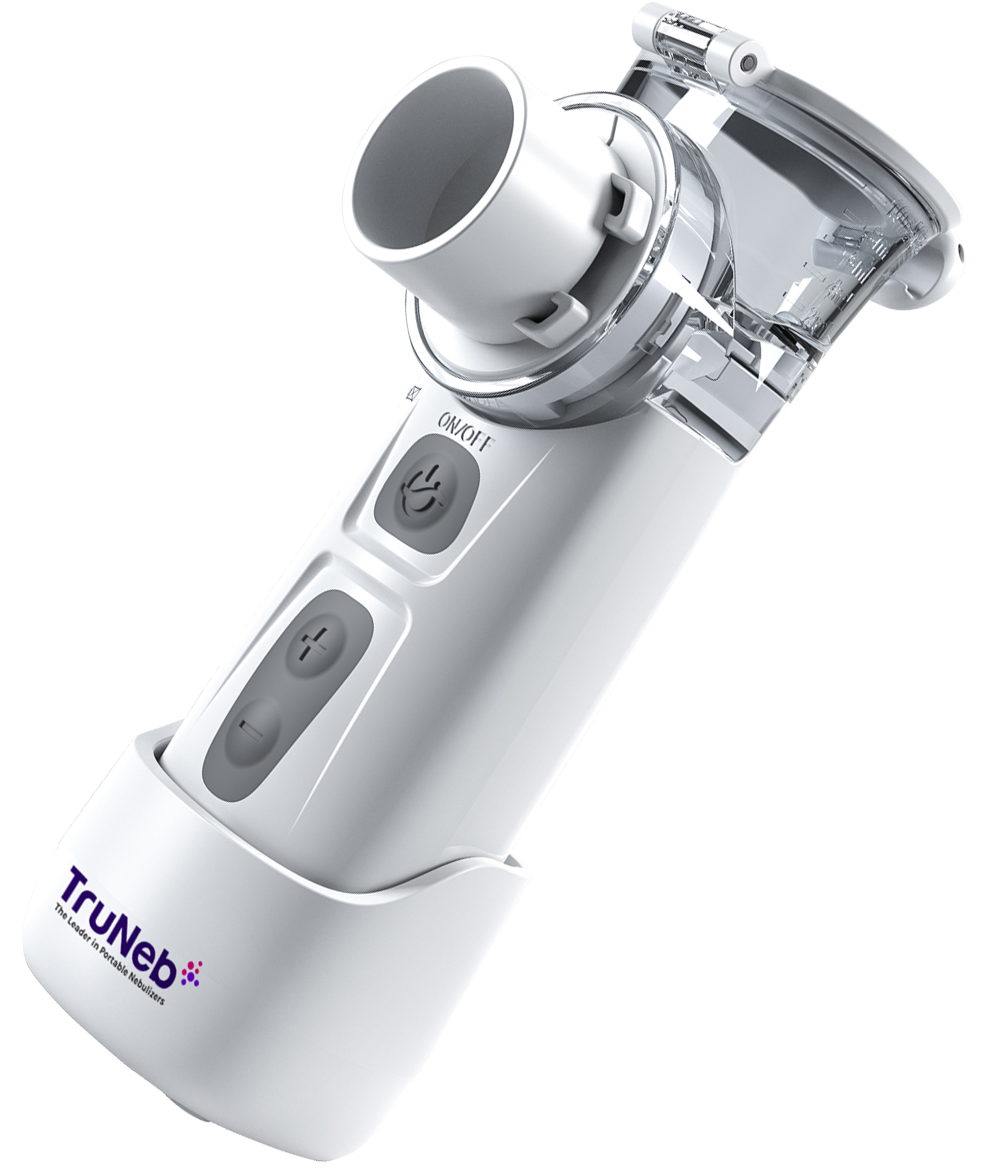
- Device support: Good inhaler technique matters. Spacers can help. A nebulizer turns medicine into a gentle mist you just breathe in. A portable mesh nebulizer like the TruNeb portable mesh nebulizer is small and quiet, so treatments fit into work, travel, or home. You might see boxes labeled 'steam inhaler' near nebulizers, but these are not meant for breathing prescription asthma medicine.
Compare devices: inhaler with spacer vs nebulizer vs steam inhalerKey takeaway: Nebulizers deliver prescription asthma medications as a mist; steam inhalers do not.
| Device | Delivers prescription meds? | Portability | Typical noise | Cleaning needs | Good for |
|---|---|---|---|---|---|
| Inhaler + spacer | Yes (metered-dose inhaler) | Pocket-sized | Very quiet | Rinse spacer regularly | Quick relief and daily control when technique is good |
| Nebulizer (portable mesh) | Yes (nebulized meds such as albuterol and other prescribed solutions) | Handheld, travel-friendly | Quiet | Rinse after each use and air-dry parts | People who prefer breathing a mist or during flare-ups |
| Steam inhaler | No | Handheld or countertop | Quiet | Clean water reservoir as directed | Comforting warm moisture; not for delivering asthma medicine |
Note: Steam inhalers provide warm moisture for comfort but are not designed to deliver prescription asthma medications.
About saline:
- Some doctors use nebulized hypertonic saline (3% or 7%) for very thick mucus. TruNeb offers 3% and 7% hypertonic saline ampules. Use it only if your doctor recommends it. This kind of treatment is usually reserved for people with very thick mucus under specialist care and isn’t part of routine asthma treatment for everyone.
Plan, monitor, and review:
- Asthma Action Plan: Write down what to take daily, how to step up treatment when symptoms rise, and when to get help.
- Track control: Notice night symptoms, rescue inhaler use, and peak flow changes. Share updates with your doctor.
Safety note: Talk to your doctor before trying a new medication.
One-liner: Daily controller medicine plus smart trigger control keeps most adult asthma well controlled.
When to Seek Medical Help for Adult-Onset Asthma
See a doctor soon if:
- You have a cough, wheeze, or shortness of breath that keeps returning.
- Symptoms wake you at night or limit your daily activities.
- You’re using a rescue inhaler more than your plan allows.
⚠️ Call 911 or emergency services right away if you notice any of these signs:
- Severe trouble breathing, or you can’t speak in full sentences.
- Lips or fingernails look blue.
- Symptoms get worse fast and don’t improve after your rescue inhaler.
- Your peak flow drops into the red zone, if you use one.
In an emergency, call 911. Prompt care saves lives. Regular follow-ups help prevent emergencies.
One-liner: Call emergency services for severe trouble breathing, blue lips, or no relief after a rescue inhaler.
Differences Between Adult-Onset and Childhood Asthma
Adult and childhood asthma share the same airway problem, but the patterns can differ.
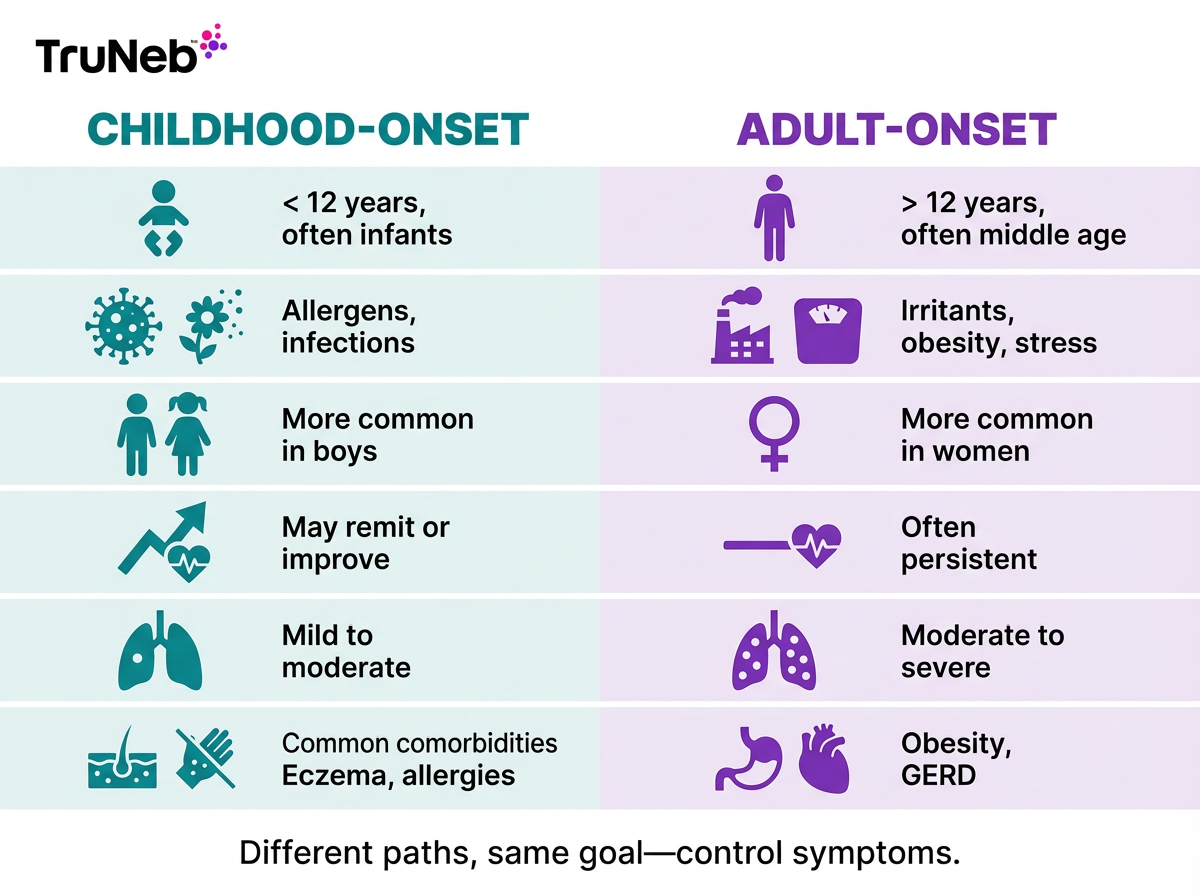
- Age of start: Childhood cases often begin early in life; adult-onset starts after age 18–20.
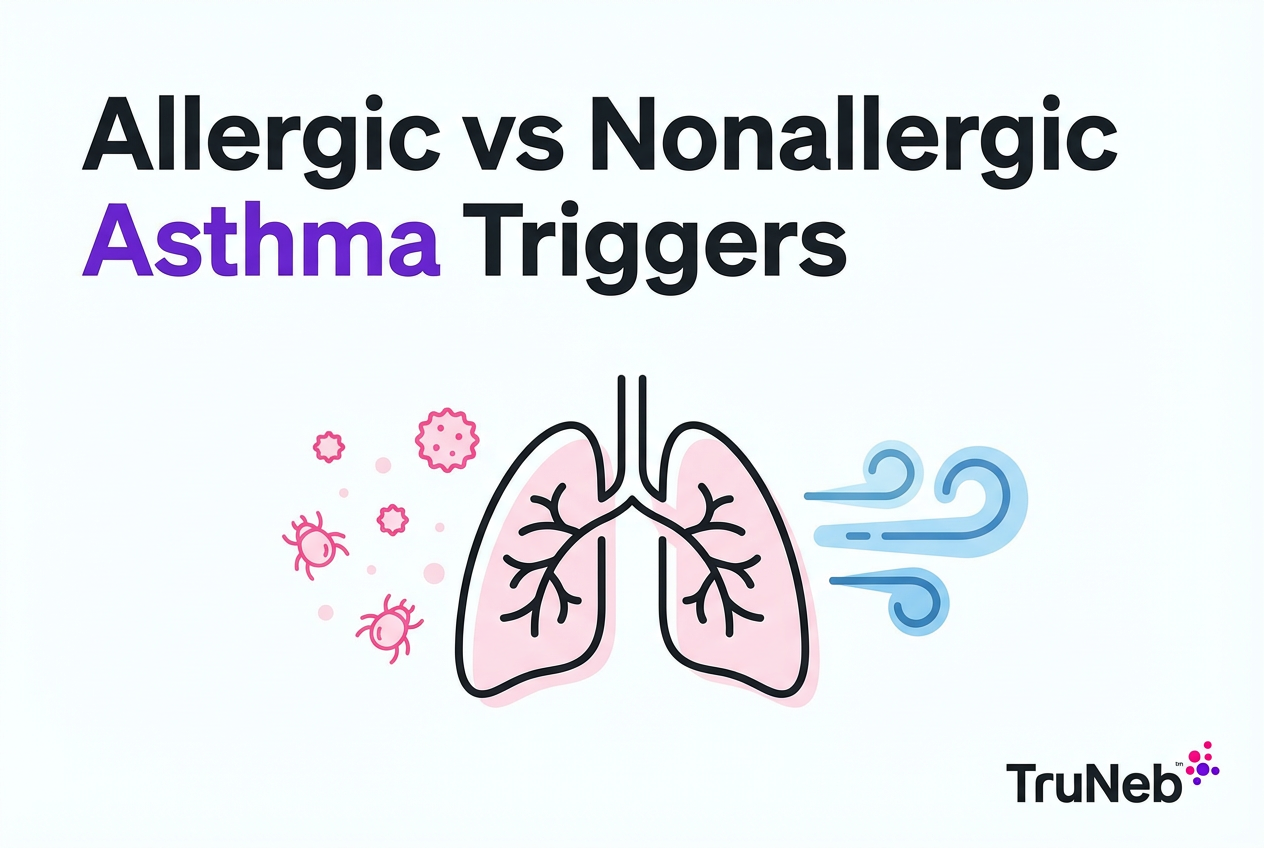
- Triggers: Kids are more often driven by allergies or viruses. Adults can have more non-allergic triggers like workplace fumes or hormone changes, though allergies still matter.
- Gender pattern: Boys have higher rates in childhood; adult-onset is more common in women.
- Course: Some kids improve or go into remission as they grow. Adult-onset usually persists and needs ongoing care.
- Severity: Adult-onset can be more persistent at diagnosis, sometimes needing stronger treatment.
- Other conditions: Adults can also have GERD or a smoking history, which can complicate breathing.
The core approach stays the same: control airway swelling, avoid triggers, and follow your action plan.
One-liner: Adult-onset asthma tends to be more persistent and is more common in women, while childhood asthma often improves over time.
Living Well with Asthma as an Adult
With a solid plan, most adults keep asthma in check and live full, active lives.
Build routines that work: carry your rescue inhaler, know your triggers, and warm up before exercise. If your doctor prescribes a controller medicine, taking it as directed helps keep symptoms in check. Check in with your doctor if symptoms change.
Tools can help your routine fit your life. A portable nebulizer, for example, can make treatments easier during travel or busy days.
Stay encouraged. Control gets easier as you learn your patterns and stick with your plan.
One-liner: With the right plan, most adults keep asthma controlled and live fully.
Frequently Asked Questions
Tap or click a question below to see the answer:
At any age. A diagnosis after about age 18–20 is considered adult-onset. Many people are diagnosed in their 30s, 40s, or 50s, and some even later. If symptoms appear, don’t ignore them because of your age.
Your body and environment change. New exposures at home or work, developing allergies, hormone shifts, infections, reflux, or smoke can make airways reactive. Sometimes a tough chest infection “unmasks” asthma that wasn’t obvious before.
Asthma is a long-term condition. Adults usually don’t “outgrow” it, but treatment can control symptoms so well it feels quiet. If you’re prescribed a controller medicine, taking it as directed—even when you feel good—helps keep symptoms quiet.
Common triggers include allergens (dust mites, pets, pollen, mold), smoke or vape, air pollution, cold air, exercise, strong odors, and viral infections. Finding your personal triggers helps you prevent flares.
It can be more persistent at diagnosis, but not always. Adults usually manage it well with daily controllers and a clear plan. If control is hard, specialists can add options like biologics.
Doctors use your history and tests to tell. In asthma, breathing usually improves a lot after a bronchodilator on spirometry. COPD tends to be less reversible and is linked to long-term smoking. Some people have features of both, and care is tailored.
One-liner: Adult-onset asthma can start at any age and is manageable with consistent treatment and trigger control.
Disclaimer: This article is for informational purposes only and is not a substitute for professional medical advice, diagnosis, or treatment. Always talk with your doctor about your symptoms, diagnosis, and treatment options.