

On this page
If you've got a stubborn cough and a fever, it's easy to wonder whether it's bronchitis or pneumonia. Both are lung illnesses, but pneumonia usually hits harder because it infects the air sacs. This guide compares symptoms, causes, treatment, and when to call your doctor or go to the ER.
Bronchitis vs Pneumonia: At a Glance
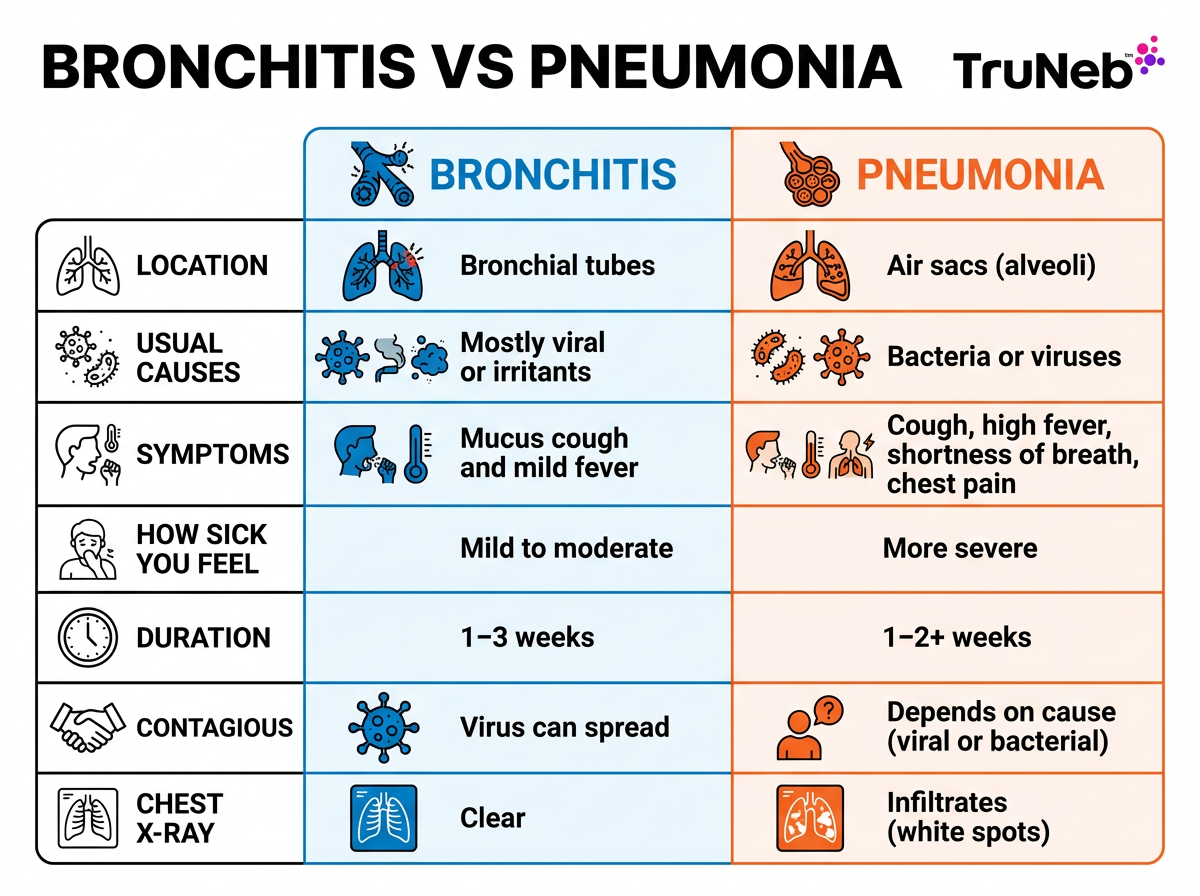
| Feature | Bronchitis | Pneumonia |
|---|---|---|
| Location in lungs | Inflammation of the bronchial tubes (airways) | Infection in the lung's air sacs (alveoli) |
| Usual causes | Mostly viruses after a cold or flu; smoke or irritants can trigger | Commonly bacteria; viruses like flu or COVID-19 can also cause it |
| Hallmark symptoms | Heavy, mucus cough; mild fever; chest tightness; wheezing | Cough with thicker mucus; high fever; chills; shortness of breath; chest pain |
| How sick you feel | Usually mild to moderate; feels like a chest cold | Usually more severe; can feel too weak to do normal activities |
| Duration | About 1–3 weeks; cough can linger | 1–2+ weeks to improve; fatigue can last longer |
| Contagious | The virus behind it can spread to others | Depends on cause; viral and some bacterial types can spread |
| Chest X-ray | Usually normal or clear | Shows patchy areas called infiltrates |
Note: Early pneumonia can occasionally look normal on a chest X-ray.
Key point: Bronchitis hits the airways. Pneumonia infects the air sacs and is usually more severe. It's more dangerous for babies, older adults, and people with weak immune systems.
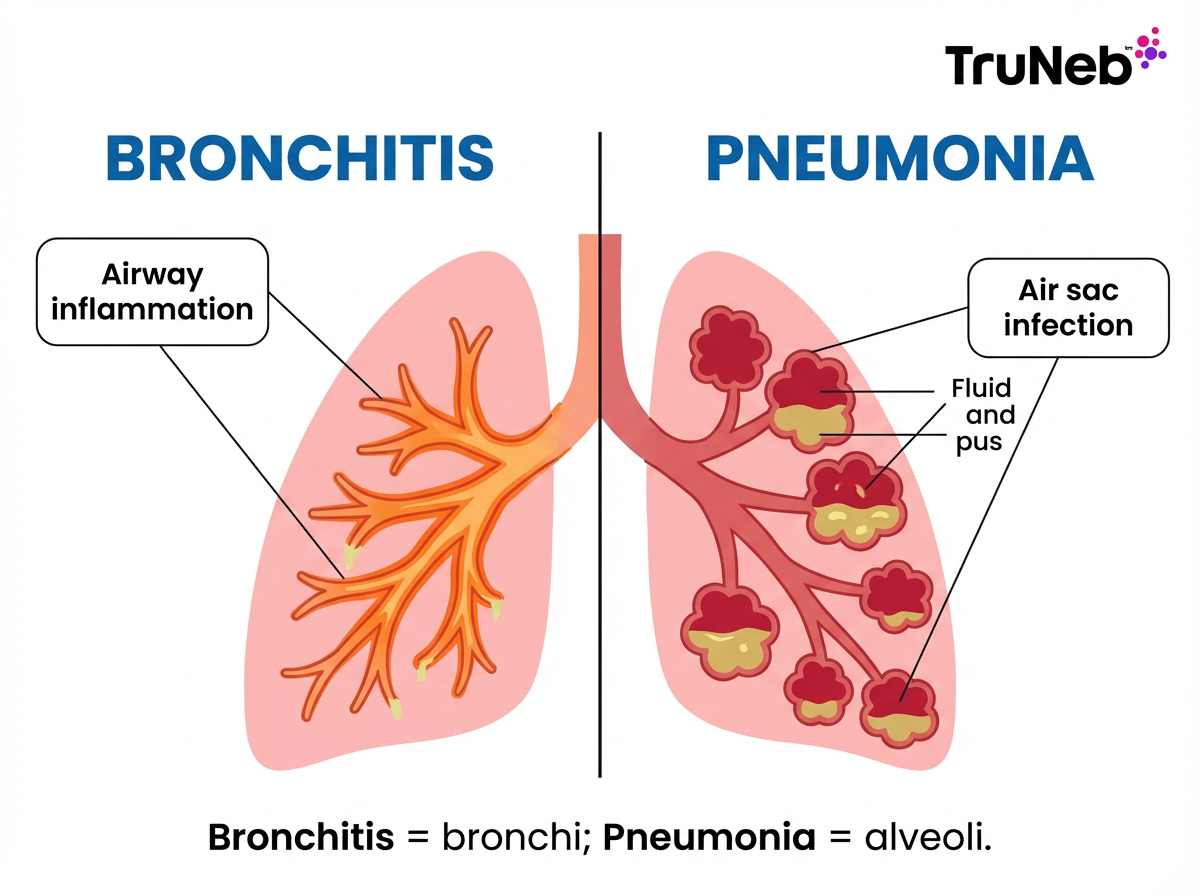
What Is Bronchitis? What Is Pneumonia?
What Is Bronchitis?
Bronchitis means the lining of your bronchial tubes is inflamed. These tubes carry air from your windpipe into your lungs. Acute bronchitis is short term and usually follows a cold or flu. Chronic bronchitis is a long-term diagnosis linked to COPD and smoking and needs ongoing care; this article focuses on short-term (acute) bronchitis.
What Is Pneumonia?
Pneumonia is an infection inside the lung tissue. Tiny air sacs called alveoli can fill with fluid or pus. It can involve one lobe, a whole lung, or both lungs (double pneumonia). Pneumonia can be caused by bacteria or viruses, and you can't reliably tell which by symptoms alone—your doctor and tests decide.
In short: bronchitis affects the airways; pneumonia infects the lung tissue.
Symptoms: Bronchitis vs Pneumonia
Symptoms of Bronchitis
A strong, nagging cough is the main sign. The cough can bring up mucus that can be clear, yellow, or green. Fever, if present, is usually low. The chest can feel tight or sore from coughing. Wheezing can happen. Tiredness is common and can last for days. Colored mucus alone doesn't mean you need antibiotics; your doctor looks at the whole picture.
Symptoms of Pneumonia
Symptoms usually hit harder. Fever is higher, and chills and sweats are common. Breathing can feel short, even with simple tasks like walking. Chest pain can feel sharp when you take a deep breath or cough. The cough can bring up thicker yellow or green mucus. Older adults can feel confused or extra weak. You can't reliably tell viral vs bacterial pneumonia by symptoms alone; your doctor and tests decide.
Bottom line: high fever, chest pain with deep breaths, or shortness of breath are more typical of pneumonia and should be checked by a doctor.
How Sick It Feels: Which Is Worse?
Pneumonia usually makes people feel much sicker than bronchitis. Most people with pneumonia are stuck in bed and get winded with light activity. Bronchitis can make you feel lousy, but most people can still move around.
Pneumonia can lead to serious problems if not treated, especially in babies, older adults, and people with weak immune systems. Bronchitis in healthy people is usually short term, but it can be tougher for those with asthma or COPD.
Rule of thumb: if you're too weak to do normal tasks or breathing is hard, that can be a sign of pneumonia or another serious problem—get checked promptly.
Causes and Contagiousness
Causes
Acute bronchitis usually starts from a virus, like a cold or the flu. Smoke and air pollution can also inflame the airways. Pneumonia is commonly caused by bacteria such as Streptococcus pneumoniae. Viruses like influenza or COVID-19 can cause either bronchitis or pneumonia, depending on how deep the infection goes.
Contagiousness
You don't catch a diagnosis; you catch a germ. If a virus caused your bronchitis, that virus can spread. Typical adult acute bronchitis is usually contagious early on when cold or flu symptoms first start. For pneumonia, viral causes and some bacteria spread in droplets when people cough or sneeze. Chronic bronchitis tied to COPD isn't contagious.
Simple takeaway: germs spread, not the label bronchitis or pneumonia.
Can Bronchitis Turn Into Pneumonia?
Yes, sometimes. A bronchitis infection can move deeper into the lungs and become pneumonia. This isn't common in healthy adults, but it can happen.
Watch for warning signs: fever climbs higher, chills get worse, breathing gets harder, or chest pain starts. Older adults, smokers, and people with asthma, COPD, or weak immune systems have a higher risk. Sometimes what seems like bronchitis at first is pneumonia that only shows up clearly after an exam or chest X-ray.
Bottom line: worsening fever, breathing, or chest pain after bronchitis needs a prompt checkup.
Walking Pneumonia vs Bronchitis: A Milder Case or Something Different?
Walking pneumonia is a mild pneumonia. People can stay up and about, which is why it has that name. It's usually caused by atypical bacteria like Mycoplasma.
It can feel like a bad chest cold or bronchitis: long cough, low fever, and fatigue. But it still affects the air sacs in the lungs, not just the airways. A chest X-ray can show infection even when symptoms seem mild. Doctors usually treat walking pneumonia with antibiotics, while most acute bronchitis doesn't need them.
In short: feeling well enough to be active does not rule out pneumonia.
How Doctors Tell the Difference Between Bronchitis and Pneumonia
At the visit, your doctor listens to your lungs. Bronchitis typically has wheezing or coarse sounds across both sides. Pneumonia can cause crackles or a quiet spot over one area.
They check your oxygen with a finger sensor. Low oxygen points more to pneumonia. A chest X-ray is the most common and fastest test doctors use to look for pneumonia. In simple bronchitis, the X-ray is usually clear. In pneumonia, the X-ray shows cloudy patches of infection. Early pneumonia can occasionally look normal on X-ray, so follow-up matters if symptoms worsen.
Key point: a clear chest X-ray is more consistent with bronchitis, while visible infiltrates are more consistent with pneumonia — your doctor uses the X-ray plus your exam to decide.
Treatment and Recovery: Bronchitis vs Pneumonia
Acute bronchitis usually gets better with home care: rest and plenty of fluids. Use medicines for fever or aches if your doctor says they're safe for you. Because acute bronchitis is usually viral, antibiotics don't help most otherwise healthy people. If you have wheezing or asthma or COPD, your doctor might prescribe an inhaler or a nebulizer treatment to help open airways.
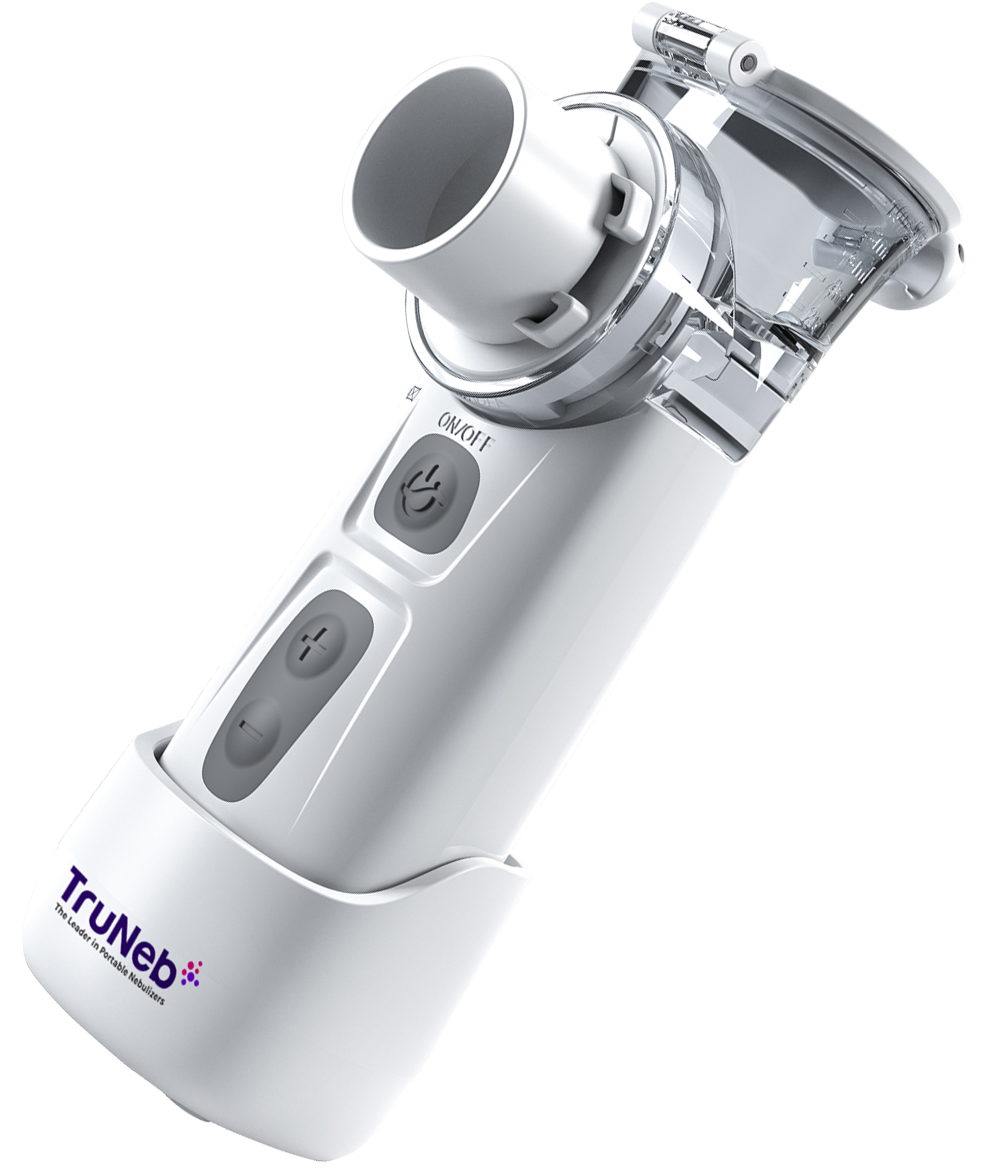
For example, a portable mesh nebulizer like the TruNeb™ Portable Mesh Nebulizer can deliver doctor-directed medications or saline to help loosen mucus and make breathing feel easier. Some doctors use 3% hypertonic saline or 7% hypertonic saline by nebulizer to support airway clearance when appropriate. This supports comfort as you heal and doesn't cure the infection. Only use hypertonic saline or nebulized prescription medications if your doctor prescribes them and explains how to use them safely. ⚠️ Devices labeled as steam inhalers or essential oil diffusers are not nebulizers and shouldn't be used to breathe in prescription medications.
Pneumonia usually needs medical treatment. Bacterial pneumonia is treated with antibiotics prescribed by a doctor. Some viral pneumonia can be managed at home with rest, fluids, and medicines for fever; flu-related cases can need antivirals if started early. Severe cases can need oxygen or fluids in the hospital. Fatigue can last for weeks as you recover.
Talk to your doctor before trying a new medication. Don't start or change prescription medications, including nebulized medications or hypertonic saline, unless your doctor tells you to.
Bottom line: bronchitis usually improves with home care; pneumonia needs a medical diagnosis and can require antibiotics.
When to See a Doctor and When to Go to the ER
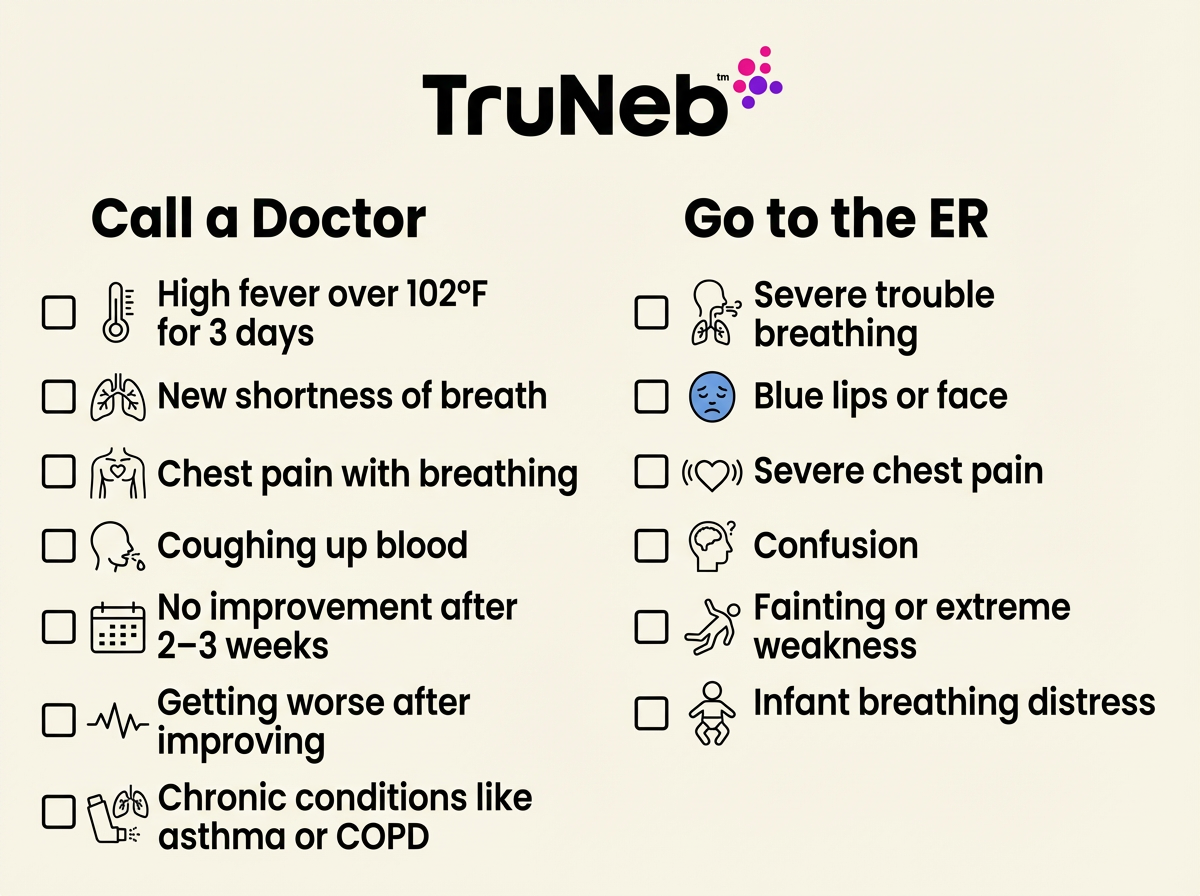
Use this checklist if you're worried your symptoms could be bronchitis or pneumonia.
Call your doctor if:
- Fever stays above 102°F for more than 3 days.
- You have new or worsening shortness of breath.
- You feel chest pain when you breathe or cough.
- You're 65 or older.
- Your baby or young child has these symptoms.
- You are coughing up blood.
- Symptoms aren't improving after 2 to 3 weeks.
- You get worse after starting to feel better.
- You have asthma, COPD, heart disease, diabetes, or a weak immune system.
⚠️ Go to the ER if:
- You have severe trouble breathing or you are breathing very fast.
- Your lips or face look blue.
- You have severe chest pain or pressure.
- You feel confused or are hard to wake up.
- You faint or feel extremely weak.
- For babies and young children: grunting, flaring nostrils, ribs pulling in, or not drinking.
If you're unsure whether your symptoms are bronchitis or pneumonia, it's safer to see a doctor or go to the ER than to wait.
FAQ: Bronchitis and Pneumonia – Common Questions
Tap or click a question below to see the answer:
Acute bronchitis usually lasts 1 to 3 weeks, and the cough can linger. With treatment, most people with pneumonia start feeling better in 1 to 2 weeks, but tiredness can last for several weeks.
Wash your hands, avoid touching your face, and stay home when you're sick. Don't smoke, and keep indoor air clean. Get a yearly flu shot, stay up to date on COVID-19 vaccines, and ask your doctor if you need a pneumococcal (pneumonia) vaccine. Managing conditions like asthma, COPD, diabetes, and heart disease lowers your risk of complications.
No. Most mild cases are treated at home under a doctor's care. Hospital care is needed if breathing is hard, oxygen is low, or the person is very ill or high risk.
Contagiousness depends on the germ. Viruses spread easily and can cause either illness. Some bacteria like Mycoplasma spread in close contact, while typical bacterial pneumonia spreads less easily.
They affect different parts of the lungs. A viral illness can start as bronchitis and then become pneumonia, so one can follow the other. If pneumonia develops, that becomes the main diagnosis.
Disclaimer: This article is for informational purposes only and isn't a substitute for professional medical advice, diagnosis, or treatment. Always talk with your doctor about your symptoms and before starting or changing any treatment.