

On this page
Bronchiolitis and Bronchitis: Key Differences at a Glance
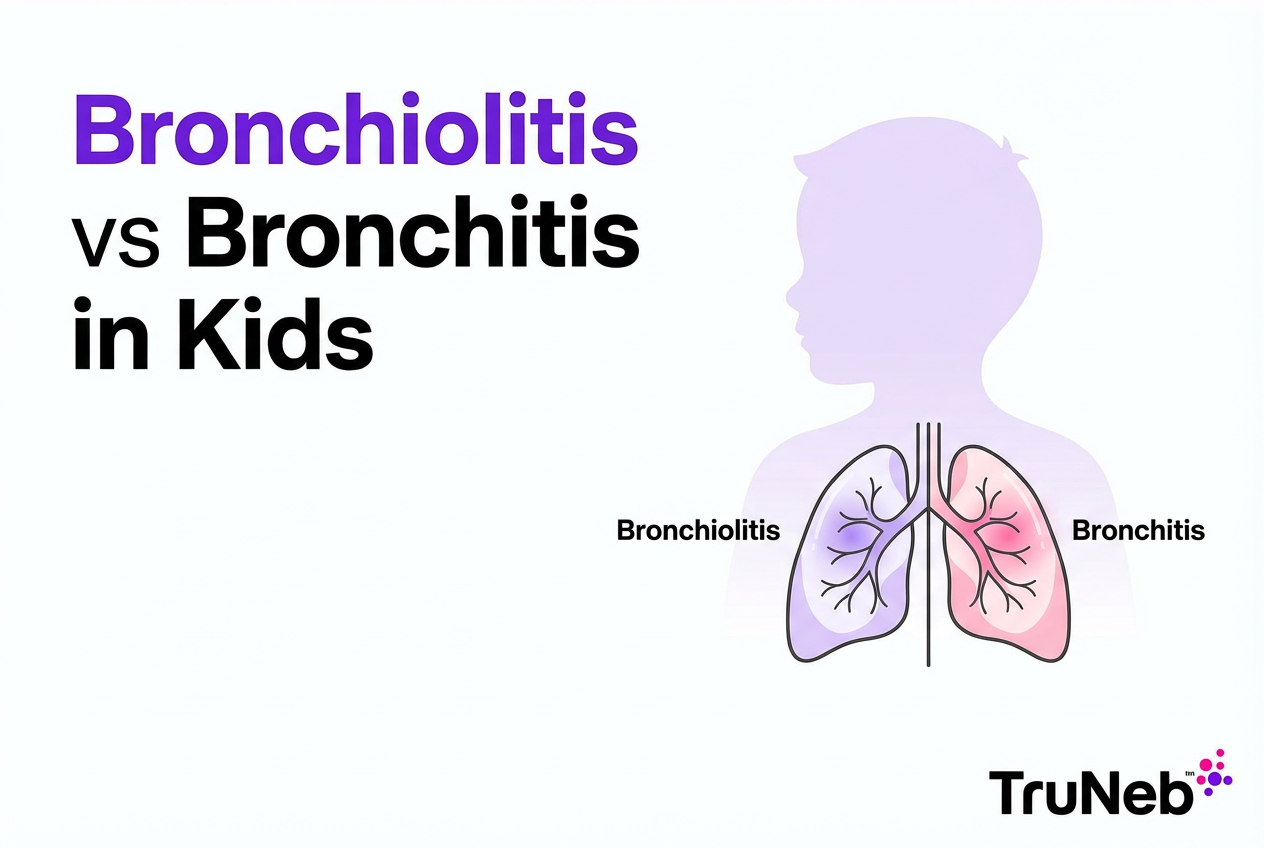
Bronchitis and bronchiolitis both affect the lungs, but they target different airways.
- Bronchitis inflames the bronchi, the larger breathing tubes that branch off the windpipe. It is common in older children and adults and usually feels like a chest cold with a nagging cough.
- Bronchiolitis inflames the bronchioles, the tiny breathing tubes deeper in the lungs. It mostly affects babies and toddlers and can cause wheezing and fast, hard breathing.
Think of a tree: the bronchi are big branches; the bronchioles are tiny twigs. Swelling in the twigs makes breathing much harder for infants. That’s why bronchiolitis in babies can be more serious than bronchitis in older children or adults.
Pneumonia is different. It infects the air sacs called alveoli, not just the airways. We compare all three next.
Takeaway: Bronchitis affects larger airways in older kids and adults; bronchiolitis affects tiny airways in infants.
Bronchiolitis vs Bronchitis vs Pneumonia: Understanding Each Lung Infection
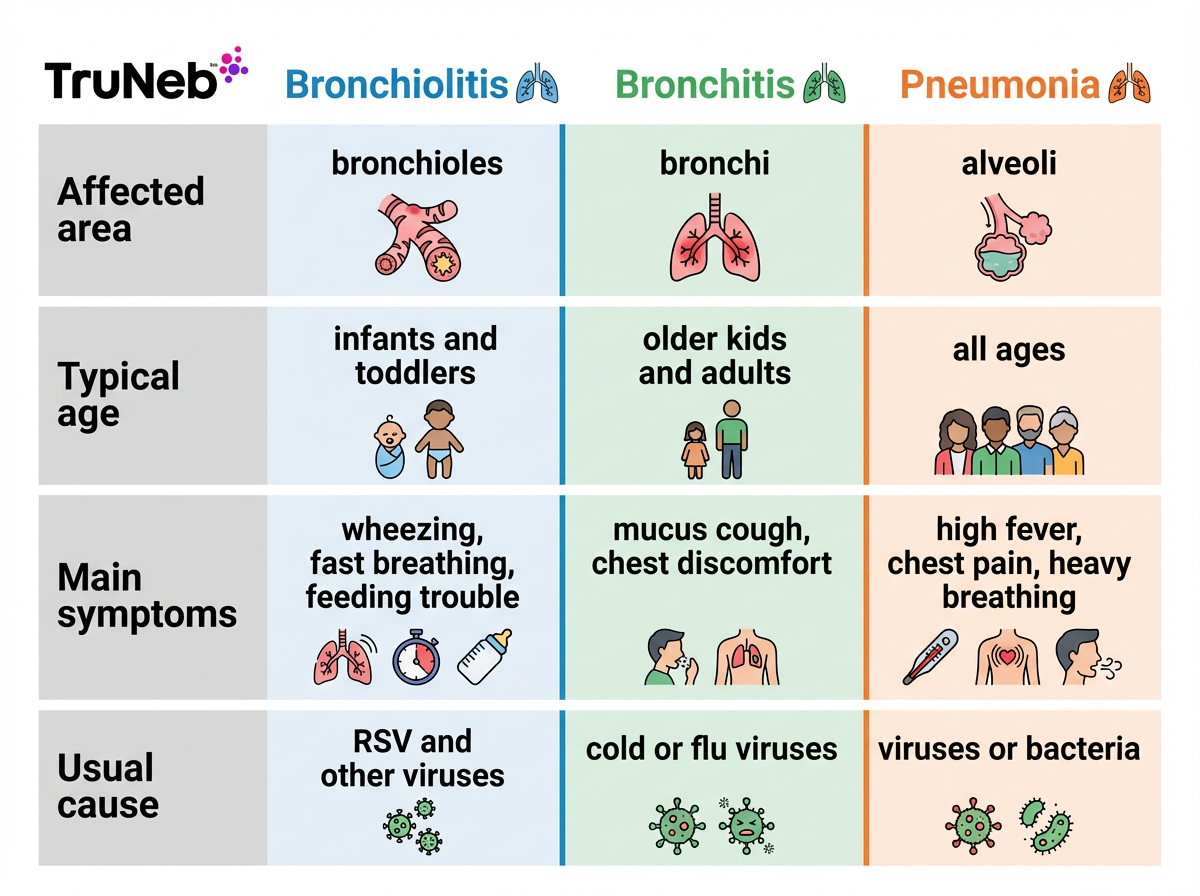
Bronchitis is inflammation of the bronchi, the large airways. It usually follows a cold. The main symptom is a persistent cough, usually with mucus, plus mild fever and chest discomfort. Most cases improve in one to three weeks.
Bronchiolitis is inflammation of the bronchioles, the small airways, mainly in infants and toddlers. It usually starts with a runny nose and low fever, then brings wheezing, fast breathing, and trouble feeding.
Pneumonia is an infection of the lung tissue and air sacs called alveoli. It can be viral or bacterial at any age. Compared with bronchitis or bronchiolitis, pneumonia commonly causes higher fever, chest pain, and more labored breathing. A chest X-ray can help confirm it, and doctors monitor oxygen levels closely. Because pneumonia affects the air sacs and can lower oxygen levels, doctors usually watch it more closely than a typical case of bronchitis or bronchiolitis.
All three can cause cough and fatigue, but where the infection lives is the key difference.
Takeaway: Bronchitis involves bronchi, bronchiolitis involves bronchioles, and pneumonia involves the alveoli.
Causes of Bronchiolitis vs Bronchitis and Why RSV Matters
Bronchiolitis is usually caused by viruses. In babies, respiratory syncytial virus, or RSV, is the most common cause. Many children catch RSV by age two. In older kids and adults, RSV typically looks like a bad cold or bronchitis rather than bronchiolitis.
Acute bronchitis is also usually viral, triggered by the same cold or flu viruses that spread through families. A few cases are bacterial. Chronic bronchitis is different. It comes from long-term irritants like cigarette smoke or polluted air and is not contagious. It’s a long-term condition, usually related to smoking or long-term lung irritation, not a short-term infection like acute bronchitis.
Risk factors overlap but aren’t identical, especially between infants and older children. Prematurity, daycare exposure, and secondhand smoke raise a baby’s risk of bronchiolitis. For bronchitis, smoke exposure, a recent cold or flu, and a weakened immune system raise risk.
Takeaway: RSV drives most bronchiolitis in infants, while acute bronchitis usually comes from common cold or flu viruses.
Signs and Symptoms: How to Tell Bronchiolitis from Bronchitis
Both illnesses can bring cough and fatigue, but their patterns differ by age and airway.
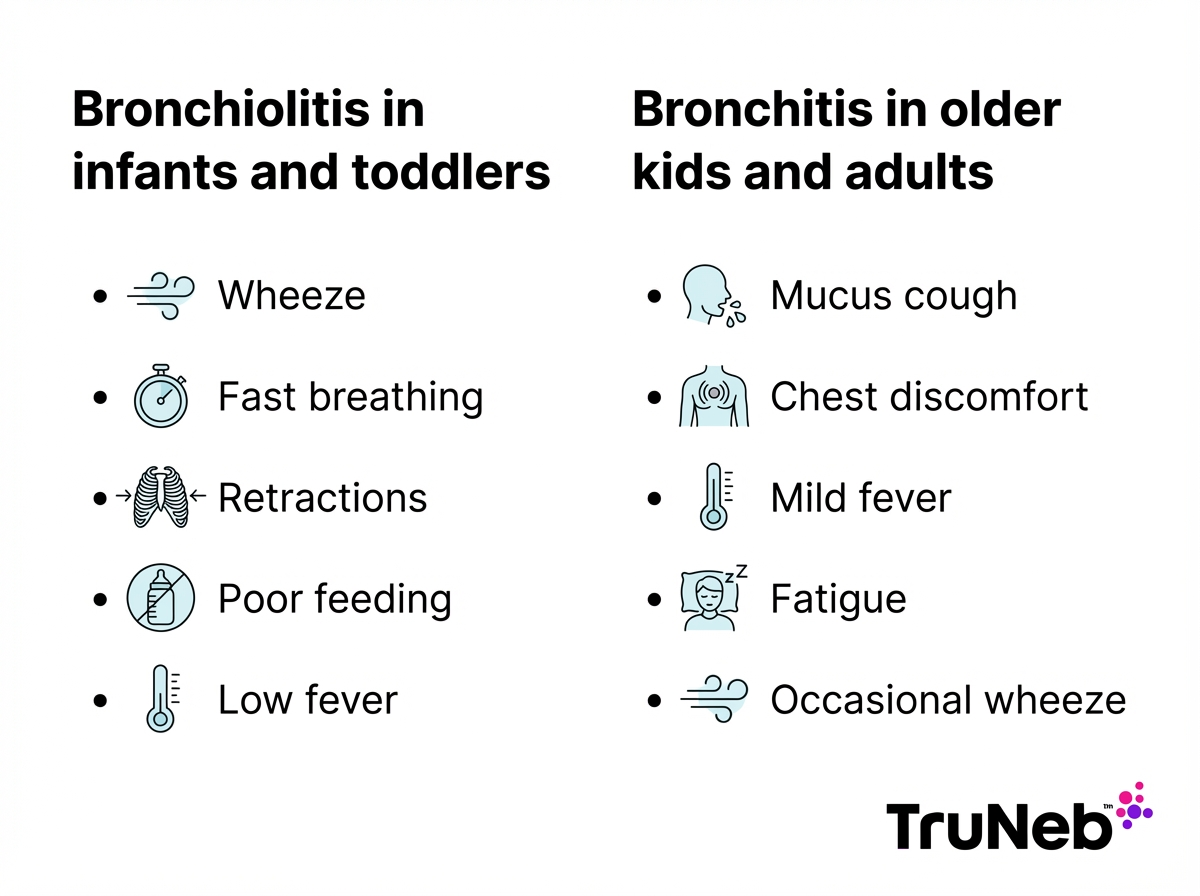
Bronchitis in older children and adults:
- Main symptom is a persistent cough, usually with mucus that can be yellow or green.
- Chest discomfort and tiredness are common.
- Fever is mild or absent.
- Wheezing can happen, especially with asthma, but breathing distress is usually mild.
Bronchiolitis in infants and toddlers:
- Starts like a cold with runny nose and low fever, then worsens over a few days.
- Wheezing and a raspy, tight-sounding cough are common.
- Fast breathing and hard work to breathe can develop. Look for nostrils flaring and skin between ribs pulling in.
- Babies can feed poorly and have fewer wet diapers.
Healthy adults rarely get true bronchiolitis. The same virus in an adult usually causes a cold or bronchitis instead. Bronchiolitis in babies usually worsens over the first three to four days before slowly improving.
Takeaway: Bronchiolitis in babies brings wheeze and fast, hard breathing; bronchitis in older patients brings a mucus cough and chest discomfort.
Red Flags: When to Seek Emergency Care
⚠️ If you see any of these signs, call 911 or go to the emergency room right away.
- Very fast breathing, pauses in breathing, grunting, or ribs pulling in with each breath.
- Blue or gray color on lips, face, or fingernails.
- Unable to drink or nurse, or no wet diaper for 12 hours.
- Unusual sleepiness, hard to wake, or a worsening high fever.
- For older kids or adults: coughing blood, chest pain, or shortness of breath at rest.
Call your pediatrician promptly if symptoms are not improving after a few days, if fever lasts more than five days, or if you are worried about breathing.
Takeaway: If you notice any of these red-flag symptoms, seek emergency medical care right away.
Treatment and Home Care: Managing Bronchiolitis vs Bronchitis
Most cases of bronchiolitis and acute bronchitis improve with supportive care at home.
Bronchitis in older children and adults:
- Rest and drinking plenty of fluids can help thin mucus.
- A cool-mist humidifier or a steamy bathroom can help ease cough.
- Use fever and pain relievers like acetaminophen or ibuprofen as directed.
- Inhalers or a nebulizer may be prescribed if wheezing is present, especially with asthma. Antibiotics are rarely needed because most cases are viral.
Bronchiolitis in infants and toddlers:
- Small, frequent feeds can help keep your baby hydrated.
- Use saline drops and gentle suction to clear the nose before feeds and sleep.
- Run a cool-mist humidifier in the room. Monitor breathing and temperature.
- In hospitals, some babies need oxygen or IV fluids.
Because bronchiolitis is usually caused by viruses, antibiotics don’t help with typical cases.
About inhaled treatments:
- Routine bronchodilators like albuterol do not help most bronchiolitis, but a doctor may try a supervised treatment to see if there is benefit.
- Some hospitals use nebulized 3 percent hypertonic saline (a salty water solution) to help clear mucus in moderate or severe bronchiolitis. Only use if a doctor recommends it.
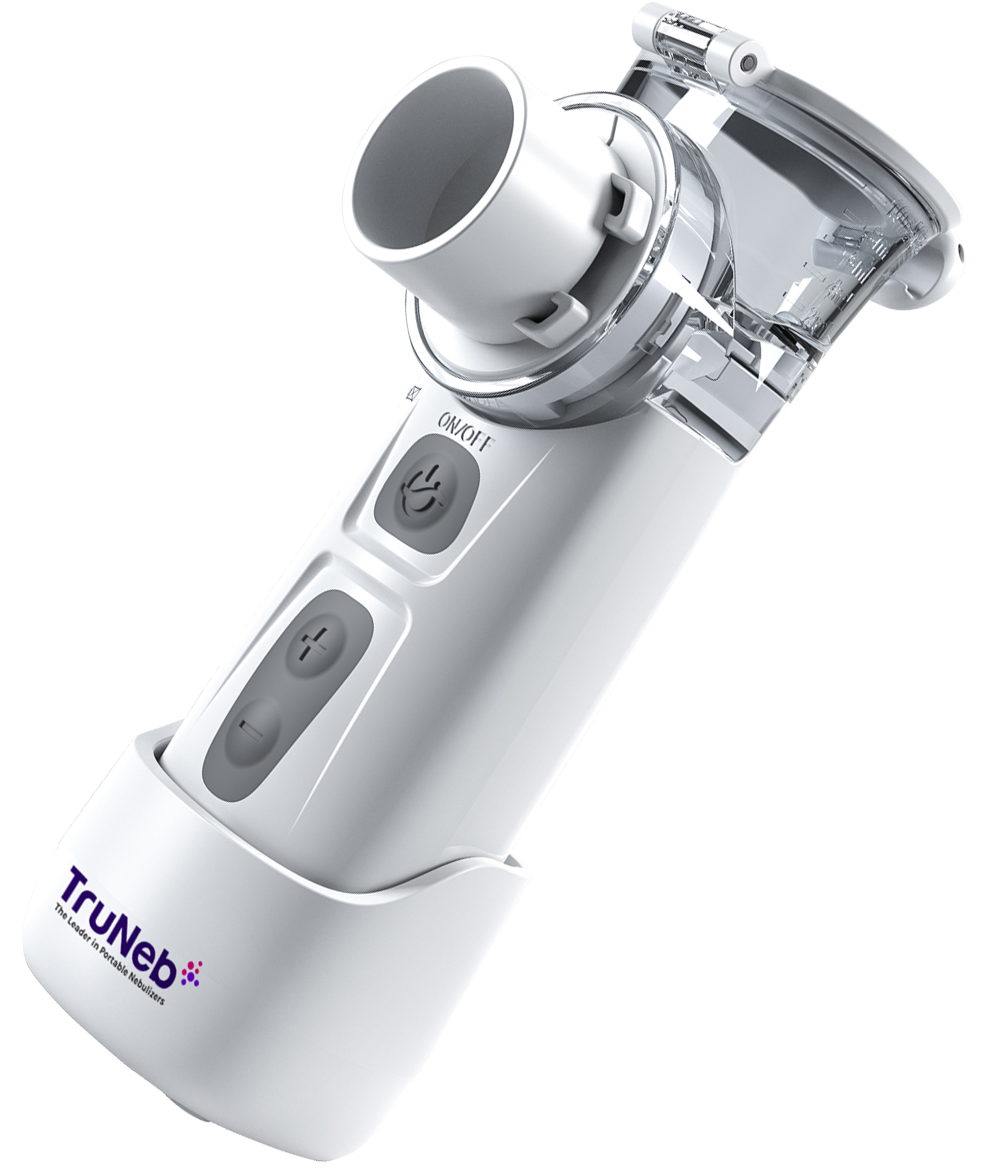
If your child is sent home with inhaled treatments, a quiet portable mesh nebulizer such as the TruNeb™ Portable Mesh Nebulizer can make breathing treatments easier for families on the go. If you’re browsing devices, remember that steam inhalers are not the same as nebulizers and shouldn’t be used to deliver prescription breathing medications.
Safety note: Talk to your doctor before trying a new medication or nebulized solution. Do not give cough or cold medicines to young children unless your doctor says it is safe.
Takeaway: Supportive care is first-line; use inhaled medicines or saline only if a doctor recommends them.
Is Bronchiolitis or Bronchitis Contagious? Prevention Tips for Parents
Yes. The viruses that cause bronchiolitis and most acute bronchitis spread like a common cold through coughs, sneezes, hands, and shared items.
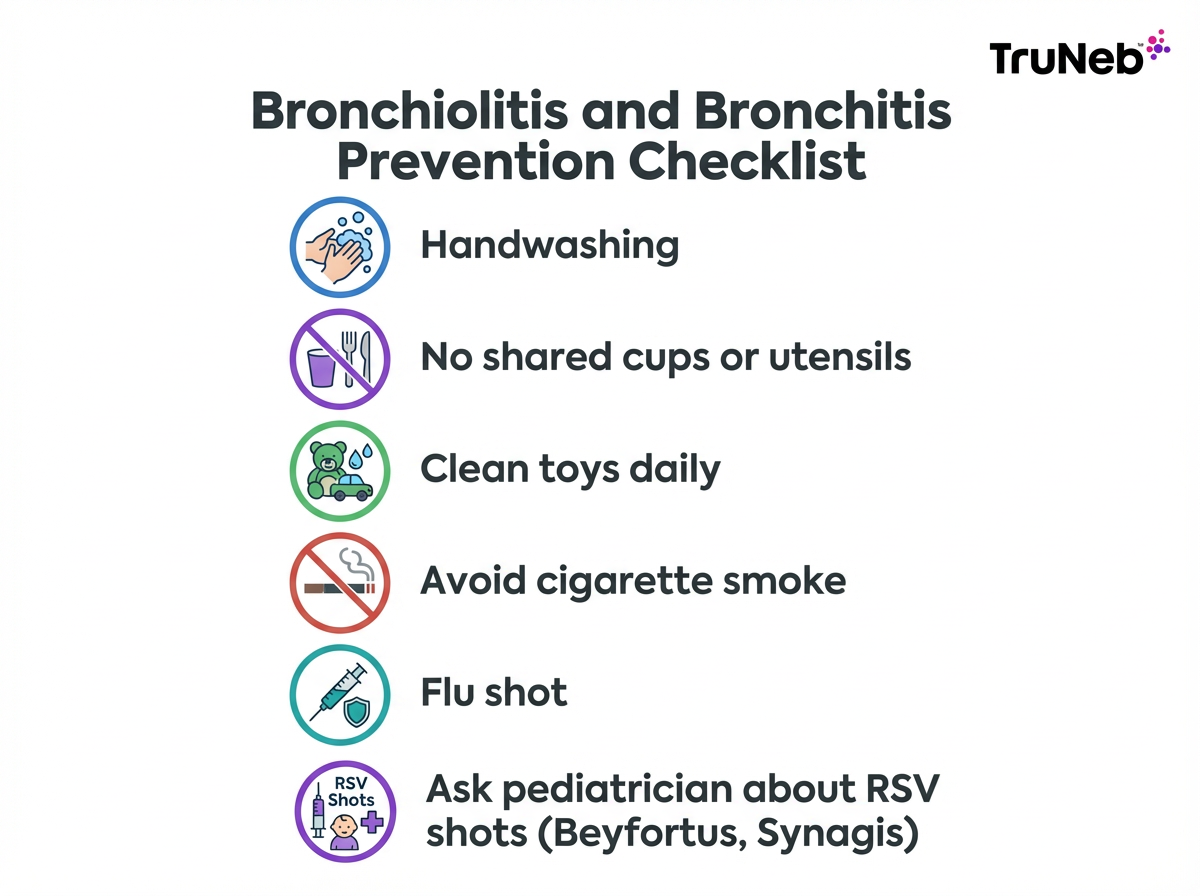
Prevention tips:
- Wash hands regularly and use sanitizer when soap and water are not available.
- Keep sick people away from young infants. Don't share cups or utensils.
- Clean toys and high-touch surfaces daily during illness.
- Avoid cigarette smoke around children. Smoke worsens symptoms and risk.
- Get recommended vaccines. Flu shots help prevent bronchitis from influenza. Ask your pediatrician about RSV protection including nirsevimab, also called Beyfortus, for infants in their first RSV season and palivizumab, also called Synagis, for certain high-risk babies.
Ask your child’s daycare about their return policy. Keep children home while feverish or if breathing is still hard.
Takeaway: Both illnesses spread like a cold; clean hands, avoid smoke and sick contacts, and ask about RSV protection for infants.
Frequently Asked Questions
Tap or click a question below to see the answer:
Bronchiolitis is mainly an illness of infants and toddlers. In healthy adults, the same viruses usually cause a cold or bronchitis instead.
No. RSV is a virus. Bronchiolitis is the small-airway illness RSV commonly causes in babies. Not every bronchiolitis case is RSV.
Bronchiolitis typically peaks around days three to four and improves by about a week, though cough and wheeze can linger. Acute bronchitis usually lasts one to three weeks, and the cough can hang on longer.
Acute bronchitis is usually viral and contagious while symptoms are active. Chronic bronchitis from smoking or pollution is not contagious.
Most bronchiolitis does not improve with bronchodilators, so nebulizers are not routine unless a doctor sees wheezing that might respond. For bronchitis, a nebulizer or inhaler can help if there is wheezing, especially with asthma.
Wait until your child is fever-free for 24 hours without medicine, breathing comfortably, and eating and drinking better. Ask your pediatrician and follow your daycare’s policy.
Disclaimer: This article is for informational purposes only and is not a substitute for professional medical advice, diagnosis, or treatment. Always talk to your doctor about your symptoms, concerns, and any treatments you’re considering.