

On this page

Best Supplements for Lung Health: What Actually Helps You Breathe Easier
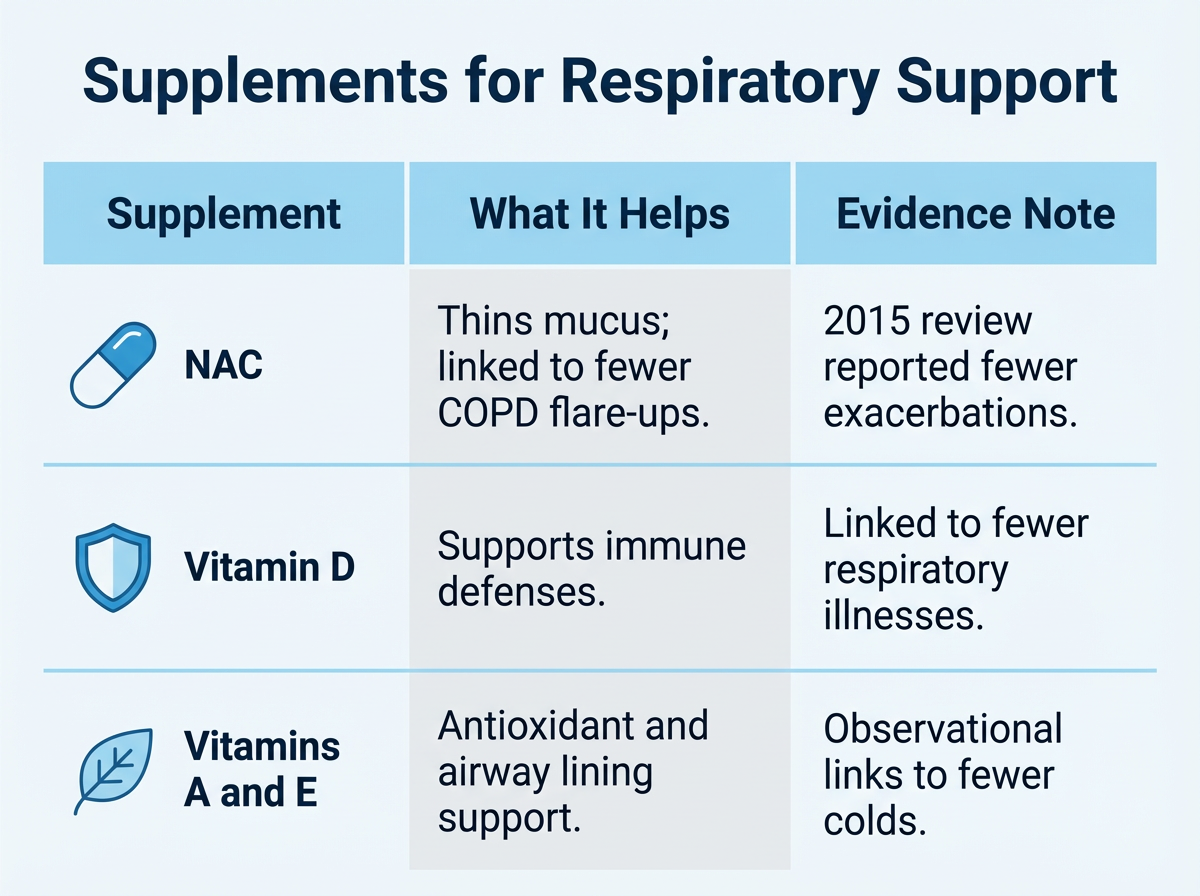
Some supplements can help your breathing. The strongest evidence points to NAC and vitamins A, D, and E. Most of the research is in people with lung conditions like COPD or chronic bronchitis. These can thin sticky mucus, calm airway irritation, and support your immune system so you get sick less.
Key takeaway: NAC and vitamins A, D, and E have the best support for lung health from current research.
Here’s a short list to discuss with your doctor:
- NAC for mucus thinning and fewer flare-ups
- Vitamin D for immune support in your airways
- Vitamins A and E for antioxidant and barrier support
Use supplements to support your plan, not replace your inhalers or prescribed treatments. Check with your doctor before adding any new medication or supplement.
We’ll cover simple daily habits that make supplements work better later in this guide.
Key takeaway: NAC and vitamins A, D, and E are the most-studied options for lung support; evidence is strongest for NAC in COPD/chronic bronchitis and for vitamin D when levels are low.Quick comparison: top lung-support supplements
| Supplement | What it helps | Best suited for | Evidence notes | Safety notes |
|---|---|---|---|---|
| NAC | Thins sticky mucus | People with COPD or chronic bronchitis | Reviews link regular NAC to fewer exacerbations | Can interact with medicines; get doctor guidance |
| Vitamin D | Supports airway immune defenses | People with low vitamin D levels | Linked to fewer respiratory illnesses; most helpful when deficient | Blood test can guide dose |
| Vitamin A | Maintains airway lining | People with low dietary intake | Observational links to fewer respiratory infections | Fat-soluble; avoid high doses unless advised |
| Vitamin E | Antioxidant protection in lungs | People with low dietary intake | Observational links to fewer respiratory infections | Fat-soluble; avoid high doses unless advised |
This table is informational and not a treatment plan. Ask your doctor what’s right for you.
NAC Thins Sticky Mucus and Can Help Reduce Flare-Ups
N-acetylcysteine (NAC) is an antioxidant and mucolytic supplement that helps break up thick, sticky mucus so it’s easier to cough out. It is commonly used for chronic lung conditions where mucus buildup is a problem. A 2015 review found fewer COPD or chronic bronchitis exacerbations with regular NAC use.
Key takeaway: NAC helps loosen mucus and is linked to fewer flare-ups in people with chronic lung conditions.
How NAC supports your lungs:
- Loosens mucus so airways open up
- Reduces oxidative stress in the lungs
- In studies, NAC was linked to fewer flare-ups in people with COPD or chronic bronchitis
What to ask your doctor:
- If NAC is safe with your current medicines
- How much to take and how frequently
Safety note: NAC can interact with some medicines and isn’t right for everyone. Check with your doctor before adding NAC.
Vitamin D Supports Immune Defenses In Airways
Vitamin D supports immune cells that protect your airways. Research has linked adequate vitamin D to fewer respiratory illnesses. Supplements are most helpful if your levels are low; a blood test can check this. If you tend to get sick a lot, check your vitamin D level and discuss a plan with your doctor.
Key takeaway: Adequate vitamin D is linked to fewer respiratory illnesses.
Smart tips:
- Don’t take high doses on your own
- Ask about a blood test to guide the right intake
- Pair with time outdoors, handwashing, and good sleep
Safety note: Vitamins can interact with medicines and health conditions. Ask your doctor whether vitamin D is right for you.
Vitamins A And E Protect Airways From Oxidative Stress
Vitamin A supports the lining of your airways. Vitamin E acts as an antioxidant that helps protect lung tissue from daily wear and tear. Together, they can support you during cold and flu season. Studies link higher intakes of vitamins A and E with fewer respiratory infections, but they don’t prove that taking extra will prevent illness.
Key takeaway: Vitamins A and E help protect the airway lining and reduce oxidative stress in your lungs.
Keep it safe:
- These are fat soluble and can build up
- Stay within recommended daily amounts unless your doctor advises otherwise
- Get some intake from food like leafy greens, orange vegetables, nuts, and seeds
Safety note: Talk to your doctor before trying a new supplement, especially higher-dose vitamin A or E.
Simple Habits That Boost Any Supplement
Supplements work best when the basics are in place.
Key takeaway: Staying hydrated and moving your body regularly can help your lung supplements work better.
Do the small things that help you breathe easier:
- Hydrate so mucus stays thin and moves more easily
- Try to walk most days to build stamina and lung efficiency
- If your doctor has shown you huff coughing, keep practicing it to clear your chest gently
- Keep your vaccinations current to reduce infections that trigger flares
Safety note: Call your doctor if your cough worsens or your breathing changes suddenly. ⚠️ If you have severe trouble breathing, chest pain, blue lips or face, or feel very confused, call 911 or seek emergency care right away.
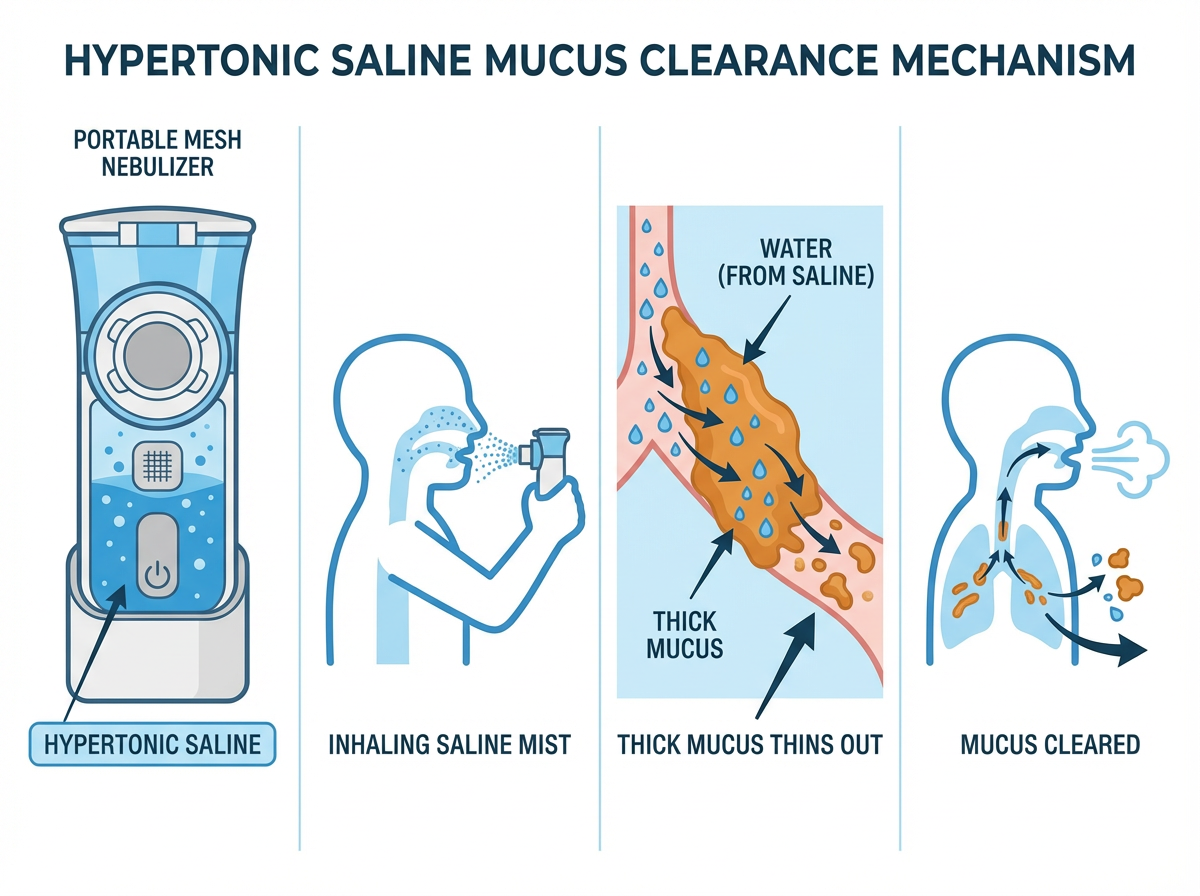
Non-Supplement Helper: Hypertonic Saline With a Portable Nebulizer
Supplements help from the inside. For thick chest mucus, inhaled hypertonic saline can help from the outside. The salty mist draws water into mucus so it thins and moves. Hypertonic saline is usually prescribed for people with lung conditions where thick mucus is a problem.
Key takeaway: Nebulized hypertonic saline can thin mucus so you can clear your chest more easily.
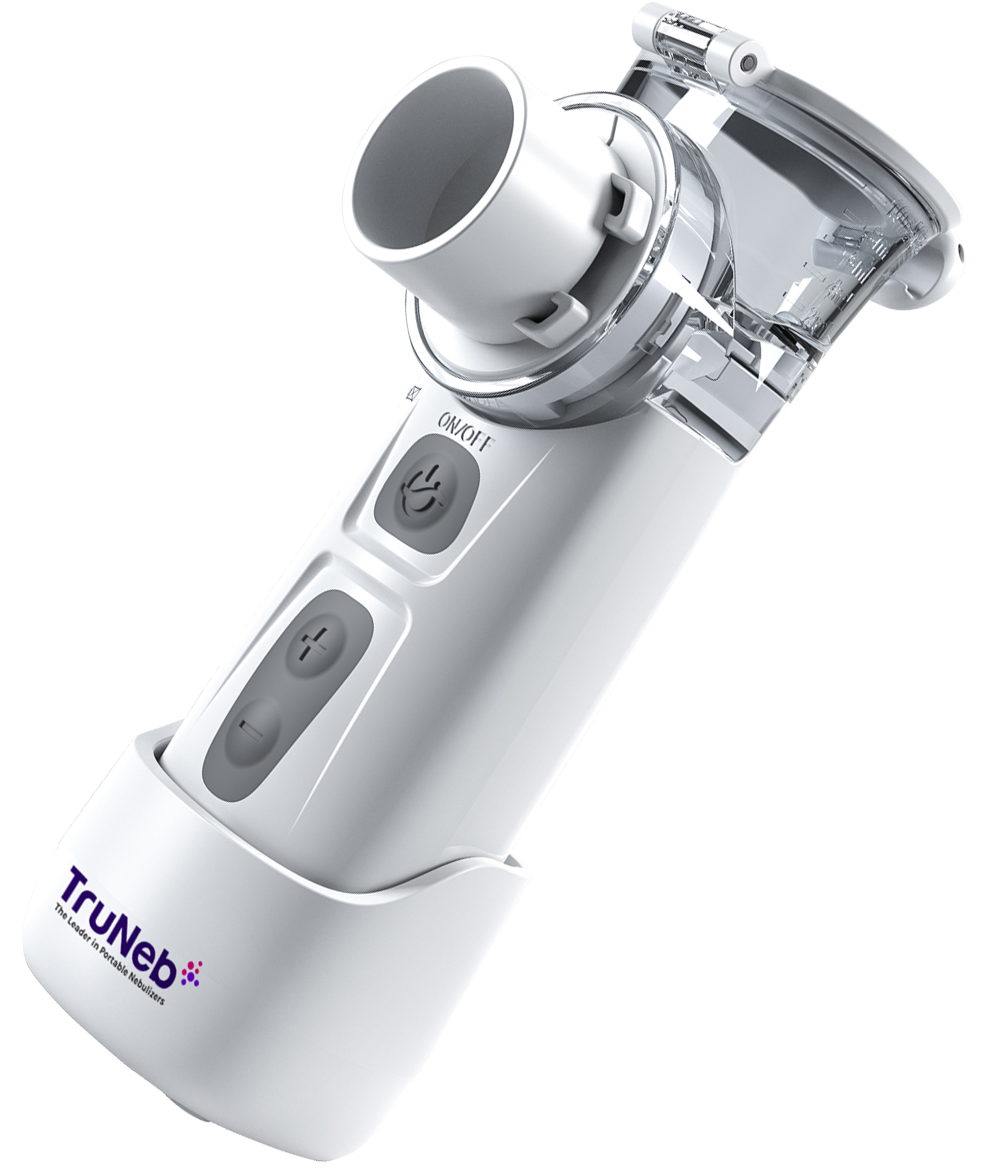
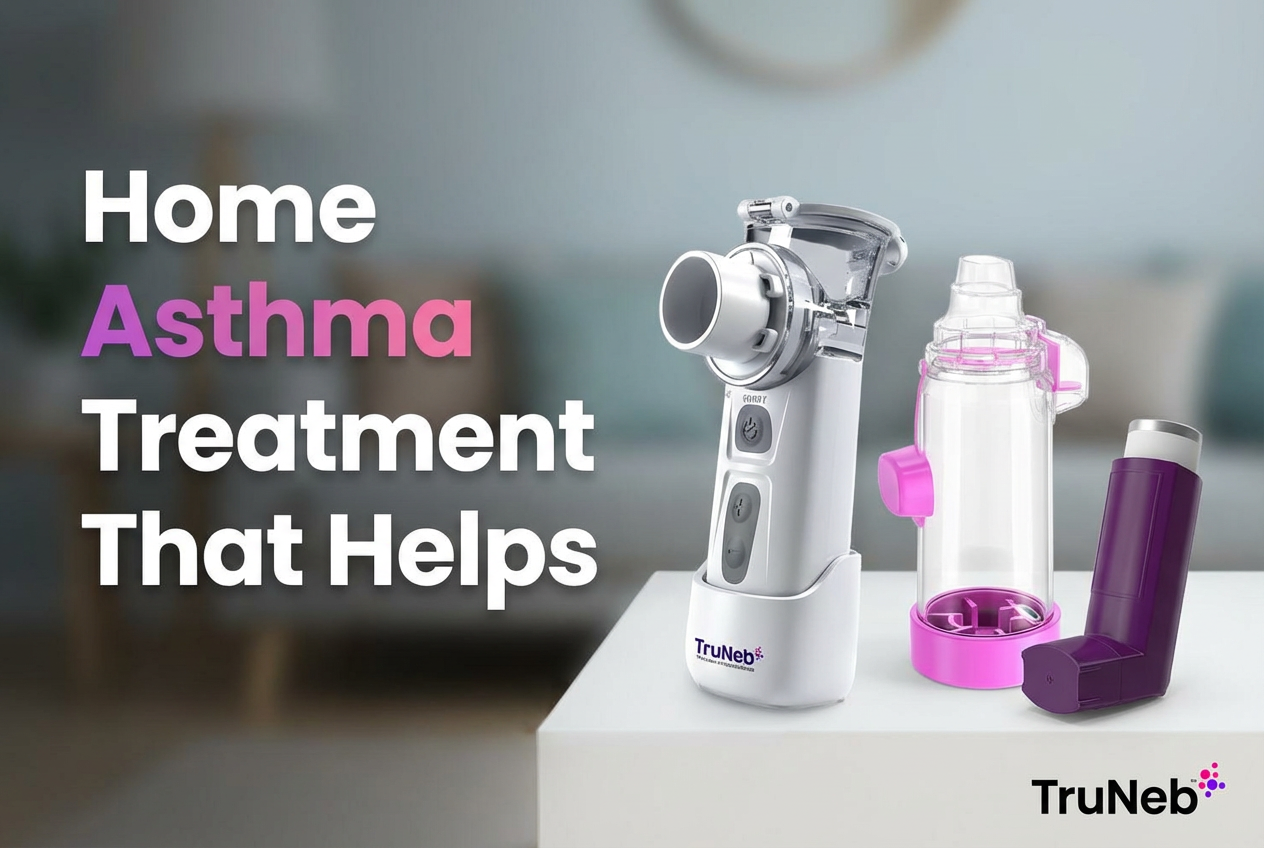
The TruNeb™ portable mesh nebulizer turns saline into a fine mist you can breathe in. It is small, quiet, and easy to carry, so you can keep treatments on schedule at home or while traveling.
Consumer note: You might see "steam inhalers" in stores, but these are not nebulizers. They provide warm moisture only and aren't for breathing medications.
Safety note:
- Use only the saline strength your doctor prescribes
- Do not mix your own saline unless your care team teaches you how
- Talk to your doctor before trying a new medication
Safety Smart Supplement Use
Start simple and stay safe. Supplements can help, but they are not a cure.
Key takeaway: Check dosing and interactions with your doctor before you start.
Before you add anything new:
- Talk to your doctor to check dosing and interactions
- Be extra cautious if you are pregnant, breastfeeding, or caring for a child
- Share all medicines and vitamins you take so your doctor can spot conflicts
- Stop and call your doctor if you notice a rash, stomach pain, or your breathing gets worse
- ⚠️ If you have severe trouble breathing, chest pain, blue lips or face, or feel very confused, call 911 or seek emergency care right away.
Frequently Asked Questions
Tap or click a question below to see the answer. This FAQ answers common questions about NAC, vitamins A, D, and E, and other tools that support lung health.
NAC is one of the best-studied supplements for thinning mucus. Vitamins A, D, and E support immune and antioxidant defenses. None replace your prescribed medicines.
Some studies used daily NAC, but what’s safe for you depends on your conditions and medicines. Ask your doctor about the right dose and how long to try it.
Vitamin D is linked to fewer respiratory illnesses, especially if your level is low. Vitamins A and E help protect the airway lining and against oxidative stress.
Some people notice thinner mucus or fewer sick days in a few weeks. Results vary. Stick with your treatment plan and follow up with your doctor.
A lot of people do, but interactions can happen. Bring all your meds and supplements to your next appointment to confirm safety.
Supplements are swallowed. A nebulizer delivers inhaled liquids like saline or prescribed medicines. If you already use one, a portable mesh model such as TruNeb can make treatments easier to keep on schedule.
Use only products and strengths your doctor recommends. Don’t mix your own saline unless you’ve been trained to do it safely.
Disclaimer: This article is for informational purposes only and is not a substitute for professional medical advice, diagnosis, or treatment. Always talk to your doctor about your symptoms, supplements, and treatments.