

On this page
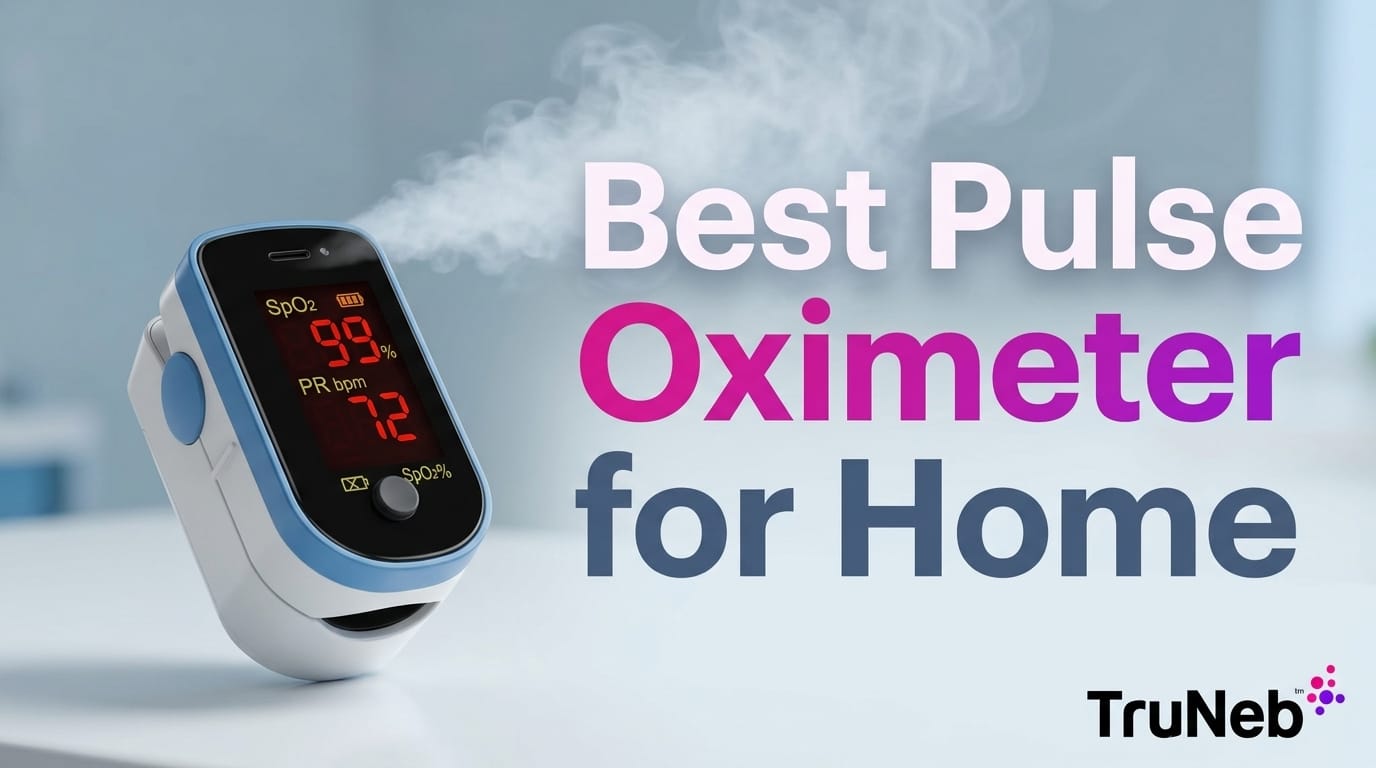
Pulse Oximeter Basics: How It Works and Why People Use It at Home
Rule of thumb: A fingertip pulse oximeter estimates your blood oxygen (SpO2) and pulse in seconds.
A pulse oximeter is a small fingertip device that shines light through your finger to estimate your blood oxygen level (SpO2) and your pulse. It’s painless and gives numbers fast, usually within 5–10 seconds. For most people, a simple fingertip pulse oximeter is the best pulse oximeter for home use for quick spot checks. You may also hear it called a blood oxygen monitor.
A lot of people keep one at home to spot drops in oxygen during illness or flare-ups of lung or heart conditions. It can feel more reassuring during recovery, but it’s one part of the picture, not the whole story.
Understanding Your Readings: Normal, Low, and When to Act
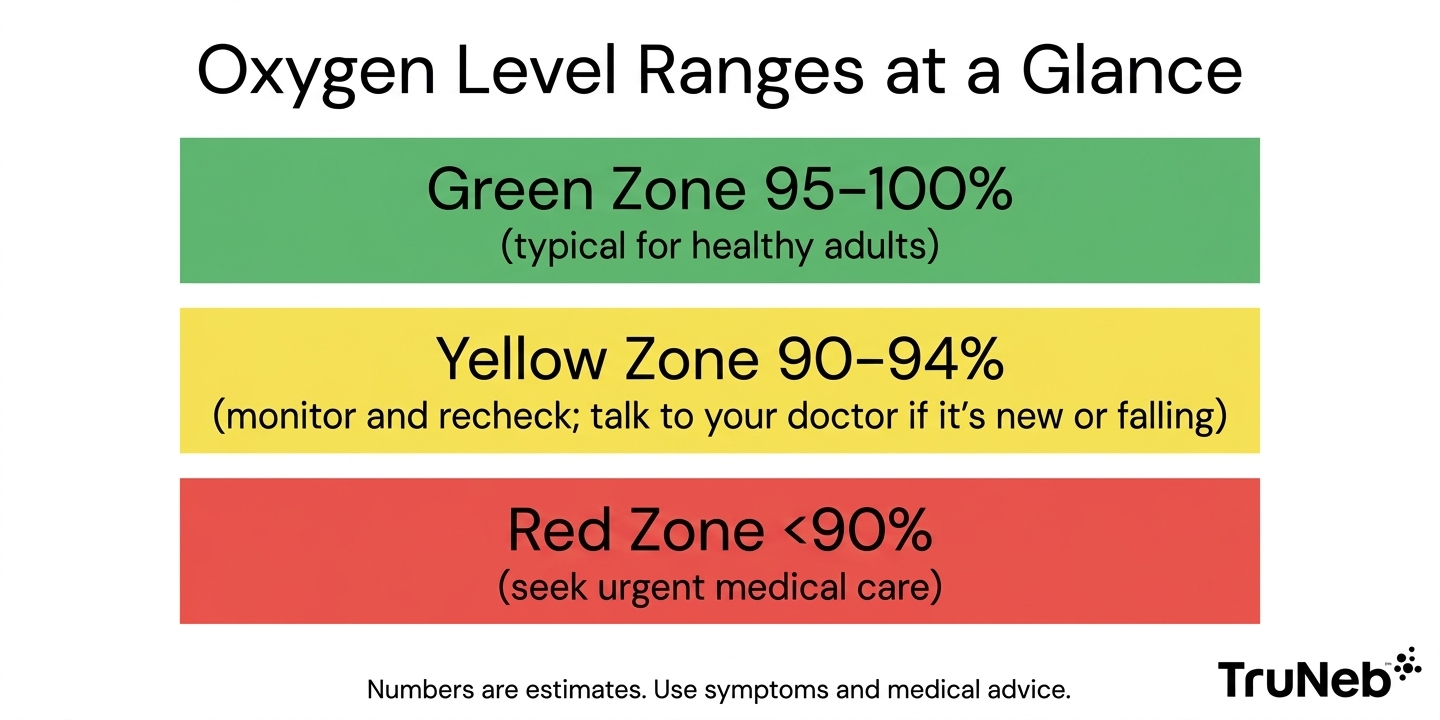
Most healthy adults rest around 95% to 100% SpO2. Some people sit a little lower and feel fine, especially at higher altitude or with certain chronic lung conditions.
Readings below 90% are usually considered low (hypoxemia) and should be taken seriously. If your reading is in the low 90s and falling, or you also feel short of breath, dizzy, or confused, don’t wait—seek care.
Watch your trend over time. A steady drop from your normal (for example 98% down to 93% for a day or two) matters even if 93% may look acceptable on its own. Always pair the number with how you feel. For a deeper breakdown, see our pulse oximeter readings chart and guide to normal oxygen during sleep.
⚠️ Seek emergency care right away if your oxygen reading is under 90%, or if you have severe shortness of breath, chest pain, confusion, or blue lips or fingertips.
Remember, a pulse oximeter estimates oxygen saturation; it isn’t the same as an arterial blood gas test.
Quick Tips for Accurate Readings
Warm, still hands and steady placement make the biggest difference in accuracy.
- Sit and keep still. Rest your hand at heart level and avoid talking or moving while the device reads.
- Warm your hands. Cold fingers can read low; rub them or warm with water, then dry.
- Remove dark nail polish or thick artificial nails. They can block the sensor.
- Fit and placement. Slide the finger fully into the clip so the sensor sits over the fingertip.
- Let it settle. Wait a few seconds until the number stops bouncing before you note it.
- Block bright light. Shade the device from direct sun or strong lamps.
Note on skin tone: The FDA reports pulse oximeters may overestimate oxygen in darker skin at low levels. That means the number can look a little higher than the true oxygen level. If a borderline reading concerns you, recheck and lean toward caution.
FDA‑Cleared vs Over‑the‑Counter: What You Actually Need
FDA 510(k)‑cleared oximeters are validated medical devices; good OTC models can be useful for home spot checks.
FDA‑cleared pulse oximeters (510(k)‑cleared) are medical devices reviewed for accuracy and reliability. They’re common in hospitals and cost more.
Over‑the‑counter models are sold for general wellness and can be accurate for everyday checks at home when used correctly.
If you’re tracking a serious condition where exact precision could guide care, an FDA‑cleared unit can feel more reassuring. For most home users, a reputable OTC device is usually enough when you follow best practices.
Key Features to Look For in a Home Pulse Oximeter
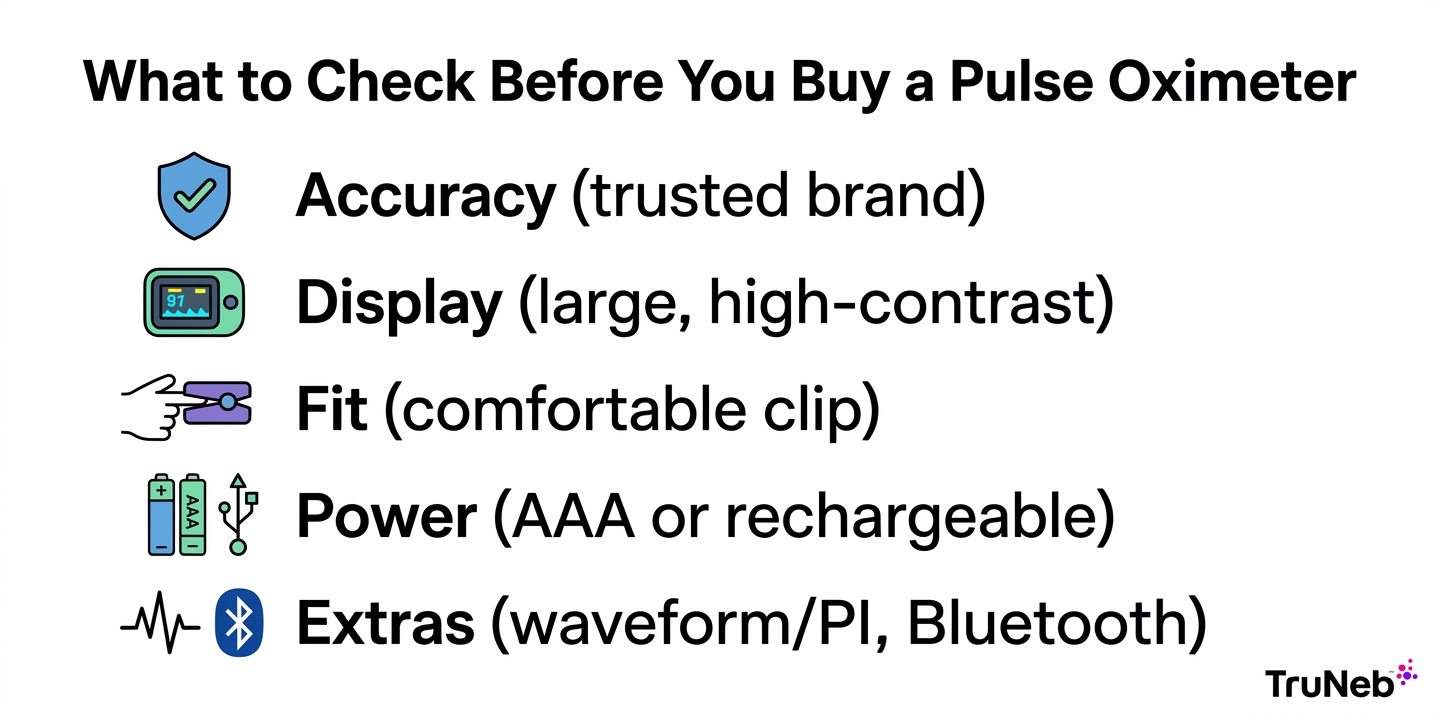
The best home pulse oximeter is one that gives consistent readings, fits comfortably, and has a display you can read easily.
Choose for accuracy first, then a screen you can read and a fit you’ll use every day. Reputable brands that test well tend to give readings within a few percentage points in the 90–100% range.
A clear display matters. Bright, high‑contrast screens with large digits are easier to read for older eyes. Comfort and fit help you use it more; clips should be snug, not painful.
Battery style affects convenience: AAA batteries are simple to replace; some premium models are rechargeable. Extras like a pulse bar, a waveform, or a perfusion index help you judge signal quality. Bluetooth and an app can log trends over time if you like to track and share data.
For children: standard fingertip devices may not fit small fingers well—look for a pediatric pulse oximeter or ask your doctor.
For overnight monitoring: fingertip spot‑check devices aren’t ideal; continuous monitors designed and cleared for overnight use are different products.
You might see smartwatches and fitness trackers that estimate oxygen, but they’re not the same as a fingertip pulse oximeter for reliable home spot checks.
Top Pulse Oximeters for Home Use in 2026
The right pulse oximeter depends on whether you care most about medical‑grade accuracy, price, or app‑based tracking.
| Model | FDA-cleared | Key features | App/Tracking | Typical price band | Best for |
|---|---|---|---|---|---|
| Nonin Onyx Vantage 9590 | Yes | Auto on, bright display, durable build | No | $$$ | Highest confidence in accuracy at home |
| Innovo Deluxe iP900AP | No | Waveform & perfusion index, rotating screen | No | $$ | Everyday spot checks with signal quality aids |
| Zacurate Pro Series 500DL | No | Simple display, one-button use | No | $ | Occasional “just in case” readings on a budget |
| Masimo MightySat Rx | Yes | Signal quality tools, extra metrics | Bluetooth app | $$$$ | Data tracking and easy sharing with your doctor |
Price bands are approximate and vary by retailer. Spot-check fingertip devices aren’t intended for continuous overnight monitoring.
Nonin Onyx Vantage 9590: Most Accurate Medical‑Grade
Why it stands out: Nonin is widely used in medical settings, and the Onyx 9590 is FDA‑cleared. It’s widely cited for consistent readings and solid build quality. For people seeking the most accurate pulse oximeter feel at home, this model is often mentioned.
Who it’s for: People who track serious respiratory or cardiac conditions at home sometimes prefer higher‑accuracy models.
Considerations: It costs more and skips extras like Bluetooth. You’re prioritizing accuracy and durability over add‑ons.
Innovo Deluxe iP900AP: Best Overall for Home Use
Why it stands out: It reads quickly in the normal range and adds a waveform and perfusion index so you can confirm a steady signal. The screen rotates for easy viewing, and the large digits are easy to read. Accessories like a case and lanyard are often included.
Who it’s for: Most people who want a simple tool for everyday checks at home during illness or recovery.
Considerations: No app or alarms, and it isn’t FDA‑cleared, but its signal‑quality features can help you spot a clean reading for home use.
Zacurate Pro Series 500DL: Best Budget Pick
Why it stands out: It covers the essentials—SpO2 and pulse—clearly and quickly. The bright LED is easy to read indoors, and the one‑button design keeps it simple.
Who it’s for: Anyone who wants an affordable “just in case” oximeter for the medicine cabinet or travel bag.
Considerations: No waveform or app, and like most low‑cost units, it can be less precise at very low oxygen levels. For occasional home spot checks, it’s a reasonable choice.
Masimo MightySat Rx: Best Premium Pick With App Tracking
Why it stands out: Masimo technology is used in hospital monitors. MightySat Rx is FDA‑cleared, adds Bluetooth so you can log trends on your phone, and shows helpful signal‑quality tools with extra metrics.
Who it’s for: Data‑focused users and anyone who wants medical‑grade accuracy plus easy sharing of readings with a doctor.
Considerations: It’s the most expensive option here, and the app adds complexity some users may not need.
Making Your Choice – Which Pulse Oximeter Is Right for You?
Choose based on your real use case, not just price, because different devices fit different health and monitoring needs.
- Want medical‑grade confidence? Nonin Onyx 9590 is a higher‑accuracy pick, at a higher price.
- Want everyday checks with a clear screen? Innovo Deluxe iP900AP fits most home spot‑check needs.
- On a tight budget for occasional use? Zacurate 500DL covers the basics.
- Want app logging and sharing? Masimo MightySat Rx adds Bluetooth and advanced metrics.
- Shopping for a child? Standard fingertip units may not fit; consider a pediatric pulse oximeter or ask your doctor.
- Need overnight monitoring? Fingertip spot‑check devices aren’t designed for continuous overnight use.
Know your personal baseline when you feel well, then watch for real changes.
Use Your Readings in a Home Care Plan
A pulse oximeter can help you track oxygen and pulse during illness, recovery, or flare‑ups.
Trends can matter: a gradual drop from your usual numbers over a day or two can be an early warning to contact your doctor.
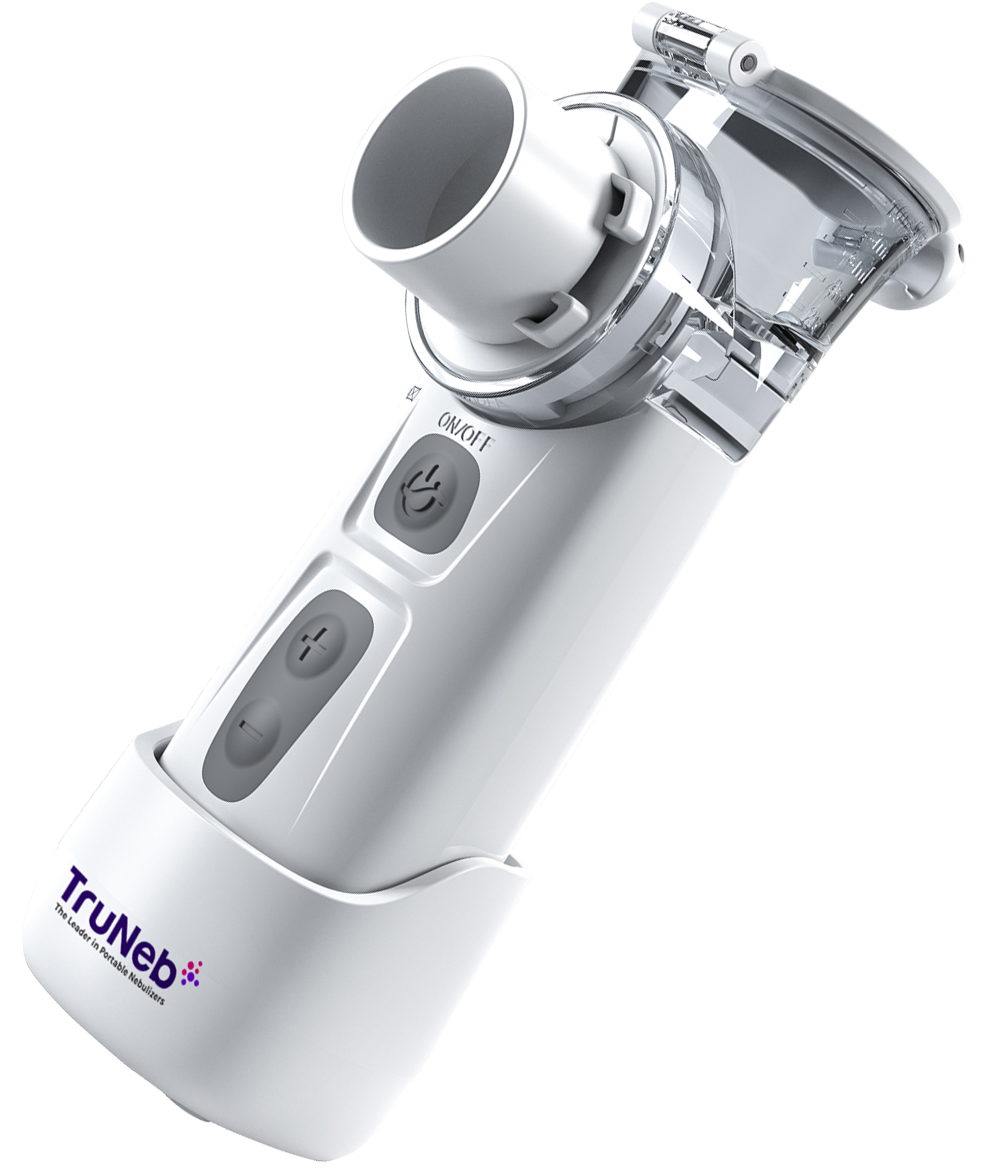
Your doctor may recommend using pulse oximeter readings as part of a home action plan. Some people use a pulse oximeter alongside inhalers or a portable mesh nebulizer like TruNeb portable mesh nebulizer as part of a doctor‑guided home routine.
If your symptoms are getting worse or your numbers are dropping, contact your doctor. A rise or stabilization after prescribed treatment can suggest it helped, but symptoms still matter.
Safety note: Talk to your doctor before trying a new medication or changing how you use your treatments. Don’t rely on the device alone if you feel very unwell—get medical help even if the number looks okay.
A pulse oximeter works best as one part of a doctor‑guided home care plan, not as a stand‑alone decision tool. If you also manage symptoms with inhaled treatment at home, our guides on nebulizer vs inhaler differences, how to use a nebulizer, ways to increase blood oxygen, and TruNeb device features may help you build a more practical routine.
Frequently Asked Questions
These quick answers cover the most common questions people have about home pulse oximeters. Tap or click a question below to see the answer:
Most healthy adults rest around 95%–100% SpO2. Below 90% is low and needs urgent care, especially with symptoms. Ask your doctor what range is right for you, especially at higher altitude or with chronic lung disease.
Use a warm finger with good blood flow—the middle or index finger usually works. Keep your hand still at heart level until the number settles.
Quality home units are usually within a few percentage points in the 90%–100% range. Accuracy drops at very low levels and can be affected by cold hands, motion, nail polish, or bright light.
Most people do fine with a reputable OTC model for spot checks. If you want higher confidence to track a serious condition, an FDA‑cleared device can be worth it—ask your doctor.
No. It can flag low oxygen, which is serious, but it can’t diagnose illness. If you feel sick or your oxygen drops, follow your doctor’s advice.
Movement, cold fingers, nail polish, bright light, a low battery, or a loose fit can cause bouncing numbers. Warm up, fit the clip fully, keep still, and wait a few seconds.
Disclaimer: This article is for informational purposes only and is not a substitute for medical advice. Talk to your doctor about symptoms, oxygen readings, and treatment decisions.