

On this page

How Diet Influences Asthma: Why Food Choices Matter
There’s no magic asthma diet. The best diet for asthma is a pattern that lowers inflammation and supports a healthy weight.
A simple place to start is a Mediterranean-style pattern: lots of fruits and vegetables, whole grains, beans, nuts, seeds, olive oil, and fish. These foods are rich in antioxidants and healthy fats that can help calm airway inflammation.
Weight matters too. Extra weight can make breathing harder and worsen symptoms. Eating balanced meals and watching portions can help you move toward a weight that supports easier breathing. Even modest weight loss can improve asthma control for people who are overweight.
Vitamin D also plays a role. Lots of people don’t get enough, especially if you spend little time in the sun. Foods like salmon, eggs, and fortified milk or plant milks can help you meet your needs.
Think of food as part of your asthma toolbox. It won’t replace your inhaler, but it can make day-to-day control easier.
Takeaway: There’s no diet that cures asthma, but a plant-forward, Mediterranean-style eating pattern can help reduce airway inflammation.
Best Foods for Asthma Relief and Lung Health
Start with these foods and why they help:
These are some of the best foods for asthma.
- High-antioxidant fruits and vegetables
- Berries, citrus, apples, tomatoes, bell peppers, leafy greens.
- Antioxidants like vitamin C, vitamin E, and carotenoids help counter oxidative stress in the airways.
- Omega-3 rich foods
- Salmon, sardines, mackerel, trout, walnuts, chia, flaxseed.
- Omega-3 fats can help reduce inflammation in and around the airways.
- Vitamin D sources
- Fatty fish (salmon, mackerel), eggs, fortified milk or plant milks.
- Adequate vitamin D can support a healthy immune response and asthma control.
- Probiotic and high-fiber foods
- Yogurt or kefir, sauerkraut, kimchi for probiotics; oats, beans, lentils, brown rice, and vegetables for fiber.
- A healthy gut can help regulate immune responses linked to asthma. Fiber-rich foods like oats, beans, and whole grains also provide magnesium that helps muscles around the airways relax.
- Hydration and helpful drinks
- Water keeps mucus thinner.
- Warm herbal teas like ginger or peppermint can feel soothing.
- Coffee or tea: caffeine can have a mild airway-opening effect for some, but it isn’t a treatment.
- Olive oil and whole grains
- Olive oil provides healthy fats; whole grains add fiber and nutrients to round out meals.
Takeaway: Build your plate around colorful produce, fish, whole grains, beans, nuts, seeds, and olive oil to support calmer airways in people with asthma.
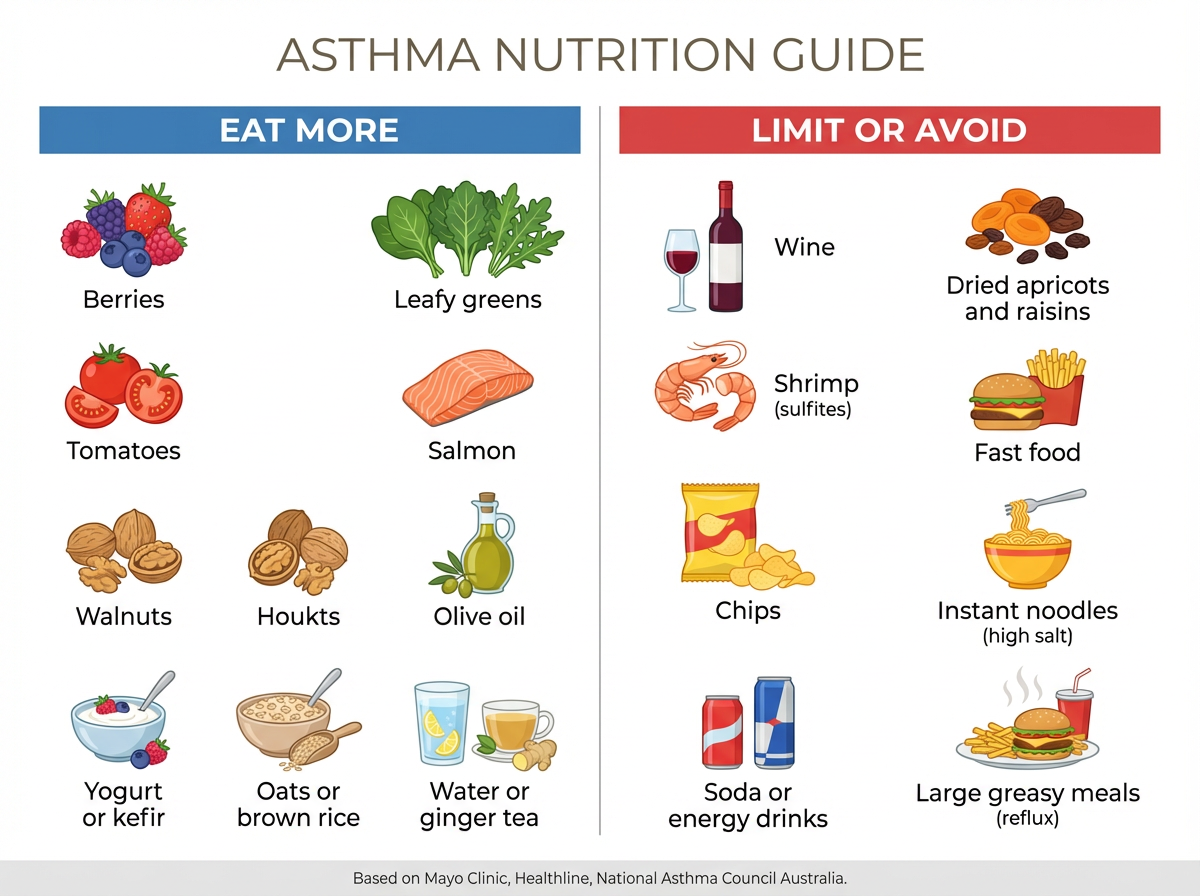
Foods and Drinks to Avoid with Asthma
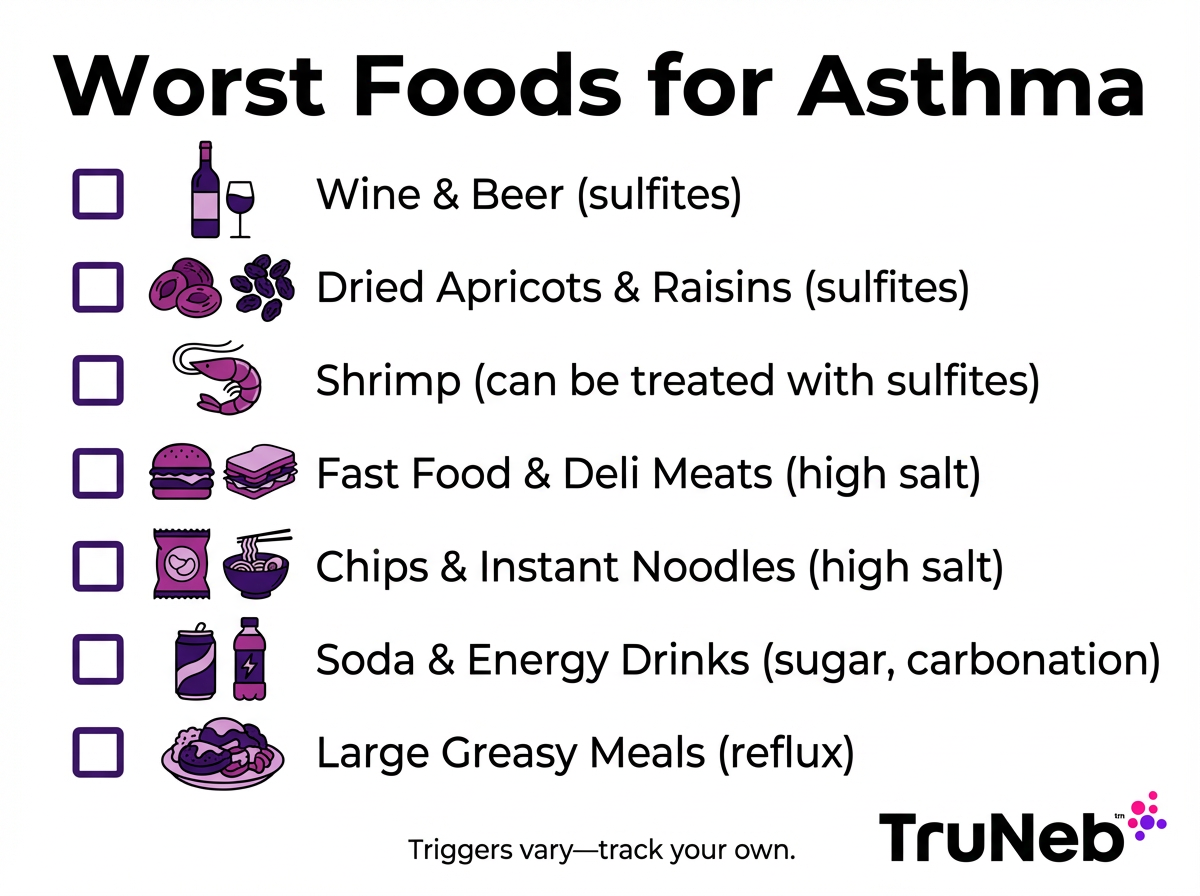
Not every food is a trigger for everyone. Still, these are among the worst foods for asthma control in people who are sensitive to them:
- Sulfite-containing foods
- Wine and beer, dried fruit like apricots and raisins, bottled lemon or lime juice, pickle relishes, some packaged potatoes, and some shrimp.
- Sulfites can provoke symptoms in sensitive people. Check labels for sulfur dioxide or sodium metabisulfite. You’ll usually see these listed near the bottom of the ingredients.
- High-salt, heavily processed foods
- Fast food, deli meats, instant noodles, salty snacks.
- Diets high in sodium and ultra-processed foods are linked with more inflammation and poorer control.
- Reflux and gas triggers
- Large, greasy meals; very spicy foods; carbonated drinks.
- Reflux can irritate airways and make symptoms worse. Smaller meals and fewer trigger foods can help.
- Allergy-related foods
- If you have a confirmed food allergy (for example, to milk protein, eggs, peanuts, tree nuts, wheat, soy, or shellfish), strict avoidance is important because allergic reactions can include wheezing. Food allergy reactions are different from asthma alone and can include hives, swelling, or anaphylaxis. If a food ever causes severe symptoms like swelling of your lips or tongue, trouble breathing, or feeling faint, seek emergency care right away.
- The truth about dairy
- For most people, dairy doesn’t worsen asthma. If dairy makes you feel phlegmy or you are allergic or intolerant, choose alternatives fortified with vitamin D.
If you tolerate a food well, you don’t need to cut it out just because it’s on this list.
Takeaway: For people with asthma, the biggest red flags are sulfites, ultra-processed salty foods, reflux-triggering meals, and any personal food allergens.
Essential Vitamins and Nutrients for Asthma Support
Food first is the goal. These nutrients matter most:
- Vitamin D
- Often low in people with worse symptoms. Get it from fish, eggs, and fortified milk or plant milks. Ask your doctor about testing and supplements if you are low.
- Vitamin C and Vitamin E
- In fruits, vegetables, nuts, and seeds. Antioxidants help tame oxidative stress in the lungs.
- Omega-3 fatty acids
- Eat fish twice a week or include plant sources like flax and chia. Fish oil shows mixed results; focus on food and talk to your doctor before taking pills.
- Magnesium
- Spinach, pumpkin seeds, almonds, beans, and whole grains supply magnesium, which helps relax muscles, including around the airways.
- Probiotics and fiber
- Fermented foods plus high-fiber meals support a healthy gut, which can help balance immune responses linked to asthma.
Safety note: Supplements aren’t a cure and can interact with medicines. Don’t start new supplements without asking your doctor.
Takeaway: Vitamin D, antioxidants, omega‑3s, magnesium, and gut‑friendly foods can support better asthma control—focus on food first and use supplements only with your doctor’s guidance.
Sample Asthma Diet Chart and Meal Plan
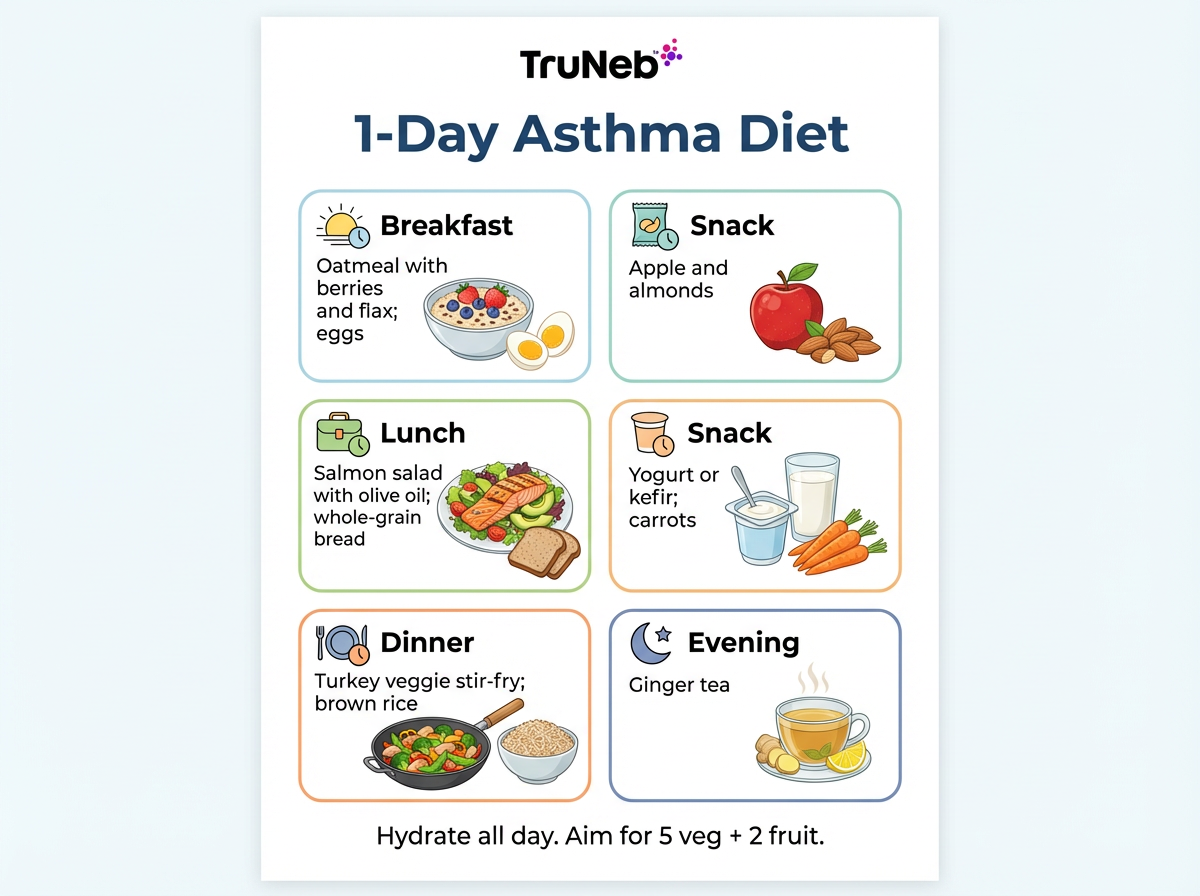
Use this one-day plan to turn guidance into meals. Swap items you like from the same categories. Adjust for your allergies, intolerances, and your doctor’s advice.
- Breakfast
- Oatmeal topped with blueberries and ground flaxseed; scrambled eggs.
- Drink: water and a cup of green tea or coffee.
- Mid-morning snack
- Apple and a handful of almonds.
- Lunch
- Grilled salmon over spinach, tomatoes, and cucumbers with olive oil and lemon; slice of whole-grain bread.
- Afternoon snack
- Plain yogurt or kefir with a drizzle of honey and a pinch of turmeric; carrot sticks.
- Dinner
- Turkey and vegetable stir-fry (broccoli, bell peppers, snap peas) with brown rice; season with ginger and garlic.
- Evening
- Ginger or chamomile tea. Avoid large late-night meals to limit reflux.
- Hydration
- Sip water through the day to keep mucus thinner.
Tip: Aim for 5 servings of vegetables and 2 of fruit most days. Want a printable asthma diet chart PDF? Save this plan and print it for quick reference.
Takeaway: Build each day around produce, whole grains, lean protein, healthy fats, and steady hydration to support long-term asthma control and overall health.
Lifestyle Tips: Weight Management, Dining Out, and More
- Achieve a healthy weight
- If you carry extra weight, losing even a modest amount can improve symptoms. Pair a balanced diet with daily movement you can stick with.
- Manage acid reflux (GERD)
- Reflux can worsen wheeze. Try smaller meals, limit greasy and very spicy foods, skip late-night eating, and go easy on sodas.
- Smart choices when eating out
- Look for grilled, baked, or steamed options. Ask for dressings and sauces on the side to control salt and additives. Watch salad bar items like dried fruit that can contain sulfites.
- For kids with asthma
- Offer colorful fruits and veggies, whole grains, fish or beans, and vitamin D sources. Keep fast food as an occasional treat. If your child uses steroid inhalers regularly, their doctor might also watch calcium and vitamin D for bone health.
- Find your personal triggers
- Keep a short food and symptom log for two weeks. If a food regularly lines up with cough or wheeze, talk with your doctor about next steps. Don’t self-eliminate major food groups long term without discussing it with your doctor or a dietitian.
Takeaway: Small daily habits—balanced meals, fewer triggers, steady movement—add up to easier breathing if you have asthma.
Where Diet Fits in Your Asthma Action Plan
Diet supports your plan; it doesn’t replace it. Keep taking your prescribed medicines and follow your written asthma action plan. Use nutrition to lower background inflammation and support weight and energy.
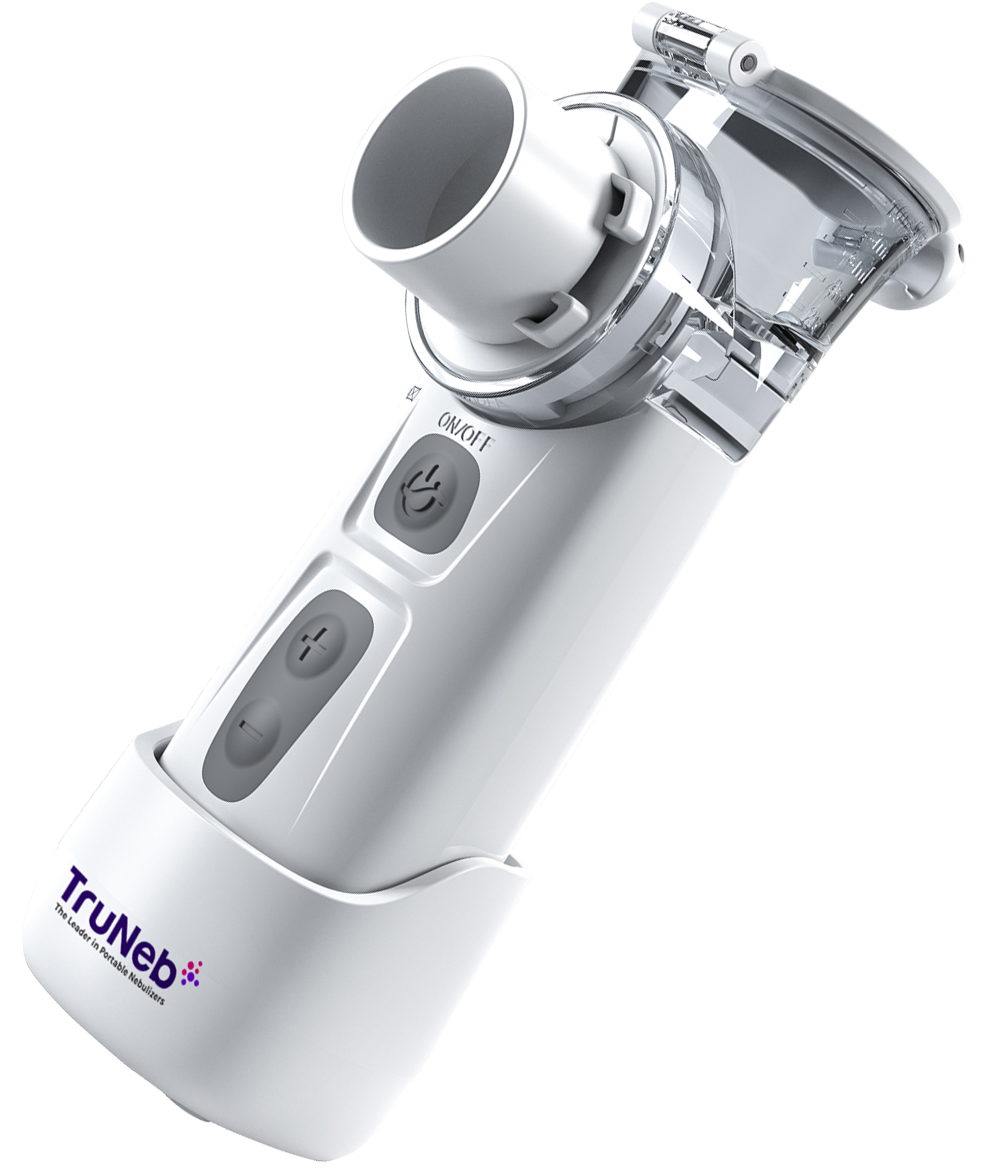
Devices can help when symptoms flare. A portable mesh nebulizer like the TruNeb™ Portable Mesh Nebulizer lets you take prescribed nebulized medicines or saline away from home. Some people also use TruNeb hypertonic saline solutions to help loosen mucus, if their doctor recommends it.
Safety note: Talk to your doctor before trying a new medication, changing a dose, or adding hypertonic saline. Don’t confuse steam inhalers with nebulizers: steam inhalers aren’t designed for breathing medications.
Put it together this way: eat an anti-inflammatory pattern most days, avoid known triggers, carry your rescue medicine, and use your inhaler or nebulizer as directed. ⚠️ If your symptoms are severe, you’re struggling to talk, or your rescue inhaler isn’t helping, seek emergency medical care right away. Always follow the written asthma action plan you’ve created with your doctor.
Takeaway: Food is a long-term helper for asthma control, while your inhaler and nebulizer remain your quick-relief tools for symptoms.
Frequently Asked Questions About Diet and Asthma
Tap or click a question below to see the answer:
Foods with sulfites like wine, dried fruit, and some shrimp can trigger symptoms in sensitive people. Ultra-processed, salty foods and large greasy meals can also make control harder, especially if they cause reflux.
No. Asthma is a chronic condition that needs medical treatment. A healthy, plant-forward diet can support better control, but it doesn’t replace your inhaler or nebulizer.
There isn’t a universal list of “worst fruits for asthma”—fresh fruits are generally helpful unless you’re allergic. The exception is if you react to a specific fruit or to dried fruits preserved with sulfites.
Water is best for thinning mucus. Warm herbal teas can feel soothing. Coffee or tea can offer a mild, short-term airway effect from caffeine, but they aren’t treatments.
For most people, dairy doesn’t worsen asthma. If dairy seems to bother you or you have an allergy or intolerance, choose fortified alternatives like soy or almond milk.
Vitamin D, vitamin C, vitamin E, omega‑3 fats, and magnesium support health and asthma control. Focus on foods first; ask your doctor before taking supplements.
Yes. If you’re overweight, losing even a modest amount often improves symptoms and day-to-day control.
No food can stop an attack. Use your rescue inhaler or nebulizer as your action plan directs. Warm fluids can feel soothing, but they aren’t a replacement for medicine. ⚠️ If you think you’re having an asthma attack and your rescue medicine isn’t helping, call emergency services right away.
Takeaway: To support asthma control, eat more plants and fish, avoid sulfites and heavily processed meals, and always follow your asthma action plan when symptoms flare.
Disclaimer: This article is for informational purposes only and is not a substitute for professional medical advice, diagnosis, or treatment. Always talk with your doctor about your asthma symptoms, medications, and any diet or supplement changes.