

On this page
Overview of Over-the-Counter Asthma Medications
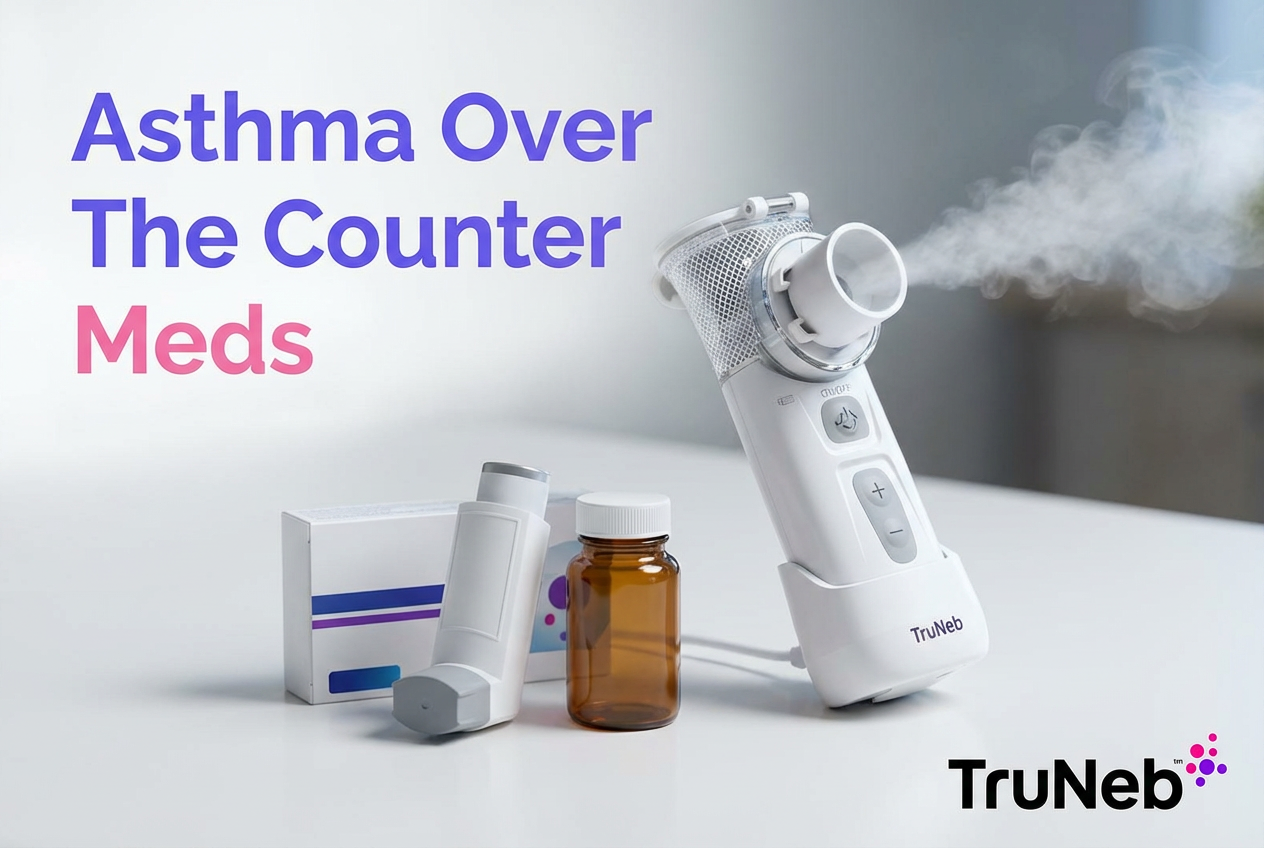
Only a few asthma medicines are sold over the counter in the United States. These options can help with mild, occasional symptoms like wheeze or shortness of breath.
In the United States, only a small number of asthma medications are sold over the counter; most inhalers, including albuterol, still require a prescription.
Over-the-counter choices:
- Primatene Mist (epinephrine) inhaler
- Asthmanefrin (racepinephrine) solution for a nebulizer
- Ephedrine plus guaifenesin tablets
These can open your airways for a short time. They do not replace a prescription rescue inhaler like albuterol or daily controller therapy. They aren’t meant to manage moderate or severe asthma or frequent flare-ups, which need a prescription plan from a doctor.
Safety note: Talk to your doctor before trying a new medication.
In short: In the U.S., only three OTC asthma medicines - Primatene Mist, Asthmanefrin, and ephedrine plus guaifenesin tablets - are available, and they’re only for short-term relief of mild, occasional symptoms.
Why People Look for OTC Asthma Relief
You might reach for an OTC product when an inhaler runs out, an appointment is hard to get, or costs feel high. In a pinch, these products can buy you time and ease light symptoms.
Keep the goal clear: quick relief for mild symptoms, not long-term control. If you find yourself using OTC meds often, your asthma is likely not controlled and it’s time to see a doctor because repeated OTC use can mask worsening asthma control and delay needed treatment.
In short: OTC asthma meds can be a short bridge when you’re between prescriptions, but they shouldn’t replace a long-term plan from your doctor.
What Counts as an OTC Asthma Medicine
Here is what actually counts as an over-the-counter asthma medication:
- Epinephrine inhaler: Primatene Mist for temporary relief of mild intermittent symptoms.
- Racepinephrine solution: Asthmanefrin for use in a handheld nebulizer.
- Ephedrine with guaifenesin tablets: Oral bronchodilator plus expectorant.
Helpful but not asthma meds:
- Allergy treatments like antihistamines or nasal sprays can lower triggers. They do not treat an asthma attack.
Rescue inhalers like albuterol and controller inhalers that contain steroids are not available over the counter in the U.S.; they require a prescription from a doctor.
Always follow the product label and ask a pharmacist if you are unsure.
In short: In the U.S., if it is not epinephrine, racepinephrine, or an ephedrine combo, it is not an OTC asthma medicine.
Primatene Mist Inhaler Explained
Primatene Mist is an epinephrine inhaler sold over the counter for temporary relief of mild symptoms like wheezing and shortness of breath. It’s labeled for adults and kids 12 and older.
How it works: Epinephrine relaxes the muscle around your airways, which can ease tightness for a short time.
Label basics:
- Use Primatene Mist exactly as the package label directs whenever symptoms start.
- Don’t exceed the maximum daily dose listed on the package.
- Stop and seek care if symptoms don’t improve.
Common side effects can include jitteriness, a fast heartbeat, and nervousness. People with heart disease or high blood pressure should be cautious and ask a doctor first.
Most guidelines don’t recommend Primatene Mist as a long-term asthma solution; it’s a last resort when a prescription rescue inhaler isn’t available. Ask your doctor if this product is safe for you.
In short: Primatene Mist can ease mild, occasional symptoms but has strict label limits and more side effects than albuterol.
Asthmanefrin (Racepinephrine) for Nebulizers
Asthmanefrin is an over-the-counter racepinephrine solution used with a handheld nebulizer. It can offer short-term relief of mild, intermittent symptoms.
What to know:
- You need a nebulizer device to use it.
- It’s a non-selective bronchodilator that stimulates your body more broadly than albuterol, which can mean more side effects like jitteriness or a fast heartbeat.
- Relief is temporary. It’s not the same as prescription albuterol and isn’t a long-term asthma control plan.
Check the product label for age limits and directions. Ask a pharmacist if it is right for you. Ask your doctor if this product is safe for you, especially if you have heart disease, high blood pressure, or take stimulant medicines.
In short: Asthmanefrin is an OTC nebulizer solution for short-term relief, not a substitute for prescription therapy.
Oral Ephedrine and Guaifenesin Tablets
Some OTC tablets combine ephedrine (a bronchodilator) with guaifenesin (an expectorant). They can help open airways and thin mucus, but they act through your whole body and can have more side effects than inhaled medicines.
Points to consider:
- Slower onset than inhaled options.
- Can raise heart rate and blood pressure.
- Can interact with other stimulants, decongestants, caffeine, and some prescription medicines.
Because they work through your whole body, doctors usually prefer inhaled medications over oral ephedrine for asthma symptoms. If you have heart disease, high blood pressure, thyroid disease, or are sensitive to stimulants, ask a doctor before use. Follow the label closely.
Medical reminder: These tablets do not replace a prescription plan if your asthma is persistent.
Bottom line: Oral ephedrine works slower, has more body-wide side effects, and is generally not preferred over inhaled asthma medicines.
Allergy Medicines That Reduce Asthma Triggers
Allergy treatments can lower triggers that set off asthma. Antihistamines and certain nasal sprays reduce sneezing, runny nose, and swelling in the nose. That can mean fewer flare-ups.
Important: Allergy meds do not treat an asthma attack. Keep a rescue plan in place and follow your asthma action plan from your doctor.
In short: Allergy meds can cut triggers but do not treat an active asthma attack.
OTC vs Prescription Inhalers
Here is the simple contrast many people ask about:
- Active ingredients: OTC options use epinephrine or racepinephrine. Controller inhalers commonly include inhaled steroids. Prescription rescue inhalers use albuterol.
- Effectiveness and safety: Experts generally prefer prescription albuterol for rescue because it targets the lungs more selectively and tends to have fewer side effects than epinephrine.
- Role in care: OTC products are for short-term relief of mild, intermittent symptoms. Prescription inhalers are the standard for both quick relief and long-term control.
If you need quick relief often, you likely need a prescription plan. A doctor can help you pick the right rescue inhaler and any controller medicine that fits your needs.
In short: Prescription albuterol inhalers are generally preferred for quick relief because they target the lungs more directly and tend to cause fewer side effects than OTC epinephrine or racepinephrine.
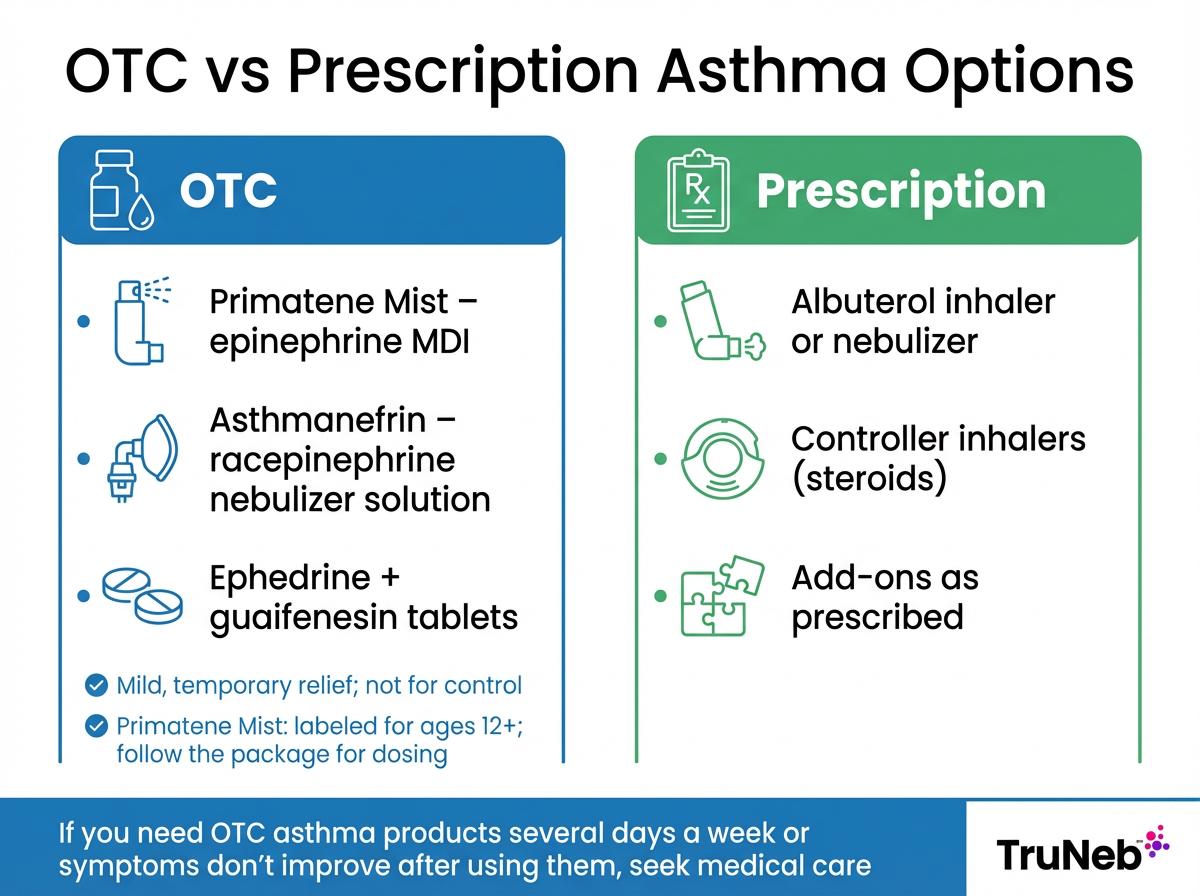
Quick Comparison: OTC vs Prescription Asthma Options
Key takeaway: Prescription albuterol is generally preferred for quick relief; OTC options are for short, mild symptoms and label-directed, short-term use.Compare common OTC and prescription asthma options
| Type | Product | Active ingredient | What it's for | Key notes |
|---|---|---|---|---|
| OTC | Primatene Mist | Epinephrine | Temporary relief of mild symptoms | Labeled for ages 12+; follow the package's maximum daily dose |
| OTC | Asthmanefrin | Racepinephrine | Temporary relief of mild symptoms | Requires a nebulizer; can cause jitteriness |
| OTC | Ephedrine + guaifenesin tablets | Ephedrine + guaifenesin | Body-wide bronchodilation and mucus thinning | Slower onset; more side effects and interactions |
| Prescription | Albuterol inhaler or neb | Albuterol | Quick-relief rescue | Standard of care for rescue; tends to cause fewer side effects than epinephrine |
| Prescription | Controller inhalers | Inhaled corticosteroids | Daily control to prevent flares | Not for immediate relief |
Always follow the product label and your doctor's guidance.
In short: OTC options are for short, mild relief; prescription inhalers cover both rescue and long-term control.
When OTC Use Is Unsafe
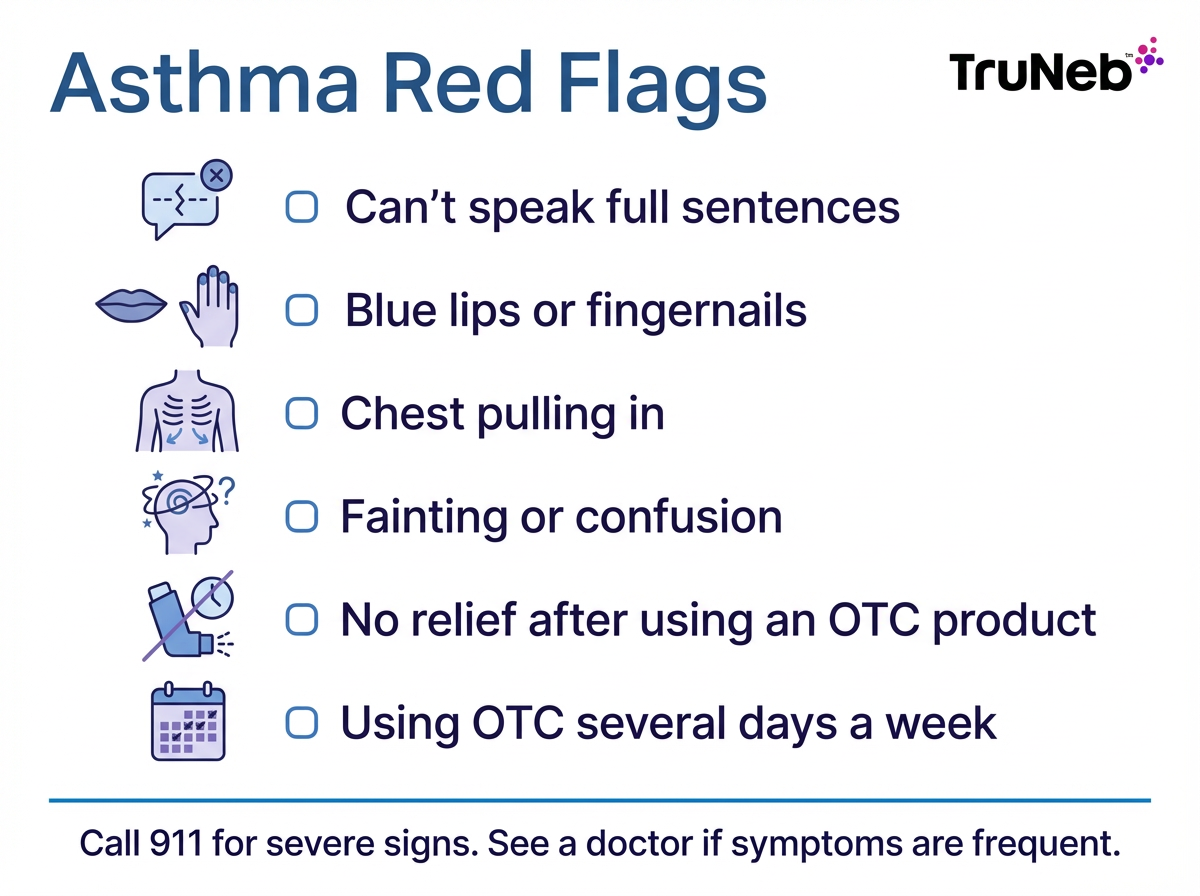
⚠️ Get emergency help (call 911) right away if you have any of these signs:
- Struggling to breathe, speak, or walk
- Lips, face, or fingernails turning blue or gray
- Chest pulling in between ribs or at the neck
- Dizziness, confusion, or fainting
Stop relying on OTC and see a doctor soon if you notice:
- Symptoms on several days a week
- Nighttime cough or wheeze
- Needing more than the label dose
- Symptoms don’t improve after using an OTC product
⚠️ If your symptoms don’t improve after using an OTC product or keep coming back, don’t keep repeating doses—see a doctor or urgent care right away.
Key point: Severe or frequent symptoms—such as trouble speaking, blue lips, or needing OTC medicines several days a week—are a red flag; get medical care instead of repeating doses.
Delivery Methods and Home Devices
Metered dose inhalers send medicine straight to your lungs in seconds. Nebulizers turn liquid medicine into a mist you breathe in over several minutes.
Asthmanefrin requires a nebulizer. Many people also receive prescription solutions, like albuterol, to use with a nebulizer.
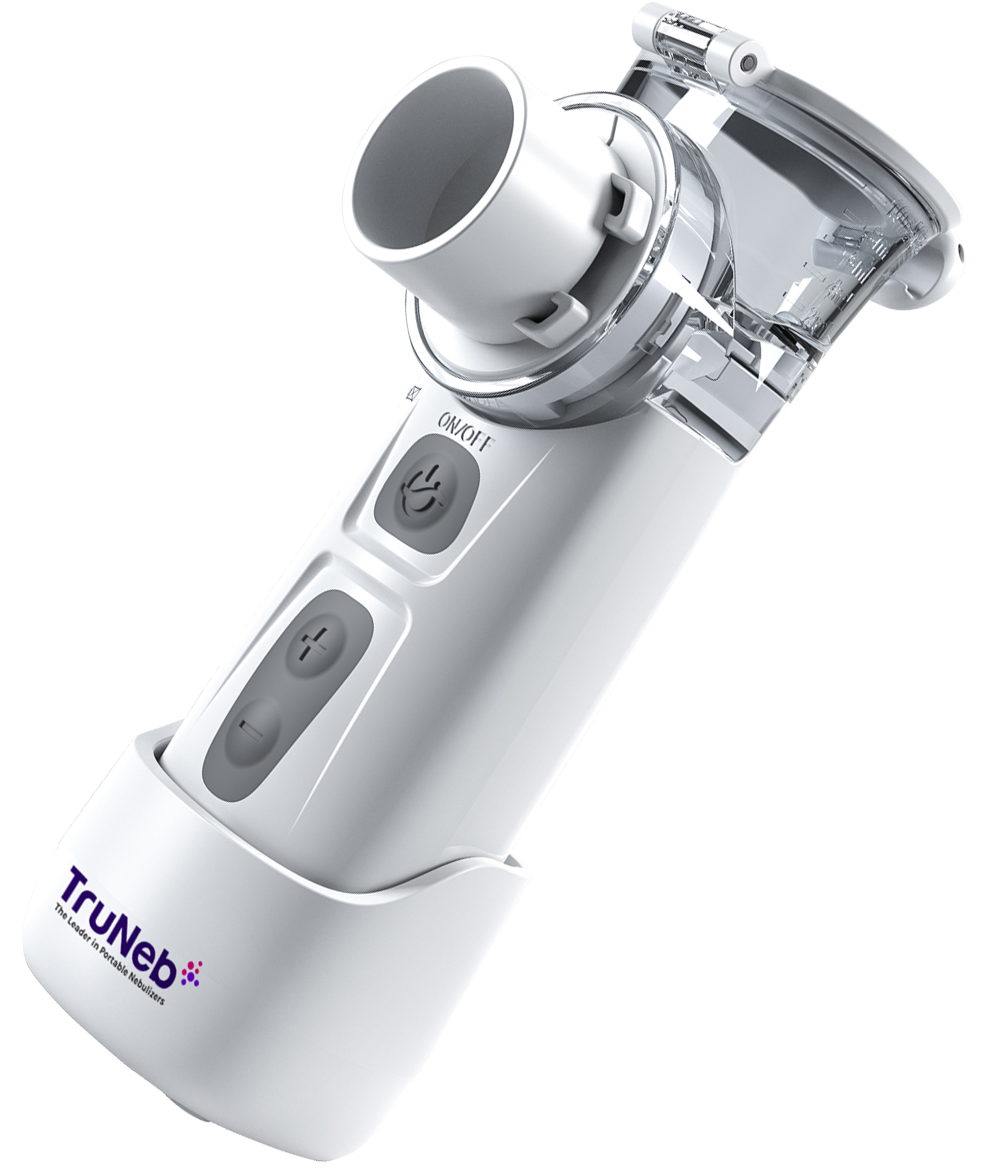
A portable mesh nebulizer can make it easier to take prescribed treatments at home or on the go because it is compact and quiet. Some doctors sometimes prescribe hypertonic saline in a nebulizer as part of a mucus management plan. Only use medications and solutions your doctor has prescribed for you in your nebulizer.
⚠️ Boxes labeled "steam inhaler" or "vaporizer" are not nebulizers and aren’t meant for breathing prescription asthma medicine.
In short: Inhalers work in seconds and nebulizers deliver a mist over several minutes; if your doctor prescribes nebulized medicine, a nebulizer can make treatments easier at home and on the go.
How to Use OTC Asthma Meds Safely
Follow these steps to lower risk and get the most from OTC products:
- Read the entire label before use.
- Check age limits and directions.
- Don’t combine stimulants like decongestants or caffeine with epinephrine or ephedrine unless your doctor says it’s okay.
- Use the lowest dose recommended on the product label unless your doctor tells you otherwise.
- Pay attention to how quickly your breathing improves. If you don’t feel better soon, get medical care.
- Track how often you need relief. If you need OTC relief more than occasionally, see your doctor.
- Make an appointment to discuss a prescription rescue inhaler and a long-term plan.
Medical reminder: Talk to your doctor before trying a new medication.
In short: Follow the product label, avoid combining stimulants, and see your doctor promptly if you need OTC asthma relief more than occasionally.
Frequently Asked Questions
Tap or click a question below to see the answer:
They can help mild, occasional symptoms, but they carry more side effects than albuterol and aren't for ongoing control. Follow the label and talk to a doctor.
No. Albuterol rescue inhalers are prescription only.
Most experts generally prefer prescription albuterol for quick relief because it targets the lungs more directly and tends to cause fewer side effects.
An OTC racepinephrine solution used in a nebulizer for short-term relief of mild symptoms. It isn't a replacement for prescription therapy.
Follow the dosing instructions on the Primatene Mist package and don't exceed the maximum daily amount listed there. It's labeled for ages 12 and up.
Antihistamines can reduce allergy triggers. They don't treat an active asthma attack.
They can ease nasal stuffiness, but they don't treat asthma in your lungs and are not a substitute for a nebulizer or rescue inhaler. Steam inhalers or vaporizers are not nebulizers and aren't meant for breathing prescription asthma medicine.
Medical reminder: Talk to your doctor before trying a new medication or changing your treatment.
Disclaimer: This article is for informational purposes only and isn't a substitute for professional medical advice, diagnosis, or treatment. Always talk with your doctor about your symptoms, medications, and any questions you have about asthma care.