

On this page

What Is a Mesh Nebulizer and How Does It Work?
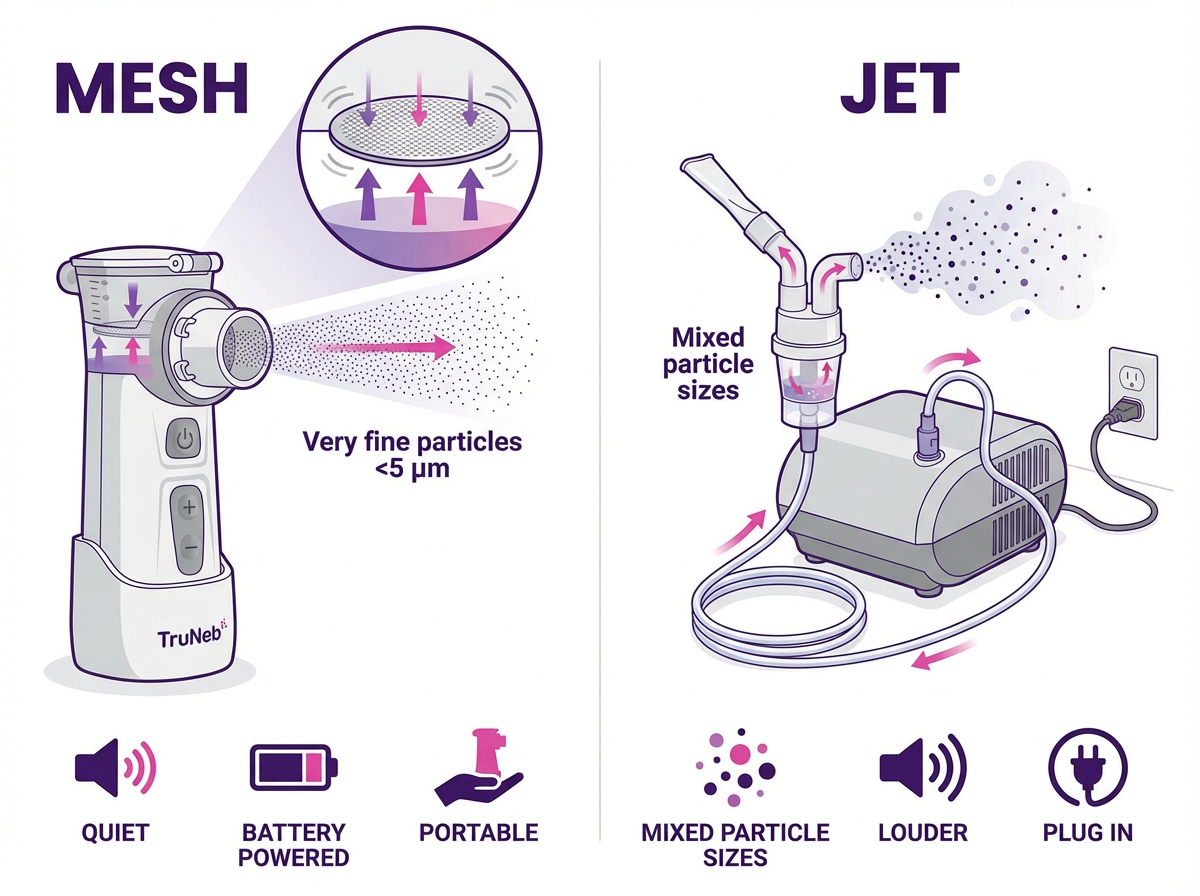
A vibrating mesh nebulizer is a small, handheld device that turns liquid medicine into a fine mist you can breathe in. It uses a thin metal plate with microscopic holes that vibrate very fast. As the liquid passes through the mesh, it becomes a smooth mist you inhale through a mouthpiece or mask. Most mesh nebulizers create droplets around 3–5 microns, small enough to reach deep into your lungs.
Mesh nebulizers are one of the main types of portable nebulizers (handheld nebulizers), alongside jet (tabletop compressor) units. How it differs from a jet nebulizer: a jet uses a loud air compressor to blast air through the liquid to make mist. A mesh nebulizer does the same job quietly with electronics, not a compressor, which means less noise and a smaller, battery-powered device you can take with you.
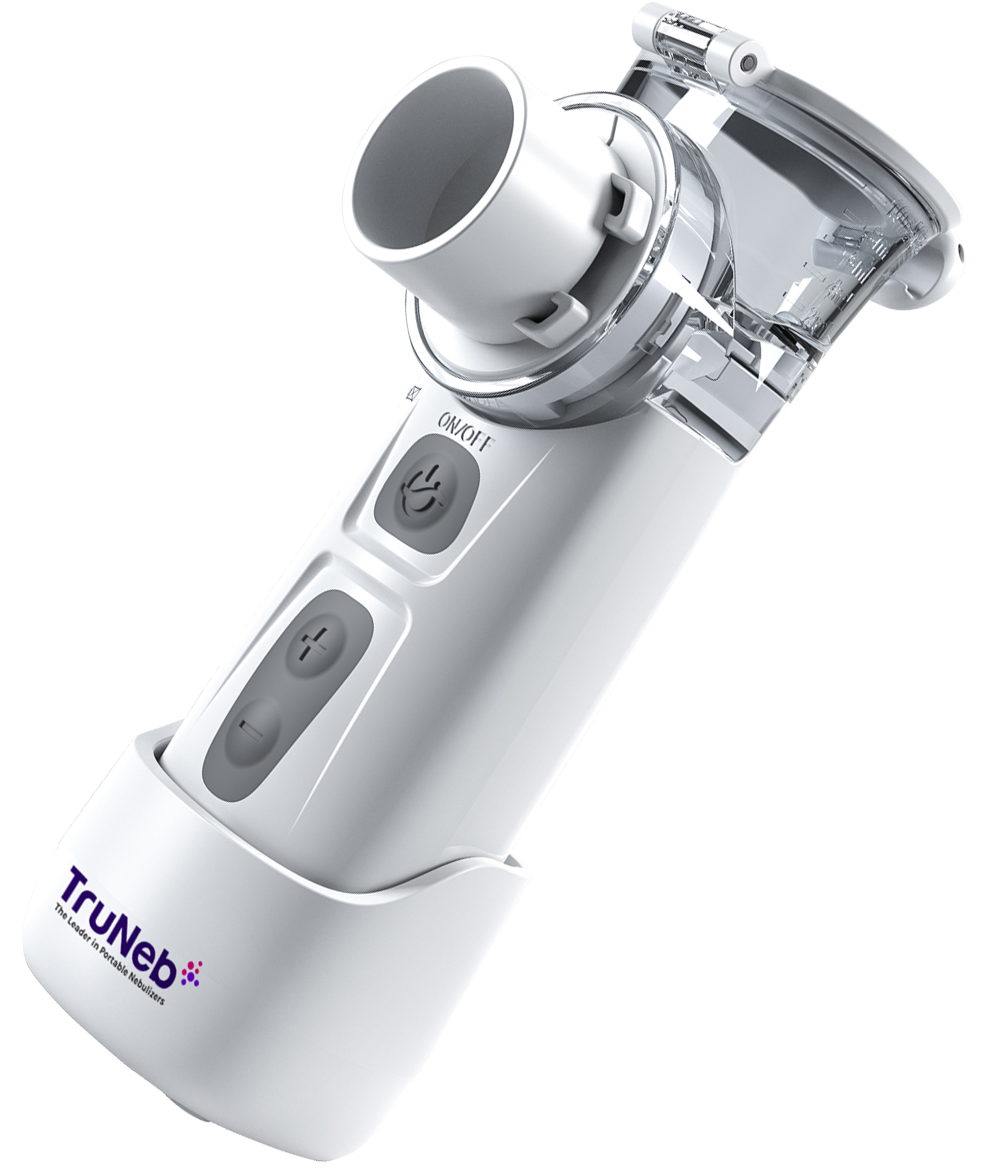
TruNeb™ portable mesh nebulizer is an example of this design. It’s built for people who want full-strength treatments without being tied to a plug or bulky setup.
Key takeaway: Mesh nebulizers use a vibrating plate with tiny holes to turn liquid medicine into a quiet, fine mist that’s easy to breathe in.
Mesh Nebulizer Effectiveness: What the Evidence Shows
If you’re wondering “are mesh nebulizers effective,” research shows mesh nebulizers are highly effective at delivering medication to the lungs.
- Acute asthma in children: A clinical trial found a vibrating mesh nebulizer was as effective and as safe as a jet nebulizer in the emergency setting.
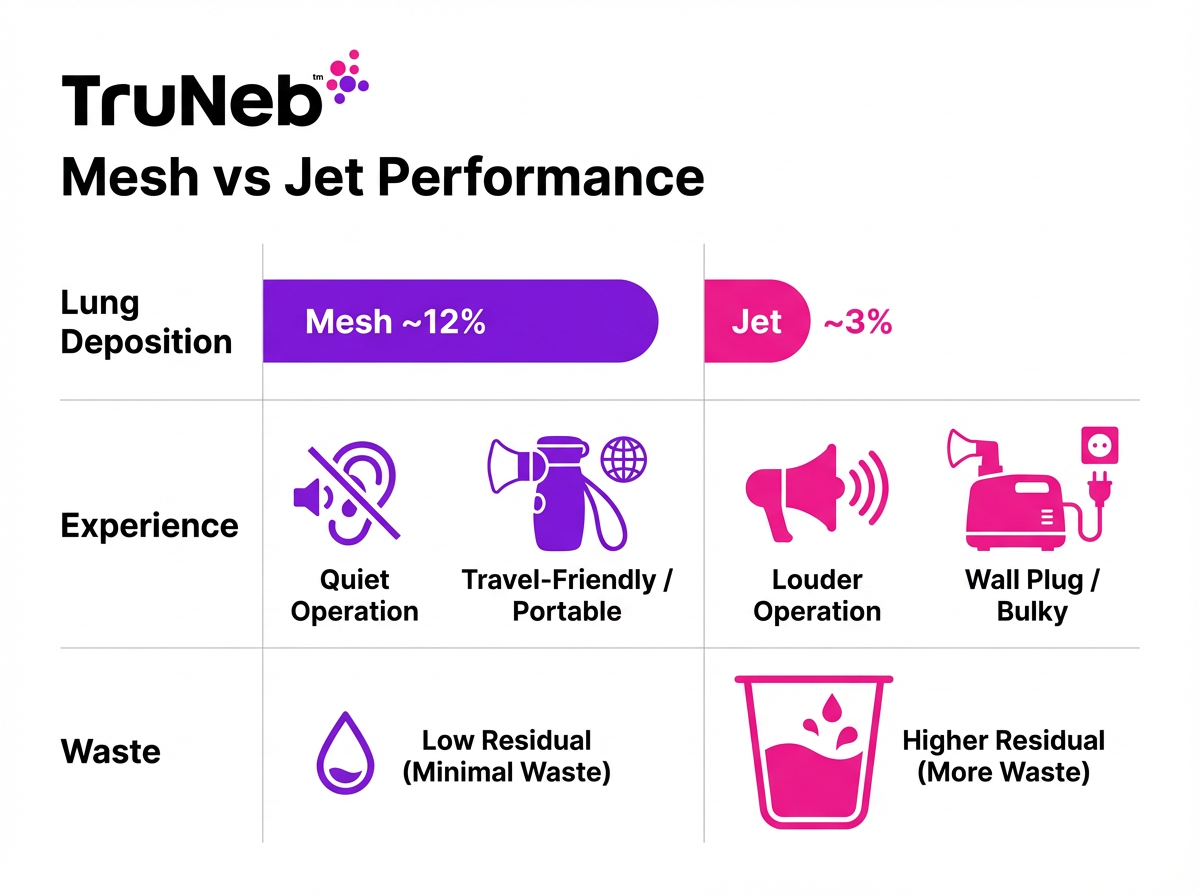
- COPD during noninvasive ventilation: In a radiolabeled study (researchers tracked where the medicine landed using a safe tracer) during noninvasive ventilation (a mask that supports breathing without a breathing tube), a mesh nebulizer achieved about three to four times higher lung deposition than a jet nebulizer (about 12% vs 3% of the dose).
- Big picture: A 2024 meta-analysis concluded mesh nebulizers usually deliver higher aerosol output and drug delivery than jets, while clinical outcomes like lung function were similar across devices. In practice, both work. In many mesh nebulizer vs jet nebulizer comparisons, mesh adds efficiency and convenience.
In simple terms, the mesh nebulizer got several times more medication into the lungs without changing how well people breathed afterward.
What this means for you: moving to a modern mesh device keeps the therapeutic benefit you expect. A portable unit like TruNeb uses the same mesh technology shown in these studies.
Key takeaway: Trials show mesh nebulizers match jet nebulizers for clinical results and, in some setups, deliver far more medicine to the lungs.
Mesh vs Jet vs Ultrasonic: What Really Changes
Jet nebulizer: A plug-in compressor pushes air through liquid to make mist. Reliable and compatible with a wide range of meds, but bulky and loud.
Ultrasonic nebulizer: High-frequency vibrations make mist without a compressor. Quiet and fast, but the gentle heat can be an issue for some delicate drugs, and thicker, milky suspensions don’t always break up well.
Mesh nebulizer: A vibrating mesh plate creates a consistent fine-particle mist with low residual volume and no heating. It’s quiet, efficient, and portable, a good fit for daily life while matching jet performance.
That’s why newer inhaled drug programs and a lot of home users are moving toward mesh nebulizers: you keep clinical effectiveness and gain convenience.
Key takeaway: Mesh nebulizers combine quiet portability with consistent fine particles, delivering jet-level results without the compressor.
Advantages of Portable Mesh Nebulizers
- Portability you’ll actually use: Pocket-size and battery powered, so you can treat at home, at school, at work, or while traveling, with rechargeable batteries for easy charging.
- Quiet operation: Near-silent sessions make nighttime or public use easier.
- Faster sessions: Efficient aerosol output usually shortens treatment time.
- Efficient delivery: Fine particles (a high fine-particle fraction) and low residual volume mean less waste and deep-lung reach.
- Simple setup: No tubing or compressor. Fill, press the button, breathe.
- Kid friendly: The quiet mist is less scary for children.
TruNeb brings these advantages together in a handheld mesh design built for daily routines without the bulky setup.
Key takeaway: Mesh nebulizers are quiet, portable, and efficient, turning more of your dose into fine particles that reach your lungs.
Limitations and When a Mesh Nebulizer Might Not Be the Best Choice
- Cost and coverage: Mesh devices usually cost more upfront than basic compressors, and insurance typically covers standard compressor (jet) nebulizers. Portable mesh units are often an out-of-pocket purchase.
- Cleaning matters: Tiny mesh holes can clog if you skip routine rinsing and disinfection.
- Medication fit: Most solutions nebulize well, but very thick suspensions and certain antibiotic or specialty solutions can be challenging for some mesh heads and sometimes need a specific jet setup. Always check the medication instructions and your device manual.
- Power: You must keep the battery charged or carry spares.
- Wear and tear: The mesh component can wear over time and sometimes needs replacement.
- Hospital-grade use: Mesh nebulizers are not typically used for continuous hospital nebulization sessions.
Safety note: Talk to your doctor before trying a new medication. Do not start, stop, or change prescribed treatments without medical guidance.
Key takeaway: Mesh nebulizers work well when you clean them regularly, but they need consistent care and aren’t ideal for very thick suspensions.
Tips for Using Your Mesh Nebulizer Effectively
- Use the right interface: Adults usually get better delivery with a mouthpiece. Young children might need a snug mask. Follow your pediatrician’s guidance on mask fit and dosing.
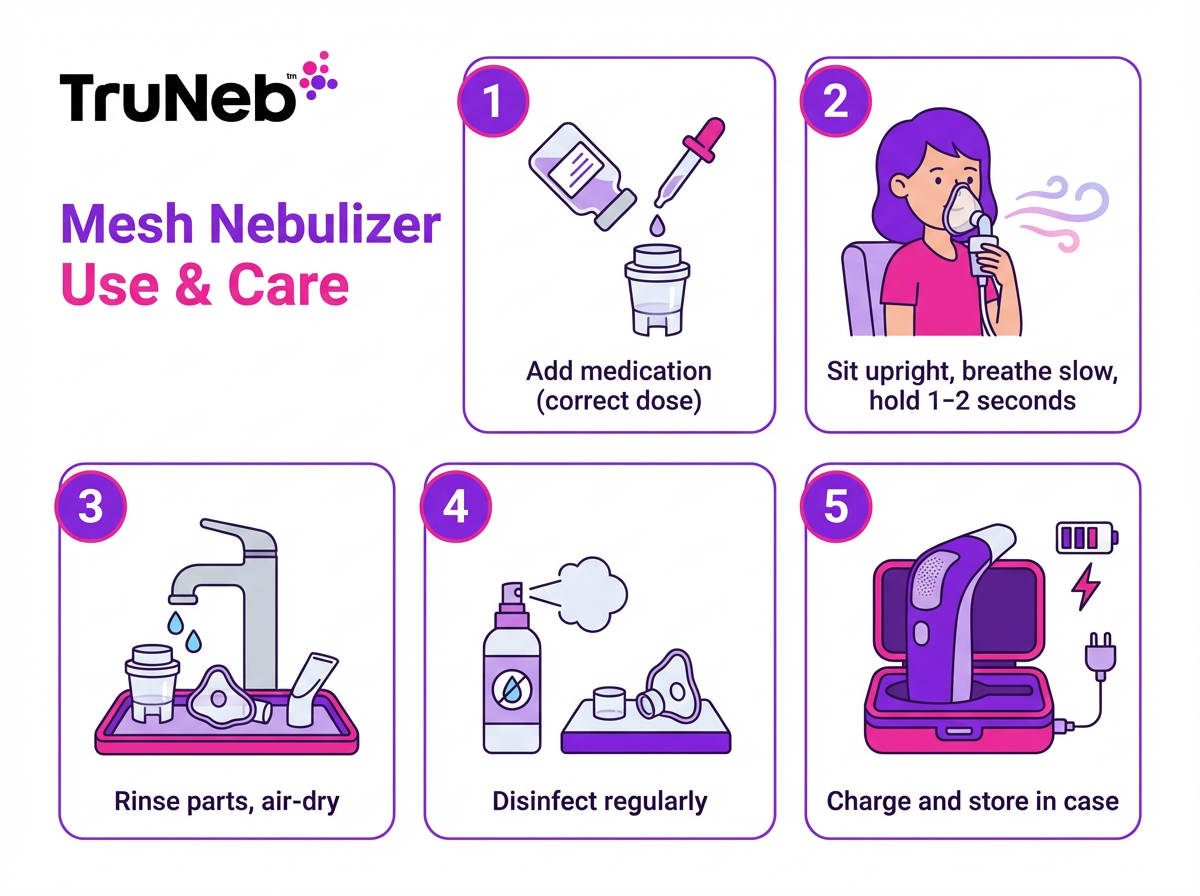
- Breathe slowly and deeply: Hold each breath for a second to help medicine settle in your lungs.
- Keep it upright: Avoid extreme tilts to prevent spills and uneven output.
- Clean after every use: Rinse removable parts with warm sterile or distilled water, air-dry, and disinfect regularly per the manual. Cleaning steps like these match guidance from groups such as the American Lung Association.
- Power check: Charge the device or pack spare batteries before leaving home.
- Use only prescribed solutions: No essential oils or unapproved liquids. You might see boxes labeled “steam inhaler” near nebulizers — these are not for breathing prescription medications. If your doctor suggests hypertonic saline for mucus in conditions like cystic fibrosis, bronchiectasis, or chronic bronchitis, use sterile unit-dose vials. TruNeb offers pre-measured 3% and 7% hypertonic saline ampules for users whose doctors recommend them.
- Store it protected: Keep it dry, dust-free, and in a case when traveling.
Medical caution: Talk to your doctor before trying a new medication or solution, including hypertonic saline.
⚠️ If you have severe trouble breathing, chest pain, bluish lips or face, or symptoms that suddenly get worse, seek emergency medical care right away (call 911 or your local emergency number).
Key takeaway: Good technique and consistent cleaning do more for effectiveness than any single device feature.
When to Choose a Mesh Nebulizer and When Not To
Choose a mesh nebulizer if:
- You live with asthma, COPD, or chronic mucus issues and need quiet, quick treatments at home or on the go.
- You want a small device you will actually carry, including for school, work, travel, or nighttime use.
- Your child does better with a near-silent mist.
- Your doctor confirms your medications work well in a mesh device.
A traditional jet nebulizer can be a better fit if:
- Cost or insurance drives the choice and a covered compressor unit meets your needs.
- You always treat next to an outlet and don’t need portability.
- Your medication requires a specific jet setup or very thick suspensions your doctor or pharmacist recommends using with a jet.
- You need continuous, hospital-grade nebulization.
About inhalers: A lot of people use both. Inhalers are compact and effective when used correctly. Nebulizers help when coordination is hard, during flare-ups, or for medicines delivered only as solutions. Ask your doctor which combination fits your treatment plan.
Note for infants: Doctors sometimes use nebulized saline for RSV/bronchiolitis in babies under medical supervision, and quiet mesh units can be easier around infants.
If a quiet, portable mesh nebulizer sounds right for you, a device like TruNeb can offer that convenience while still delivering full-strength treatments under your doctor’s guidance. If your symptoms don’t improve with your current treatment or you’re considering changes, talk to your doctor first.
Key takeaway: Choose mesh nebulizers for quiet portability and convenience. Stick with jet nebulizers for lower cost, hospital-grade use, or specific thick meds your care team recommends.
Frequently Asked Questions about Mesh Nebulizers
Tap or click a question below to see the answer:
Yes. As described above, multiple studies show vibrating mesh nebulizers are as effective and as safe as jet nebulizers. In one COPD study during noninvasive ventilation, a mesh device delivered about 12% of the dose to the lungs versus about 3% with a jet, indicating higher lung deposition.
Most standard inhalation solutions work well, including bronchodilators like albuterol, steroid solutions such as budesonide, and sterile saline. Some other examples, when prescribed, include ipratropium, certain inhaled antibiotics (for example, tobramycin solution), or mucus-thinning medicines like dornase alfa. Very thick suspensions can be less suitable for some mesh heads, so always check the medication instructions and your device manual.
After each use, rinse removable parts with sterile or distilled water and let them air-dry. Wash with mild soap as your manual describes and disinfect on the schedule your manual recommends. Don’t scrub or poke the mesh. Good cleaning keeps output strong and lowers germ risk.
Yes. Mesh units are quiet and portable, which most children tolerate better. Use an age-appropriate mask with a snug fit and supervise treatments. Your pediatrician can guide mask choice and dosing.
Usually yes, if your doctor recommends it. Hypertonic saline can help loosen mucus in conditions like cystic fibrosis, bronchiectasis, or chronic bronchitis, but it isn’t right for everyone and can trigger cough or bronchospasm in some people. Use sterile unit-dose vials and start under medical guidance.
Safety note: Talk to your doctor before trying a new medication or changing how you use your treatments.
Key takeaway: Mesh nebulizers are as effective as traditional nebulizers, work with most standard inhalation medicines (including saline), and can be used safely in children and adults when guided by a doctor.
Disclaimer: This article is for informational purposes only and is not a substitute for professional medical advice, diagnosis, or treatment. Always talk to your doctor about your symptoms, medications, and which devices are right for you.