

On this page
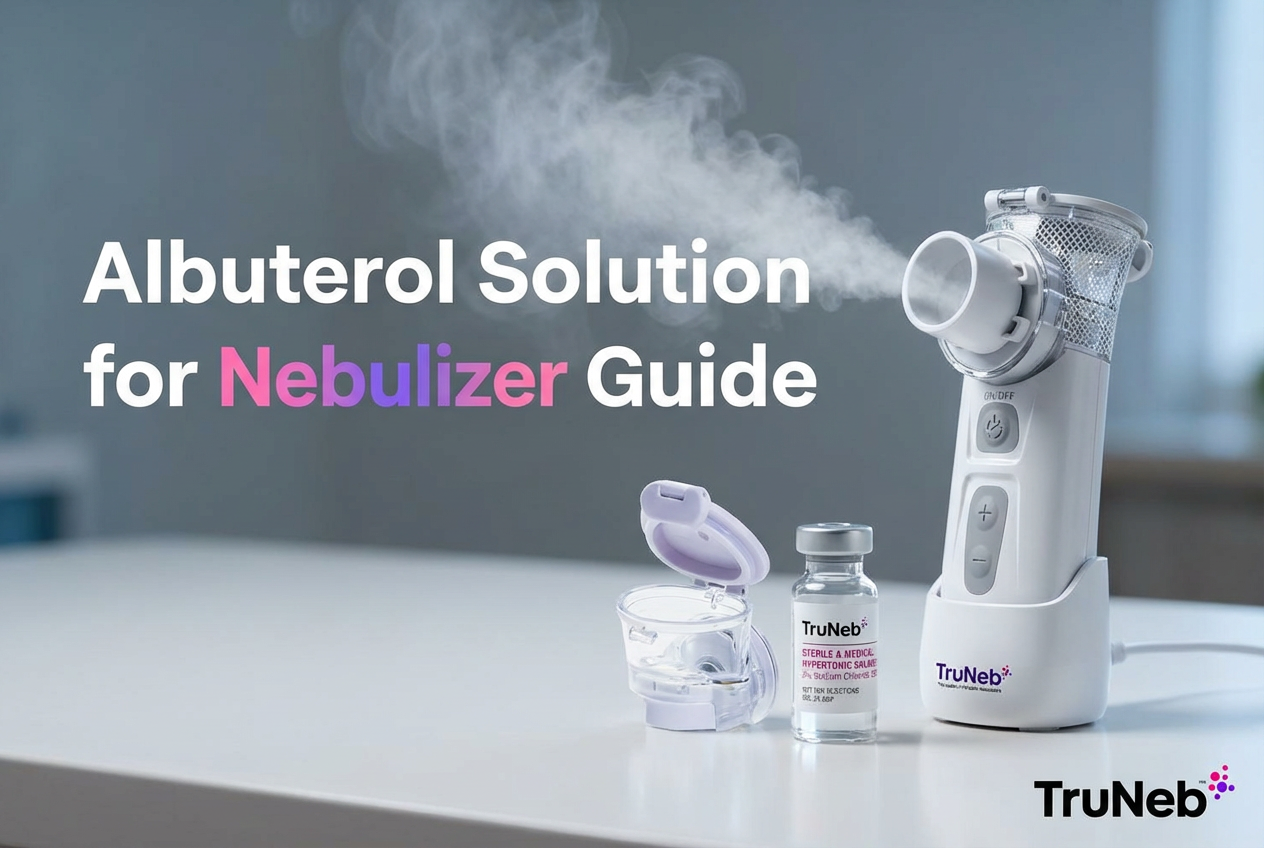
When and How to Use Albuterol Nebulizer Solution (Dosage & Administration)
For adults, doctors commonly prescribe one premeasured 2.5 mg/3 mL (0.083%) vial of albuterol nebulizer solution per treatment, breathed in over about 5–10 minutes. The albuterol nebulizer solution dosage and how often you use it come from your doctor.
Standard Dosage Guidelines (2.5 mg/3 mL and Pediatric Doses)
- Adults: 2.5 mg/3 mL via nebulizer over about 5–10 minutes, following the schedule your doctor prescribes.
- Children: Doctors sometimes prescribe 1.25 mg/3 mL or 0.63 mg/3 mL (e.g., AccuNeb for pediatric use). Only use the exact dose your child’s doctor orders.
- Don’t split vials. Use the full prescribed amount each time, then discard the opened vial.
- In clinics or urgent care, doctors sometimes give higher doses (such as 5 mg) with monitoring; don’t increase your dose or how often you use it on your own.
About Dilution
- Do not add water or saline to premixed 0.083% (2.5 mg/3 mL) vials.
- If you’re given a concentrated 0.5% (5 mg/mL) solution, only dilute with normal saline if your doctor or pharmacist tells you to. Follow their exact mixing instructions.
Step-by-Step: How to Use a Nebulizer with Albuterol
These are general steps for using a nebulizer with albuterol; always follow your doctor’s instructions and your device’s manual.
- Wash your hands. Set up the nebulizer parts (machine or mesh device, medicine cup, tubing, mouthpiece or mask).
- Check the vial. The liquid should be clear and not expired. Use only sterile, labeled albuterol solution for nebulizer use. Twist off the top and pour the entire vial into the cup. Don’t mix with other medicines unless your doctor said to.
- Assemble and turn on. Close the cup, attach tubing (if using a compressor), put on the mouthpiece or mask, and switch the device on. You should see a steady mist.
- Breathe the medicine. Sit upright. Seal your lips around the mouthpiece (or fit the mask snugly). Breathe in slowly and deeply through your mouth. Continue until the mist stops, about 5–10 minutes.
- After finishing. Turn the device off. Don’t save leftover liquid. You can rinse your mouth to reduce any bitter taste.
- Clean the parts. Rinse the cup and mouthpiece or mask with warm water and air-dry. Wash with soap daily and disinfect weekly per the device’s guide.
Never Adjust Your Dose or Frequency Without Medical Advice
Never change your albuterol nebulizer dose or how often you use it without your doctor’s guidance. Never leave a child alone during a treatment. ⚠️ Stop the treatment and call 911 or seek emergency care right away if you have severe chest pain, feel like you might pass out, or have extreme trouble breathing. Call your doctor promptly if you notice strong tremors, a racing heart, or dizziness that doesn’t go away.
Side Effects of Albuterol Nebulizer Solution and How to Manage Them
Like any medicine, albuterol can cause side effects. Most are mild and fade as the dose wears off.
Common and Potential Side Effects
- Shaky hands or jittery feeling
- Nervousness or restlessness
- Headache
- Fast heartbeat or palpitations
- Dizziness or lightheadedness
- Dry or irritated throat; mild cough
- Trouble sleeping if used late
Serious Signs – Call Your Doctor
- Very fast or irregular heartbeat
- Chest pain
- Severe dizziness or feeling faint
- Wheezing or breathing that gets worse right after a dose (rare paradoxical bronchospasm)
- Rash, hives, or swelling of lips/face; trouble swallowing
What helps: Mild jitters are common and usually short-lived. Limiting caffeine around treatment time can help. If side effects bother you, talk with your doctor about the dose or timing. If breathing gets worse after albuterol, stop the treatment and seek medical care right away. ⚠️ If you’re struggling to breathe, have blue lips or fingers, or can’t speak in full sentences, call 911 or your local emergency number.
Safety Precautions and When to Avoid Use
- Tell your doctor before using albuterol nebulizer solution if you have heart problems (such as irregular heartbeat or coronary artery disease), high blood pressure, a history of seizures, an overactive thyroid (hyperthyroidism), diabetes, or a tumor called pheochromocytoma.
- Let your doctor know about all medicines you take, especially beta blockers for heart or blood pressure problems, older antidepressants such as MAOIs or tricyclics, water pills (diuretics), or other inhaled breathing medicines.
- Pregnancy and breastfeeding: If you’re pregnant, planning to become pregnant, or breastfeeding, talk with your doctor about using albuterol; it’s commonly used when needed in pregnancy, but your doctor will weigh the benefits and risks for you.
- Children: Albuterol nebulizer solution is commonly prescribed for children; always use the dose your child’s doctor orders and never share someone else’s prescription.
- Paradoxical bronchospasm: If your breathing gets worse right after using albuterol, this can be a rare reaction called paradoxical bronchospasm. Don’t use that dose again and seek urgent medical care.
In simple terms, brief shakiness and a faster heartbeat are common with nebulized albuterol, while serious problems like chest pain or breathing that gets worse are rare but need immediate medical care.
Availability and Cost of Albuterol Nebulizer Solution
Can you buy albuterol nebulizer solution over the counter? In the U.S., no. It is prescription-only.
How to get it
- Ask your doctor for a prescription.
- Pick it up at your local or mail-order pharmacy.
- Note: The nebulizer device itself can be purchased without a prescription. TruNeb™ portable mesh nebulizer can be bought directly, but the albuterol medicine still requires a prescription.
- Even online purchases require a valid prescription; avoid buying albuterol from unverified sources.
- There’s no safe over-the-counter substitute to put in a nebulizer — OTC inhalers aren’t the same medication and aren’t for nebulizer use.
Cost without insurance
- Generic albuterol solution is usually affordable. A box of 25 unit-dose vials (2.5 mg/3 mL) usually costs about $15–$30 (roughly $0.60–$1.00 per dose). Prices vary by pharmacy and region.
- Insurance commonly covers albuterol solutions. Medicare Part B sometimes covers nebulizer medications for qualifying conditions.
As a rule of thumb, you can buy the nebulizer device over the counter, but the albuterol medicine still needs a prescription.
In the U.S., albuterol nebulizer solution is prescription-only, but the nebulizer device itself can be bought over the counter, and a box of generic vials typically costs about $15–$30 without insurance.
Choosing the Right Nebulizer Device for Albuterol
Albuterol solution works with standard jet nebulizers and modern mesh nebulizers. Pick the device that fits your life.
You can use albuterol solution in either a tabletop jet nebulizer or a portable mesh nebulizer, and the best choice depends on how portable and quiet you need your treatments to be.
What to compare
- Portability: Jet nebulizers are larger and plug into a wall. Mesh devices are handheld and battery powered for travel.
- Noise: Jet units can be loud. Mesh devices are very quiet, helpful for kids and night use.
- Speed and ease: Mesh devices usually give fast, simple treatments with fewer parts.
- Care: Clean parts after each use and replace components on schedule to keep performance strong.
- Maintenance matters: Any nebulizer you use should be well-maintained and used as directed by the manufacturer and your doctor.
Key takeaway: jet units are sturdy and widely compatible; mesh devices are quieter and portable but need careful cleaning and may have medication limits.
| Device Type | Portability | Noise | Treatment Time | Medication Compatibility | Maintenance |
|---|---|---|---|---|---|
| Jet (compressor) | Tabletop, needs wall outlet | Louder | Typically 5–10 minutes | Works with most nebulizer solutions, including albuterol and hypertonic saline | More parts; replace filters/tubing; clean daily |
| Mesh (portable) | Handheld, battery/USB | Very quiet | Usually shorter for many meds | Works with most standard solutions; some thicker or suspension meds not recommended† | Rinse after each use; disinfect as directed; keep mesh plate clean |
† Always check your device manual for compatible medications.
A helpful example
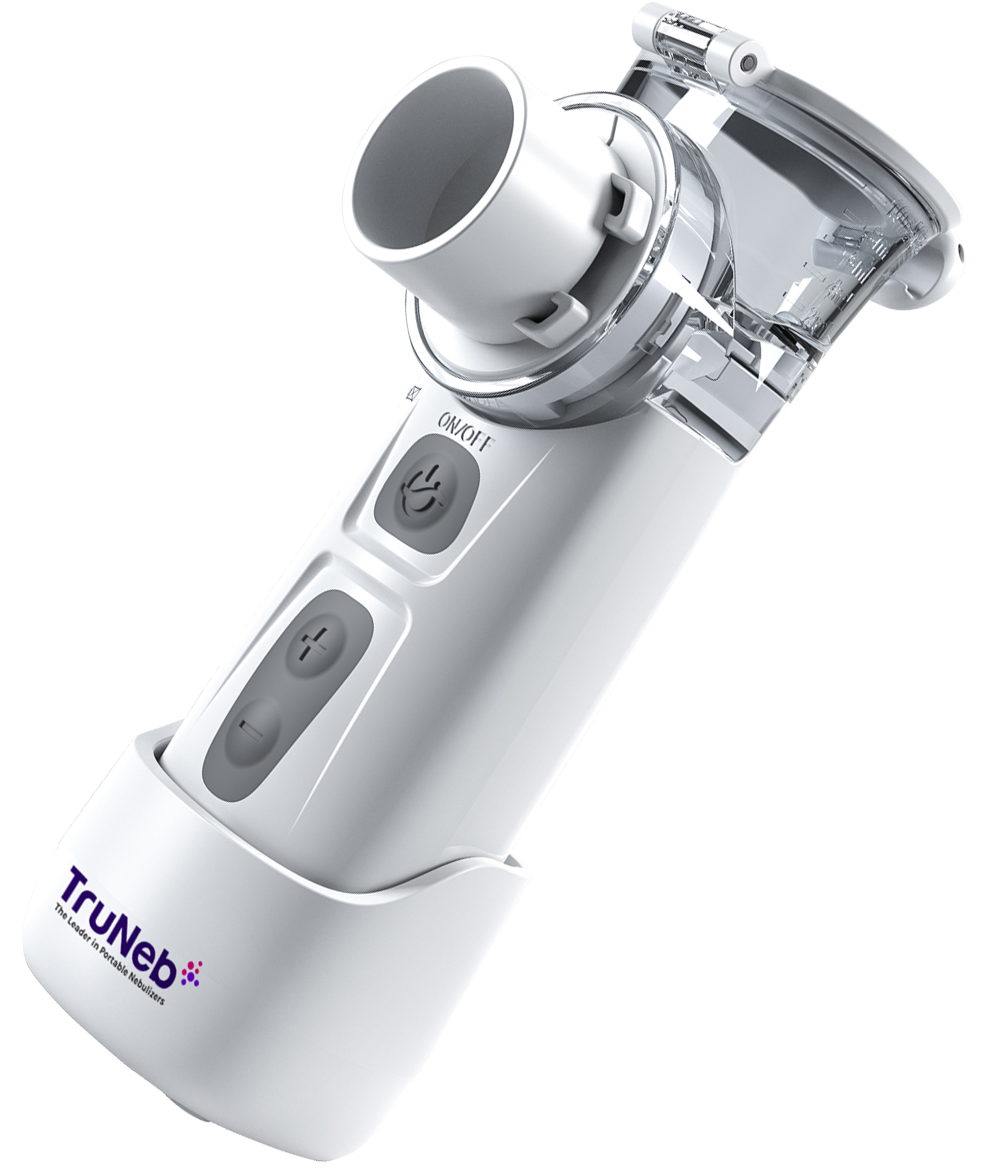
- The TruNeb Portable Mesh Nebulizer is a compact, quiet, handheld option for home or travel. It can deliver typical albuterol solutions without an outlet, which makes sticking to your plan easier.
Bottom line: a quiet, handheld mesh nebulizer can make treatments easier without giving up performance. ⚠️ Don’t put prescription nebulizer medicines into a steam inhaler — they aren’t designed for medication delivery.
Other Nebulizer Solutions: Hypertonic Saline (Not a Bronchodilator, But Useful for Mucus)
Hypertonic saline is sterile saltwater that is stronger than normal saline (often 3% or 7%). It pulls water into the airways and thins thick mucus so it’s easier to cough out.
Key points
- Not a bronchodilator: it doesn’t open tight airways like albuterol.
- Where it helps: commonly used for cystic fibrosis and bronchiectasis; sometimes for stubborn congestion.
- Important caution: it can irritate airways and can trigger cough or bronchospasm. Some doctors have patients use albuterol before saline to reduce this risk as part of a prescribed plan.
- Not for emergencies: hypertonic saline isn’t appropriate for emergency asthma relief and should never replace a rescue bronchodilator during an acute attack.
- Asthma caution: people with asthma can be more prone to chest tightness or bronchospasm with hypertonic saline, so use it only under your doctor’s supervision.
- Availability: TruNeb offers 3% and 7% hypertonic saline solutions for nebulization. Use it only if your doctor recommends it.
Do not mix albuterol and saline in the same cup unless your doctor gives clear instructions. If your doctor prescribes both, they’re usually done one after the other, not mixed in the same cup.
Key takeaway: hypertonic saline thins mucus for clearance; it is not a rescue bronchodilator.
Conclusion & Frequently Asked Questions (FAQs)
With the right dose, good technique, and a clean device, albuterol nebulizer treatments can bring quick relief. A portable nebulizer like TruNeb can make your routine simpler at home or on the go, as long as you use it the way your doctor and the instructions describe.
Overall, albuterol nebulizer treatments can quickly ease breathing problems when used exactly as prescribed and paired with the right nebulizer device.
Tap or click a question below to see the answer:
Yes. It’s the same medication delivered a different way.
Relief usually starts in about 5 minutes and commonly lasts 3–6 hours.
Most treatments take about 5–10 minutes until the mist stops.
Disclaimer: This article is for informational purposes only and is not a substitute for professional medical advice, diagnosis, or treatment. Always talk to your doctor about your symptoms, medications, and any changes to your treatment plan.